
Space Force has awarded a $90 million contract to Rocket Lab for satellites to host payloads that tracks objects in geosynchronous orbit.
The award, announced by Rocket Lab and the Pentagon on May 21, will expand the Space Force’s space domain awareness capabilities in a critical orbit.
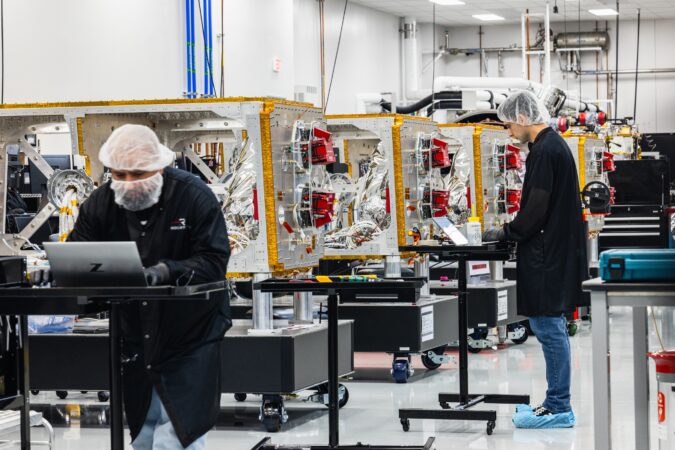
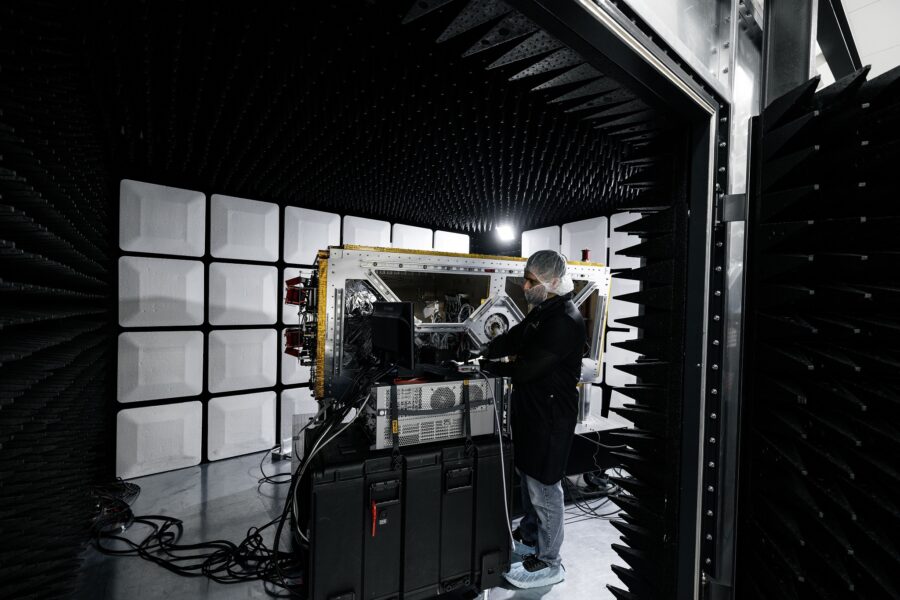
The satellites will carry a small optical sensor called Heimdall—the Space Force first awarded a contract to GEOST to develop a low-cost “hosted” payload in 2022, meaning it did not have a dedicated satellite but could be integrated onto one later.
Rocket Lab acquired GEOST in 2025, as part of the firm’s push to expand beyond launch and into satellites and payloads. This latest deal is Rocket Lab’s first satellite production program for GEO, which is 22,000 miles above Earth.
Work on the two satellites will take place at the company’s Long Beach, Calif.-Spacecraft Production Complex.
The two satellites will be built on the company’s Lightning bus, which has been adapted for the strain of the GEO environment.
The new contract covers up to five years of on-orbit operations, launch integration, and manufacturing, according to the release. It also moves the prototype to an operational space delivery vehicle.
The two-satellite sensor contract might be small in number, but it is one piece of the larger project the USSF is pursuing to better track space-based objects.
Space Domain Awareness
The Space Force has poured effort in recent years to improve its space domain awareness, using a mix of ground- and space-based sensors.
In orbit, the service said in budget documents, it is looking to develop “the space-based architecture required to detect, track, catalogue, and identify objects and activities in the space domain.”
In addition to the Rocket Lab contract, the Space Force has a program called Andromeda, developing both reconnaissance and surveillance satellites. The service has selected a pool of vendors to compete for the program and earlier this month raised the ceiling value of the program from $1.8 billion to more than $6.2 billion, saying an urgent need for more visibility in orbit drove more funding toward space-based domain awareness programs in the fiscal 2027 budget request.
On the terrestrial side, Air & Space Forces Magazine reported earlier this month that the service aims to revamp eight analog space surveillance radars to take on digital capabilities as part of the Ground Based Radar Digitization project.
Many Projects
Rocket Labs already has other programs supporting USSF efforts. In December, the service’s Space Development Agency awarded Rocket Lab an $805 million contract for satellites responsible for missile warning, tracking and defense. Under that contract, the company will build 18 satellites.
That was part of a larger $3.5 billion award for 72 satellites for the agency to put into low-Earth orbit. SDA is building a Proliferated Space Warfighter Architecture in LEO, which will include missile tracking and data transport satellites.
n 2025, the Air Force Research Lab picked Rocket Lab for an experiment to test using rockets to transport cargo around the world, and in 2024, Space Force and the Defense Innovation Unit chose Rocket Lab for launch services in its Victus Haze mission, a tactically responsive space mission the service is pursuing.
If successful, the mission could give the service the ability to respond to adversary threats against space assets. The Victus Haze mission was delayed to this year following a rocket launch failure.
The company previously worked with the Air Force in 2019, putting three of the service’s research satellites into orbit under the Rapid Agile Launch Initiative, part of the DOD’s Space Test Program, Air & Space Forces Magazine reported.