
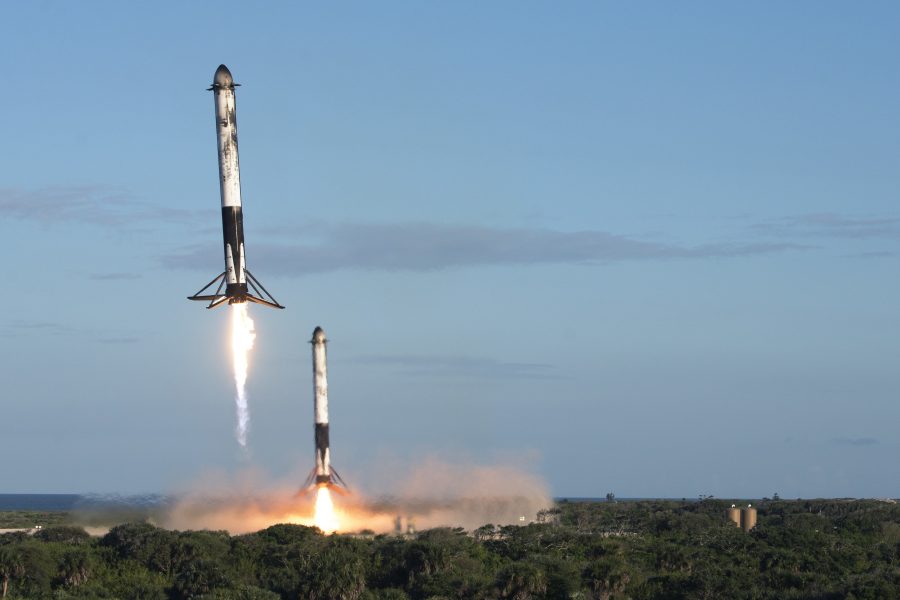
A recent study of the Space Force’s launch infrastructure found that the service needs a third launch site to manage surging government and commercial launch demand.
Air Force Secretary Troy Meink highlighted the finding during a May 20 House Armed Services Committee hearing, noting that the study is still moving through the approval process. The Space Force operates the nation’s busiest spaceports at Cape Canaveral Space Force Station, Fla., and Vandenberg Space Force Station, Calif.—both of which are running out of room.
“At a high level, what it says is we probably need another site that’s capable of heavy and super heavy launch capability, both from a resiliency perspective and just, even at the Cape, limitations on how much space we’ve got,” Meink said.
He didn’t expand any further on the findings of the study, which was mandated by Congress in the Fiscal 2026 National Defense Authorization Act, and it’s not clear what locations the service is considering.
Together, both the Cape and Vandenberg supported 175 launches in 2025 and are projecting that number to jump to upwards of 700 missions by 2036—a 300 percent increase over 10 years. That forecast is based on projections from each of the major launch companies who have pads at the spaceport—including SpaceX, United Launch Alliance, and Blue Origin—as well as newcomers like Firefly, Stoke, and Relativity. Their backlogs are crowded with commercial and government customers making plans for constellations made up of hundreds to thousands of satellites, as well as the Pentagon, which has plans for proliferated fleets of its own.
The two ranges have been working to optimize the space they have by reconfiguring their ranges, making their processes more efficient, and upgrading ports and roads to enable more activity. In fiscal 2024, Congress allocated $1.3 billion through fiscal 2028 to support major construction efforts, and the Space Force’s fiscal ‘27 budget request calls for another $2.2 billion in additional launch infrastructure investment.
Even with that focused effort, the Space Force is exploring options to pursue additional launch sites for heavy and super heavy launch sites, in particular. For less demanding missions, the service already leverages state-run spaceports—including Wallops Flight Facility, Va., and the Pacific Spaceport Complex, Alaska—and Space Force officials have said the service is considering additional partnerships with state spaceports that can support smaller vehicles.
Speaking during the hearing alongside Meink, Chief of Space Operations Gen. Chance Saltzman said the service is considering shifting more of its smaller-lift launch capabilities to other ranges, but didn’t discuss that effort in detail.
“Step one is make sure we’re using as efficiently as possible the resources we have,” Saltzman said. “Then second is growing the infrastructure to support the demand signal that we are seeing from industry and our national security launches. We’re going to have to increase the capacity. And then, maybe connected to that, is the geographic resiliency that you might need to have separate launch locations and not be so tied to just the two specific launch ports that we have. So, we’re looking heavily and we’re now analyzing alternatives to support other launches.”