
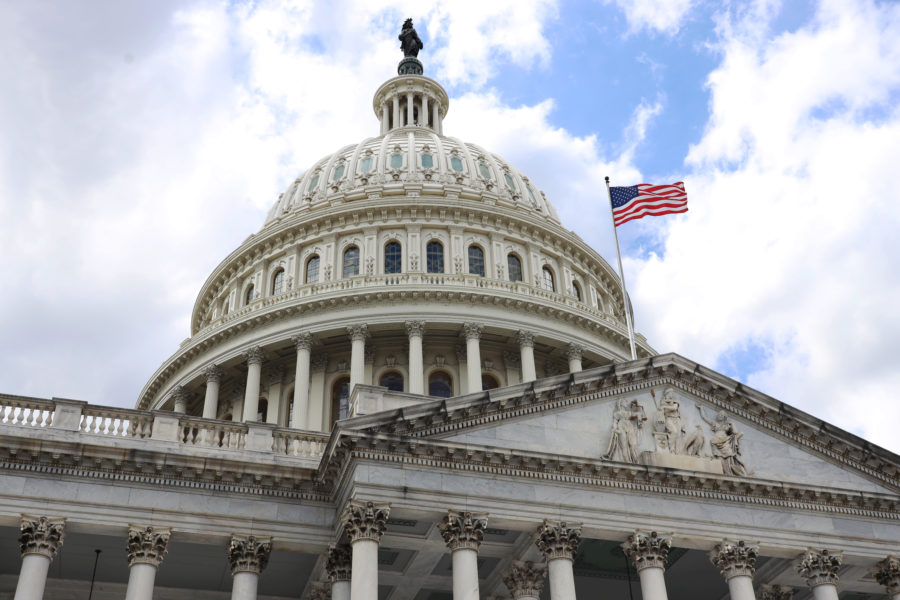
President Donald Trump signed legislation reopening the federal government late Nov. 12, ending the longest shutdown in U.S. history. The move sets the stage for tens of thousands of defense civilians to return to work and guarantees troops will be paid in a few days’ time.
Trump’s signature capped a whirlwind end to the shutdown, which lasted 43 days. Just a few hours before the signing ceremony in the White House, the House of Representatives voted to approve a continuing resolution that will keep the government funded through Jan. 30, along with full-year appropriations to fund military construction, Veterans Affairs, the Department of Agriculture, and Congress itself through fiscal 2026.
The Senate had voted for the measure Nov. 10.
During the shutdown, service members and some civilians designated “essential” reported to work, but only military members were paid. While the department found funds for military paychecks, most civilians were not paid and Treasury Secretary Scott Bessent had warned the government would not able to pay troops again for the Nov. 14 paycheck.
“The Air & Space Forces Association commends lawmakers for ending the longest government shutdown in U.S. history,” AFA President and CEO retired Lt. Gen. Burt M. Field said in a statement. “All Americans can rejoice that Airmen and Guardians, Soldiers, Sailors, Marines, and defense civilians can get back to the business of ensuring our National Security without worry about when their next paycheck will arrive.”
The Pentagon furloughed about 334,000 civilian employees—including thousands of military spouses—during the shutdown. It is unclear if those workers are expected to return Nov. 13—or how soon pay will resume. The measure reopening the government directs that furloughed employees receive backpay, and that pay resume “at the earliest date possible after the lapse in appropriations ends, regardless of scheduled pay dates, and subject to the enactment of appropriations Acts ending the lapse.”
It is unclear how quickly that can happen. Queried by Air & Space Forces Magazine prior to the House vote, Pentagon spokespeople were unable to offer definitive details on how soon normal work schedules and pay would resume.
The bill approved by Congress also includes provisions to ensure the Air Force has $200 million and a clear directive to continue work on the E-7 Wedgetail program. The Pentagon had announced its intent to cancel plans for a fleet of the airborne early warning and control aircraft, but advocates say the Air Force needs the capability while the Space Force builds up its own fleet of targeting satellites, and lawmakers included specific directives in the continuing resolution to keep the Wedgetail program alive.
For the most part, however, the bill keeps Defense Department funding frozen at fiscal 2025 levels, which were already frozen at fiscal 2024 levels by a previous continuing resolution. Now, lawmakers have 78 days to approve a new budget or face another shutdown or CR.
In his statement, Field noted the issue.
“This is especially important to our Space Force, which simply cannot execute the missions that Congress has assigned them unless Congress allows them to acquire the new systems needed to execute those missions,” he said. “Without a full budget, new military programs cannot start, money-saving multiyear contracts cannot be signed, and military readiness cannot be improved and assured. It Is imperative that Congress pass full-year appropriations bills and end this cycle of destructive temporary measures.”