Audio of this article is brought to you by the Air & Space Forces Association, honoring and supporting our Airmen, Guardians, and their families. Find out more at afa.org
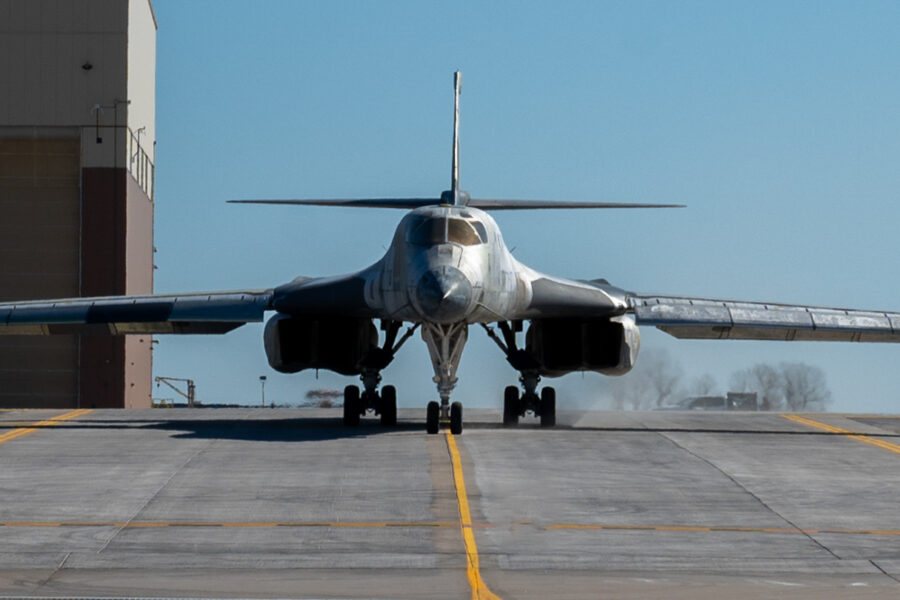
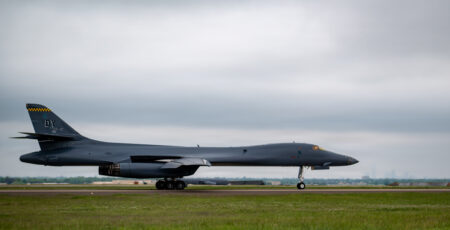
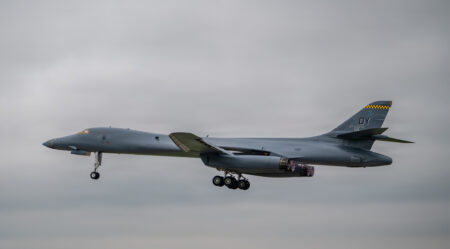
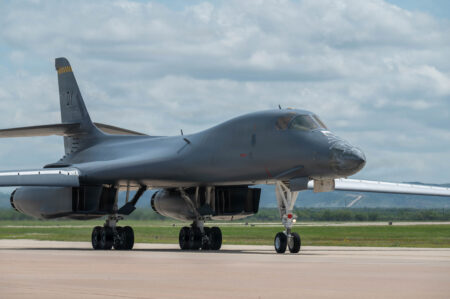
The Air Force has finished resurrecting a B-1B Lancer, completing a yearslong process to transform a bomber that had been stored for parts in the Arizona desert into the new flagship of the 7th Bomb Wing at Dyess Air Force Base, Texas.
B-1B, tail 86-0115, was sent to the “Boneyard” at Davis-Monthan Air Force Base, Ariz., in 2021. But it was brought back into service last month, moving from retirement to front-line service.
The Air Force retired 86-0115 and 16 other B-1Bs in 2021, four of which were kept in “reclaimable condition,” Air Force Global Strike Command said at the time
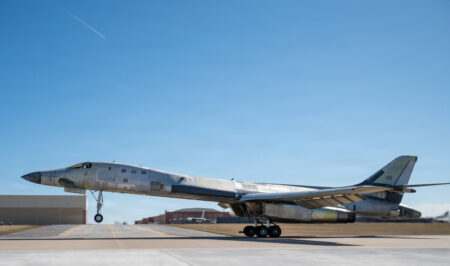
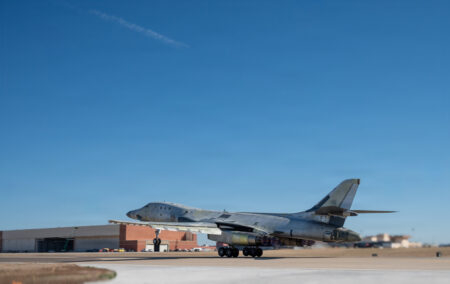
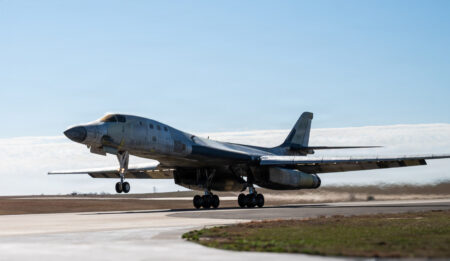
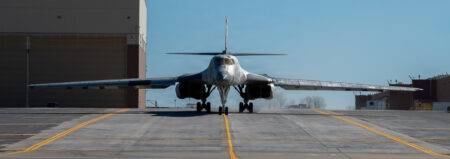
The process to restore 86-0115 began in earnest in July 2024 when the aircraft was flown from the Boneyard to Tinker Air Force Base, Okla., for repairs to prepare it for reentry into the fleet. Photos released by the Air Force on May 6 show the aircraft conducting flight tests in February in a bare-metal finish, before painting was completed in April.
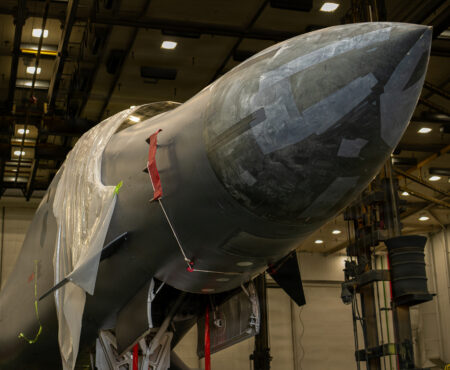
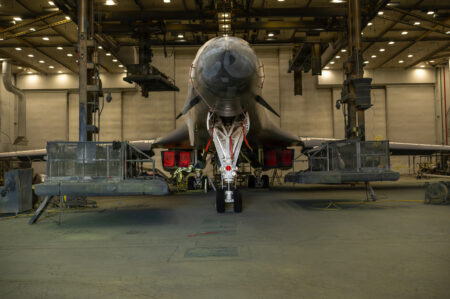
The B-1B underwent an “intensive regeneration and depot maintenance effort” at the Oklahoma City Air Logistics Complex at Tinker, according to a release from the facility’s 72nd Air Base Wing.
More than 200 Airmen and civilians from 567th Aircraft Maintenance Squadron worked on the aircraft, according to the release, replacing more than 500 components, including completing “system overhauls and structural repairs.”
“Three rotating teams worked around the clock to prepare the aircraft for final delivery,” according to the 72nd Air Base Wing.
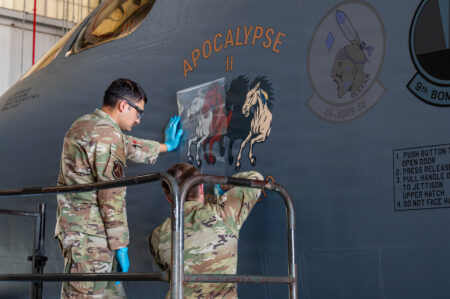
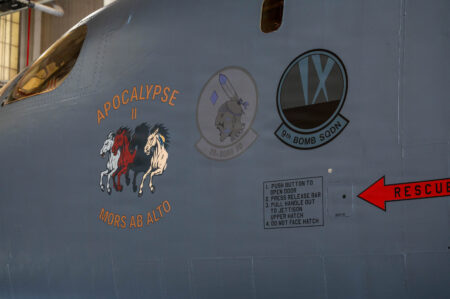
The plane is now sporting a new name: “Apocalypse II.” The moniker is in honor of the crew of a World War II B-24 Liberator aircraft nicknamed “Apocalypse” that was shot down over Burma on Dec. 1, 1942.
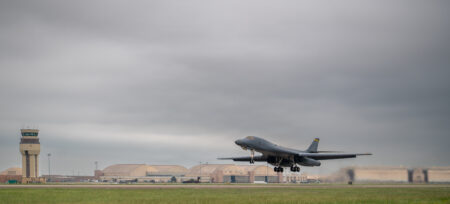
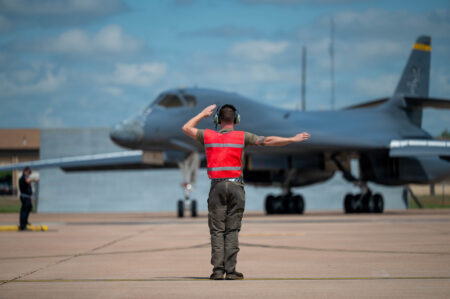
The aircraft left Tinker on April 22 for Dyess, where a ceremony was held in honor of the newly renamed aircraft. New nose art was applied late last month.
The original “Apocalypse” B-24 was part of the 436th Bombardment Squadron, the predecessor to today’s 436th Training Squadron, which is based at Dyess. The remains of several crew members of the original Apocalypse, the fallen B-24, were identified through DNA analysis in recent years and buried. In its previous service, 86-0115 was nicknamed “Rage.”
Apocalypse II is the second B-1B known to have been reclaimed by the 309th Aerospace Maintenance and Regeneration Group, as the “Boneyard” is officially known. A previously retired B-1B—known as “Lancelot”—is replacing another B-1B that caught fire during an engine run in April 2022.
A third B-1 was destroyed in a crash at Ellsworth Air Force Base, S.D., in January 2024. Air Force budget documents for fiscal 2027 indicate the service will have 44 B-1s in service. Congress has prohibited the Air Force from retiring more B-1Bs from its fleet.
Budget documents also indicate that the Air Force now wants to keep at least some of its B-1Bs flying until 2037 and invest $342 million to modernize the aircraft. The service had previously planned to retire all B-1Bs by the early 2030s. The type will be replaced by the B-21 Raider.
The B-1B, which has the largest conventional payload in the Air Force fleet, has been heavily used in bombing operations against Iran in Operation Epic Fury. U.S. bombers, operating out of RAF Fairford, U.K., had been flying daily missions before the two sides agreed to a ceasefire last month.
The Air Force still has roughly two dozen bombers stationed at the English base, most of them B-1s, along with around half a dozen B-52s. B-1s—along with B-52 Stratofortress and B-2 Spirit stealth bombers—have also flown missions against Iran from the continental U.S.
Audio of this article is brought to you by the Air & Space Forces Association, honoring and supporting our Airmen, Guardians, and their families. Find out more at afa.org
More than 40 years after the original YF-117 operational prototype flew test runs from a Lockheed Martin Skunk Works facility, an F-117 returned for a $1 million refurbishment to look its best when it assumes its place in history alongside other iconic aircraft on permanent exhibit at the National Air…
A U.S. Air Force F-22 pilot controlled a YFQ-44A Fury Collaborative Combat Aircraft this month while both aircraft were in flight, according to an Oct. 16 release, another milestone in the service’s ambitious CCA efforts.
The Marine Corps recently conducted its first-ever “ripple” release of eight Small Diameter Bomb IIs from an F-35B, a key early step in proving out the capability for all F-35 variants.
The Air Force will field operational prototypes for an autonomous drone to replace its MQ-9 Reaper in 2028, Secretary of the Air Force Troy Meink said Oct. 14.
One of the Air Force’s critical B-2 Spirit stealth bombers has returned to Whiteman Air Force Base, Mo., after an extensive course of maintenance to restore its stealth coating and preserve its structural integrity.
BAE Systems has received a contract from Lockheed Martin to install an upgraded Block 4 electronic warfare system into new F-35 Joint Strike Fighters, as well as to retrofit some older jets.
The Air Force has figured out a way for maintainers to inspect what had been a “blind spot” in F-16 engines, after problems in that area led to the catastrophic crashes of two jets in recent years.
The Air Force has begun evacuating stealth fighters, gunships, and special operations planes ahead of Hurricane Isaias expected landfall over the Gulf Coast this weekend.
The Air Force’s B-52 bomber may soon be able to carry up to 20 stealthy long-range anti-ship missiles to strike moving targets at sea, a key capability in a potential fight with China.
✓
Thank You!
Check your inbox to verify your email address and finish setting up your AFA account.
★
Welcome Back!
An account with this email already exists. Please log in to continue.
Subscribe to the Air & Space Forces Daily Report
The latest news from Air & Space Forces Magazine, as well as news from other leading publications, delivered right to your inbox every morning!
We’re sorry, there has been an error. Please review your input or try again later.