
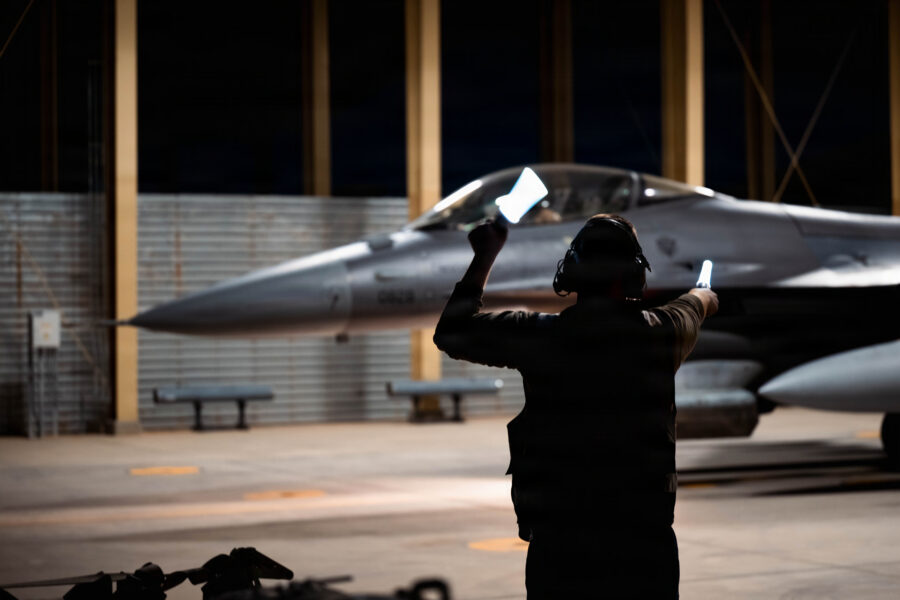
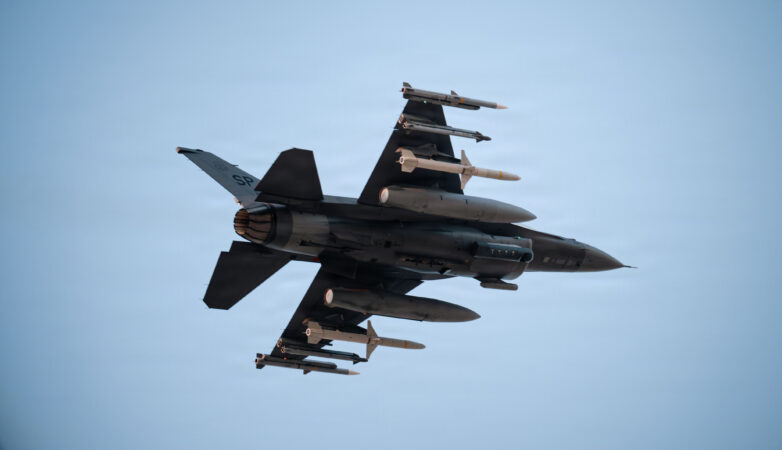
As the U.S. war with Iran intensifies, the Pentagon is rushing more warplanes to the region, deploying additional Air Force F-16 Fighting Falcon and F-35 Lightning II fighters to the Middle East, people familiar with the matter told Air & Space Forces Magazine.
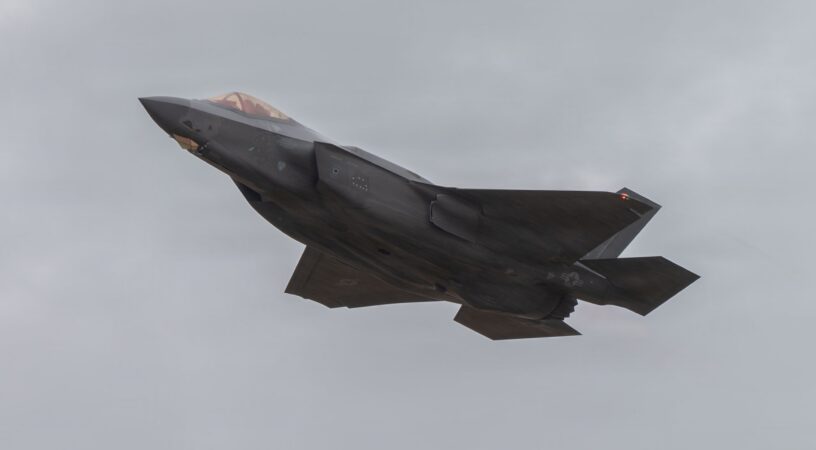
Among the warplanes being sent are F-16s from the 480th Fighter Squadron at Spangdahlem Air Base, Germany, and stealthy F-35s from the 48th Fighter Wing at RAF Lakenheath, U.K.
Aerial refueling tankers are also headed toward the region.
The Trump administration has ratcheted up the air campaign against Iran since a ceasefire between the two sides collapsed over disputes over the Strait of Hormuz. U.S. forces have since hit infrastructure, including multiple bridges and other targets inside Iran.
The U.S. and Iran had been trading blows for weeks even during the ceasefire—the U.S. attacking military sites along the coast of Iran and Iran firing at U.S. bases in the Gulf and commercial ships. But the U.S. had been sending home airpower it had deployed starting in January and February for Operation Epic Fury against Iran. Half a dozen B-52H Stratofortresses, which were deployed to RAF Fairford, U.K., for strikes on Iran, returned home in recent weeks, while some B-1B Lancers remained at the base. In the past few weeks, F-22 Raptor and F-15E Strike Eagle fighters, and A-10 Thunderbolt II attack planes also returned to their home bases after being deployed to the Middle East, though many Air Force and Navy warplanes remained in the region.
F-16s from the 480th Fighter Squadron had only recently returned to Germany. But just a few weeks after coming home, the unit’s “Wild Weasels,” which specialize in the suppression of enemy air defenses, are headed back to the Middle East.
The U.S. has also reimposed a military blockade of Iranian ports and is now conducting airstrikes against a broader set of targets inside Iran.
The U.S. has carried out seven straight days of airstrikes as of July 17, the biggest flare-up in the conflict since a memorandum of understanding between the two countries was signed in June. U.S. Central Command said in a statement July 18 that the airstrikes are designed to “continue degrading Iranian military capabilities.”
The fresh arrival of U.S. warplanes suggest the war could expand as the Trump administration seeks to pressure the Iranian regime into agreeing to another deal.
Iran has responded with more force of its own. Kuwait said a power and water desalination plant was attacked, a dramatic escalation aimed at civilian infrastructure. Iran has also attacked Qatar and Oman, countries it hit earlier in the conflict, which began Feb. 28 with U.S. and Israeli strikes on Iran. Since a ceasefire deal was reached in April after six weeks of the most intense air campaign in the Middle East in a generation, Iran had mostly focused its periodic attacks on U.S. bases in the region, mainly in Bahrain and Kuwait, in response to specific flare-ups, rather than the wider attacks seen in recent days.
“We’re still in the operation,” Air Force Chief of Staff Gen. Kenneth S. Wilsbach said in an interview with Air & Space Forces Magazine on July 16 when asked about USAF actions in the Middle East. He declined to comment on specific operations, tactics, platforms, or locations. “The Airmen that were involved and are still involved with those operations, they’re doing what we trained them to do, and they’re doing it extremely well. When you think about Epic Fury, the Airmen have been under fire the entire time, and yet it hasn’t slowed us down at employing airpower. So as the base have had attacks, they’ve repaired the base, and they’ve kept moving.”