


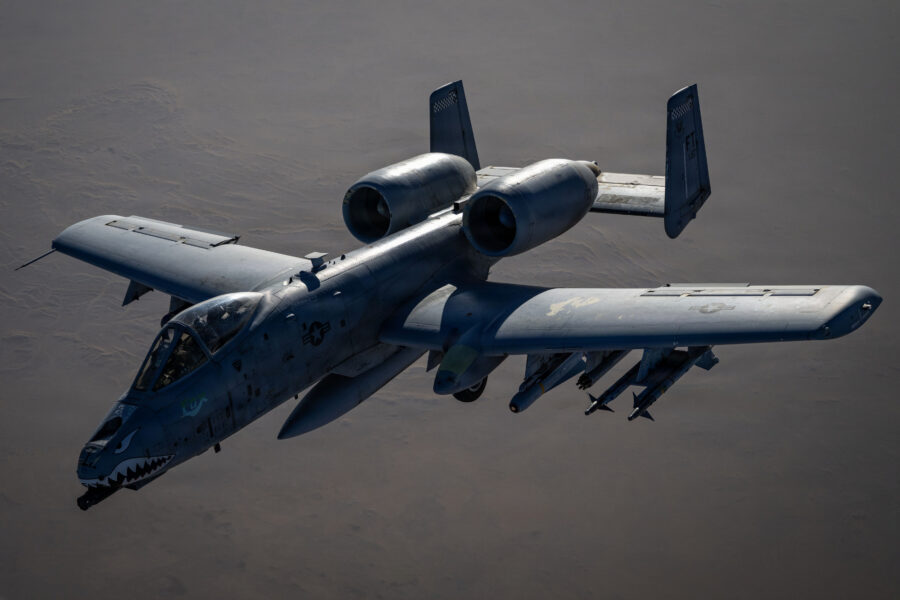
The Air Force is extending the life of the A-10 Thunderbolt II attack plane until at least 2030, pausing the service’s plan to retire the close air support aircraft amid active combat in the Middle East.
Air Force Secretary Troy Meink announced the move on social media, saying the service made the move in consultation with Secretary of Defense Pete Hegseth.
Meink promised there was “more to come” after praising President Donald Trump for “quick, decisive leadership as we equip our force.”
The Air Force is set to unveil its fiscal 2027 budget on April 21, when its latest plans for its future fleet are likely to come into focus.
The service has tried to wind down its fleet of A-10s for years, arguing that the aircraft isn’t survivable in the high-end conflict that it expects to face in the future and had planned to rid itself of the aircraft by the end of the decade. But Meink’s comments indicate it has reversed course. The move comes as the aircraft has been heavily used in recent operations in the Middle East.
“This preserves combat power as the Defense Industrial Base works to increase combat aircraft production,” Meink wrote on in a post on X.
The Air Force plans to replace the A-10 in its close air support role with the F-35A Lightning II stealth fighter, and it plans to buy 38 F-35As in fiscal 2027. The Air Force has yet to spell out its full plans for the next few years, but high-level budget documents released earlier this month offer insight into procurement plans for some platforms. In addition to F-35s, the Air Force plans to buy 24 F-15EXs next year—62 new fighters in total. The service will have a total of 129 F-15EX Eagle II fighters under plans released last year. The Air Force is also investing significantly in the B-21 Raider bomber and the sixth-generation F-47 fighter jet.
As of fiscal 2026, there were 162 A-10s in the Air Force inventory, which the service originally planned to retire. Some members of Congress have long been skeptical of the Air Force’s plans to retire the A-10, nicknamed the “Warthog,” and the latest National Defense Authorization Act mandated that the USAF keep at least 103 A-10s through the end of this fiscal year. The bill also required Meink to deliver a report to Congress on the status of the Air Force’s A-10 fleet and its proposed retirement plans by the end of last month, a briefing which has not been made public.
Earlier this year, the Air Force ended pilot training for new A-10 aviators and is ceasing depot-level maintenance—airframe overhauls, upgrades, and rebuilds—for the aircraft as part of its long-term plan to retire the Warthog. The Air Force has cut a quarter of its A-10 inventory since 2024 and planned to shelve the remaining fleet over the next two years.
But the A-10 remains a key aircraft in current conflicts. A-10s have been used by U.S. Central Command against Iranian-aligned militia groups in Iraq and against armed Iranian small boats in the Strait of Hormuz during the conflict with Iran, according to U.S. officials. A-10s are among the aircraft being used to enforce a U.S. blockade against Iranian ports, people familiar with the matter told Air & Space Forces Magazine.

A-10s also supported the rescue of two downed American Airmen from an F-15E Strike Eagle who were rescued from Iran this month, as the Warthogs circled overhead to provide close air support. One A-10 was severely damaged by Iranian fire, and its pilot flew towards friendly airspace before safely ejecting.
The U.S. doubled the size of its A-10 fleet deployed to the Middle East earlier this month.
Even before the U.S. conflict with Iran, A-10s had played a key role in the Middle East, participating in airstrikes against the Islamic State group over the past few years. A-10s have been continuously deployed to CENTCOM since 2023.
In response to Meink’s social media post announcing the platform’s extended service life, Hegseth said: “Long live the Warthog.”
The aircraft is known for its 30mm GAU-8/A Gatling gun, which can fire 3,900 rounds per minute to strafe targets. But A-10s have also been spotted carrying an array of munitions in official images from recent operations in the Middle East, including JDAM-guided bombs, AGM-65 Maverick air-to-ground missiles, AIM-9 Sidewinder air-to-air missiles, and APKWS II laser-guided rockets. Last year, A-10s returning from the Middle East were even spotted carrying kill markings of Iranian-made Shahed drones on their fuselages, offering unofficial indications the jets scored air-to-air kills.