


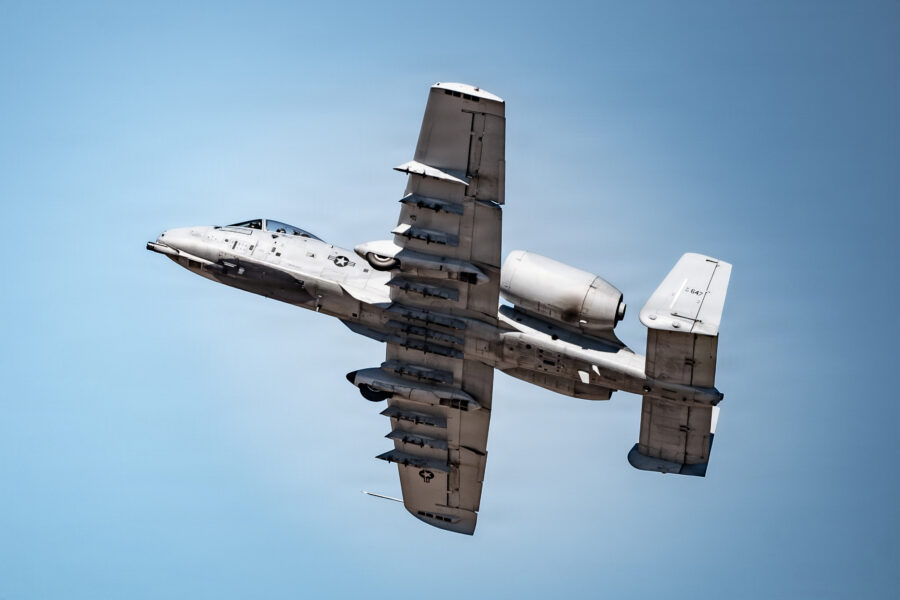
The final class of new A-10C Thunderbolt II pilots graduated from training this month, signaling another step in the Air Force’s goal of retiring the venerable close air support aircraft in the coming years.
The milestone comes even as the aircraft has proven valuable in Operation Epic Fury and the ongoing U.S. blockade of Iranian ports.
The Air Force expects to fully divest all its A-10s by the end of the decade. In the run-up to that, the service has started winding down some of the enterprise that feeds into and supports the fleet. The April 3 graduation ceremony at Davis-Monthan Air Force Base, Ariz., follows the February closure of depot maintenance on the “Warthog” at Hill Air Force Base, Utah.
Yet the relatively timeline for dismantling the A-10 operation and divesting the aircraft is raising some concerns about impacts on the overall health of the Air Force’s fighter enterprise, one expert told Air & Space Forces Magazine.
Inventory
At the start of fiscal 2026, there were 162 A-10s in the Air Force inventory. The service wanted to retire all of those aircraft this year, but Congress stepped in and forced USAF to keep at least 103 of the airframes.
The end of depot maintenance and new pilot training for the A-10 don’t necessarily mean the aircraft cannot keep flying in the immediate future. As the fleet contracts, the need for new pilots declines and the number of spare parts available in the “Boneyard” at Davis-Monthan Air Force Base increases.
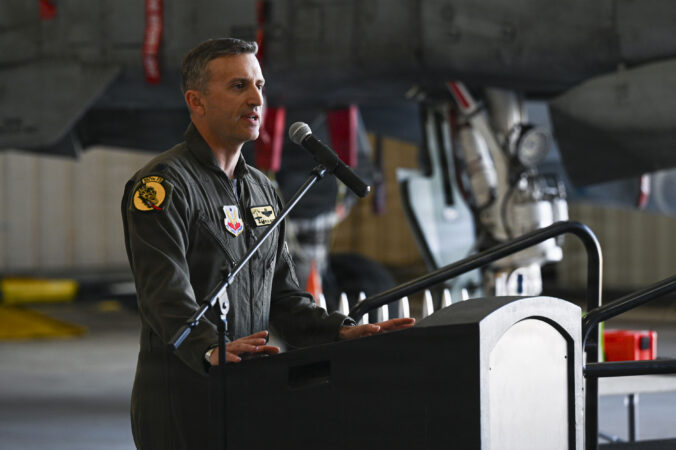
The issue of new pilots could also be mitigated for a few years by the fact that a large chunk of the remaining A-10s are in the Guard and Reserve, where retention is high. And an existing A-10 squadron could be converted to a combined training and operations squadron to continue pilot training for the total force, said retired Air Force Col. John Venable, now a senior resident fellow at the Mitchell Institute for Aerospace Studies.
All told, Venable suggested the aircraft can keep going for a few years at least.
There are 36 A-10s in the Air National Guard, which is scheduled to fully divest the aircraft in fiscal 2027, said Maj. Jonathon M. LaDue, a Guard spokesman.
There are 26 A-10s in the Air Force Reserve, which is slated to divest the airplane by fiscal 2028, said Sean P. Houlihan, a Reserve spokesman.
Both individuals said that there are no plans for the Guard or Reserve to convert any units to fly A-10s nor to transfer active-duty A-10 aircraft or personnel to the reserve component.
An Air Force official said the service does not plan to operate aircraft in the reserve components that it doesn’t have in the Active component, but declined further comment on the disposition of Active component aircraft.
Drawdown
As depot maintenance shuts down, the pilot pipeline dries up, and officials chart the end of the A-10’s service life, some units already have replacement aircraft lined up.
The Active-Duty 23rd Fighter Group at Moody Air Force Base, Ga., is scheduled to transition to the F-35 beginning in 2029. The Guard’s 190th Fighter Squadron at Gowen Field, Idaho, is expected to transition to the F-16 this year, and the 107th Fighter Squadron at Selfridge Air National Guard Base, Mich., will get the F-15EX in 2028, LaDue said.
Others, however, do not. The Reserve’s 442nd Fighter Wing, which has squadrons at Moody and Whiteman Air Force Base, Mo., have no current plan to recapitalize with new aircraft, Houlihan said, though “discussions are ongoing.”
Yet even for the units with a plan for new aircraft, the winding down of the A-10 presents a challenge, said Venable. If their Warthogs retire without new planes ready to fill in, Venable fears the loss of operations and maintenance personnel in those squadrons.
“Do I think the A-10 needs to stay around forever? No, I don’t, nobody does, not anymore,” Venable said. “But until we can get those airframes into these units, we need to sustain them for as long as we possibly can.”
A delay of six months or so is a manageable gap, Venable said. But longer timelines pose risks and Venable noted that there have been delays in delivering new F-35s and F-15EXs.
In the Guard and Reserve, where lots of Airmen have combat experience, if the unit doesn’t have a flying mission, pilots and maintainers will either transfer to other squadrons or leave altogether to join commercial airlines, Venable said. So keeping the A-10 going makes sense, he argued.
“To make an exception for this would be the right thing until we get the pipeline up and spinning fast enough so these squadrons don’t die because they don’t have airplanes with which to fly,” Venable said.
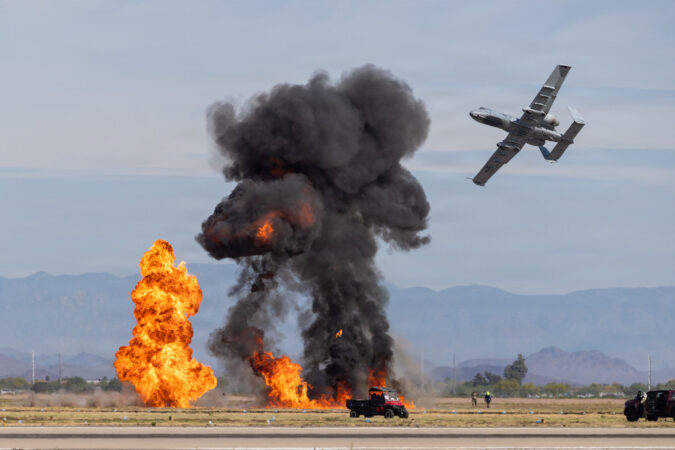
The Air Force, however, seems determined to retire the A-10 quickly. Officials cit the fleet’s age—now an average of 43.37 years—and its low survivability in a peer conflict with China.
In the 2026 budget request, officials estimated that ditching the A-10 entirely would save $423 million in operations and maintenance costs. The Air Force has yet to reveal details from its 2027 request, but early budget documents have no money earmarked for the A-10.
The Air Force has contemplated retiring the A-10 since 1984, shortly after production ended, according to a 2015 Congressional Research Service report. Air Force officials at the time didn’t think the plane was survivable against a peer threat such as the Soviet Union.
But in the ensuing years against less advanced adversaries, the tailored close-air-support plane proved its worth.
The Air Force deployed the A-10 extensively in the Gulf War, and it conducted 19 percent of the close air support mission sorties during the Iraq and Afghanistan Wars between 2006 and 2013, according to the report.
Still Useful
Even now, about a dozen A-10s contributed to efforts against Iranian-backed militia groups in Iraq early in Operation Epic Fury. In the following weeks, the aircraft was tasked with a counter-maritime mission to defend U.S. ships from Iranian fast-attack boats in the Strait of Hormuz.
Since then, at least 18 additional A-10 aircraft have been deployed to CENTCOM to support the mission.
One A-10 was downed on April 3 while participating in the combat search-and-rescue mission to retrieve a downed U.S. F-15 Strike Eagle crew member in Iran. The aircraft is also being used in the U.S. blockade of Iranian ports.
“It’s a very amazing platform,” Venable said.
The A-10 pilot community is specifically trained in close air support with the Army and has built trust with ground forces in providing that support.
“They understand how to talk to them and how close they can get to them,” Venable said. “They have the trust to come in and strafe from 100 feet, 50 feet in front of them with a 30mm cannon.”
That cannon gives them the ability to strike armored targets, something the 20mm gun on the F-16 and F-15E cannot do, he said.
And even as service plans its divestment, it also isn’t done tinkering with the aircraft’s capabilities.
The Air National Guard Air Force Reserve Command Test Center announced in early April that it had successfully delivered a probe-and-drogue refueling capability for the A-10, enabling the aircraft to refuel from HC-130 tankers.
Developers built a device that attached to the A-10’s boom receptacle to enable probe-and-drogue refueling.
The A-10 was previously limited to flying boom refueling, predominantly from the KC-135 Stratotanker, which has suffered refueling complications due to the lack of power the legacy A-10 can generate to lock into the boom.