


U.S. Air Force and Navy fighter jets are playing a prominent role in patrolling for threats as part of the U.S. naval blockade of Iran, people familiar with the matter told Air & Space Forces Magazine.
Fighter jets are “executing the mission to blockade ships entering and departing Iranian ports,” U.S. Central Command wrote in an April 15 social media post, accompanied by a video of F/A-18 Super Hornets launching from an aircraft carrier in the region.
Ten ships leaving ports in Iran have been turned around so far, CENTCOM says. The blockade applies to all vessels that sail to and from Iran and the entire Iranian coast.
U.S. air and maritime forces in the region appear to have multiple aims. In addition to blockading Iran, CENTCOM says it is also supporting freedom of navigation for vessels transiting the Strait of Hormuz to and from non-Iranian ports.
“I think what they’re actually trying to do is open up the Strait militarily while under the guise of this blockade,” said Bryan Clark, a maritime expert and senior fellow at the Hudson Institute. “We’re going to blockade Iran, but CENTCOM said we’re also going to protect and allow friendly shipping to come out.”
There is still a long way to go, however, in restoring freedom of navigation.
About 20 ships passed through the Strait of Hormuz in a recent 24-hour period, not all of them oil tankers. In peacetime, well over 100 ships passed through the narrow waterway connecting the Persian Gulf and the Gulf of Oman on a daily basis. Unlike Operation Earnest Will, which was carried out during the Reagan administration, the U.S. Navy is not escorting oil tankers in the Gulf.
There have been concerns that Iran has mined the critical waterway. Last week, two U.S. destroyers sailed through the Strait in what CENTCOM described as part of an effort to clear mines and show there is a safe way to navigate through the Gulf waters.
“It’s going to require a pretty substantial effort to demonstrate to shipping companies and to allies that the Strait is actually clear and that there’s safe passage available before you’re going to see any real improvement in the shipping,” Clark said.
The blockade began at 10 a.m. Eastern Time on April 13.
“During the first 48 hours of the U.S. blockade on ships entering and exiting Iranian ports, no vessels have made it past U.S. forces,” CENTCOM said in a statement issued the morning of April 15. The command said the vessels that have been blocked by the U.S. “complied with direction from U.S. forces to turn around and return toward an Iranian port or coastal area.” Seizing a ship is a last resort, a U.S. official said. That has so far been unnecessary.
The U.S. blockade is being carried out by more than a dozen warships. But dozens of fighters, drones, intelligence, surveillance and reconnaissance aircraft, and tankers are participating in the operation.
Over 100 of those aircraft are fighters and surveillance planes helping enforce the blockade, CENTCOM said. U.S. satellites are also playing an important role in monitoring the region, people familiar with the matter said.
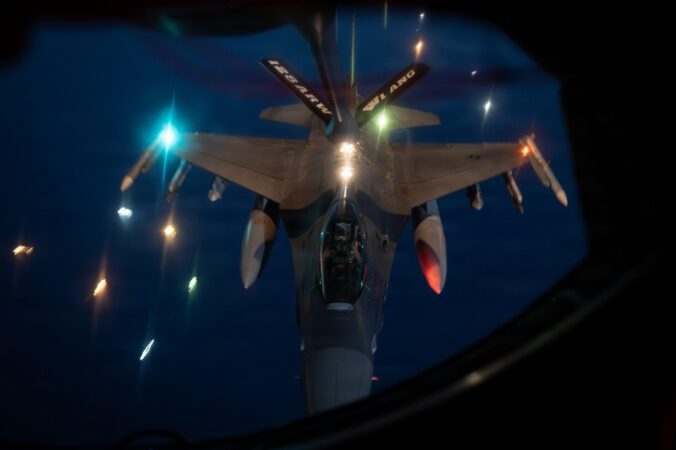
U.S. airpower consists of USAF F-16 Fighting Falcons and F-15E Strike Eagles, as well as A-10 Thunderbolt II attack aircraft. Also participating are Navy and Marine Corps fighters from the USS Abraham Lincoln aircraft carrier, which carries F-35C and F/A-18 Super Hornets, and the USS Tripoli amphibious assault ship, embarked with USMC F-35B vertical takeoff and landing stealth fighters.
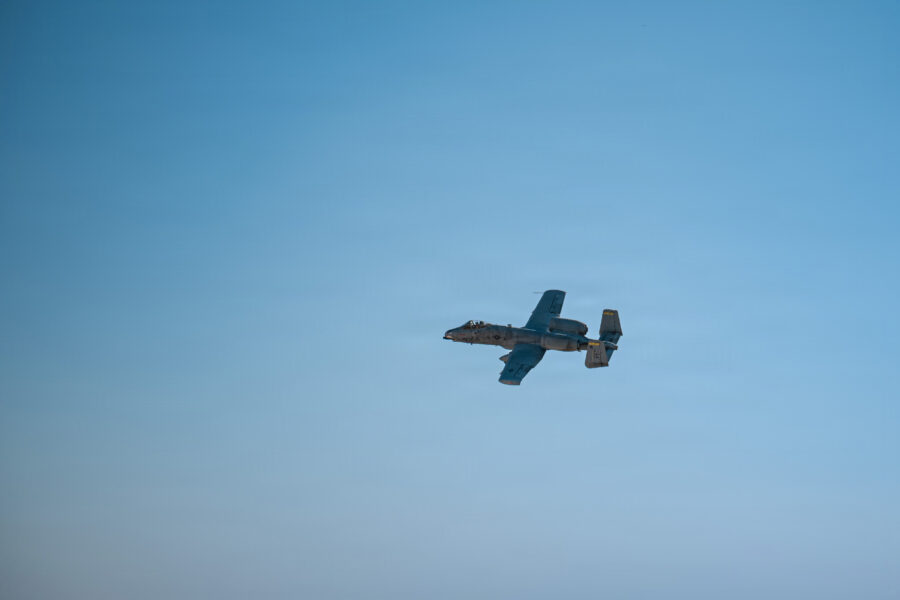
A-10s have already been active in the Persian Gulf and Strait of Hormuz during the U.S. conflict in Iran. The slow-moving attack plane, which provides close air support, can attack fast-moving gunboats like those used by Iran’s Islamic Revolutionary Guard Corps.