


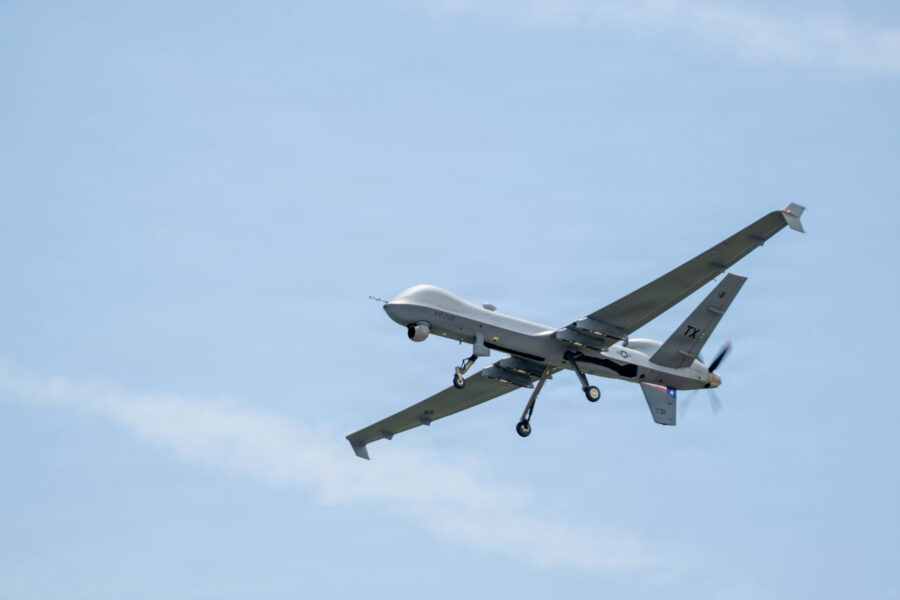
Air Force Chief of Staff Gen. Kenneth S. Wilsbach recently called the MQ-9 Reaper the “most valuable player” of Operation Epic Fury. Now the Senate Armed Services Committee wants the Air Force to build up its Reaper fleet.
The SASC approved its version of the 2027 National Defense Authorization bill June 11 with a measure directing “the Secretary of the Air Force to limit divestment and to submit a report and briefing on the MQ-9 aircraft, while directing the MQ-9 to increase inventory by 2028,” according to a summary provided by committee staff.
The Air Force had 182 MQ-9s as of last October, split 158-24 between the Active and National Guard fleets. But losses have mounted over the past nine months. Today, there are only about 135 aircraft, Lt. Gen. David Tabor, Air Force deputy chief of staff for plans and programs, testified last month.
Wilsbach said the MQ-9 was by far the most widely used platform against more than 13,000 targets struck during the war. One reason is risk reduction: Because the Reaper is uncrewed, the Air Force can send the drone into higher-threat areas and keep it there on watch, which isn’t possible with crewed aircraft. Attrition is more acceptable when no crews are at risk.
The Air Force wants to replace as many MQ-9s as it can, but options are limited. The MQ-9A production line closed in 2024, and General Atomics, which builds the aircraft, is now offering a larger, improved version dubbed the MQ-9B, that is also more expensive. The company says it has enough parts on hand to build a few more of MQ-9s and there are also some older Reapers that could be reactivated out of the “Boneyard” at Davis-Monthan Air Force Base, Ariz.
But GA is also interested in selling its new MQ-9B, which is larger, can carry a heavier payload, and fly farther than the A model.
“We are proactively developing options and offering solutions to the problem,” General Atomics spokesman C. Mark Brinkley said. “The MQ-9B line is hot, with 100 aircraft on order from 10 different nations. It is better in every way than the MQ-9A and is a true asset for America. We know there is a solution to this problem, and we’re prepared to help.”
General Atomics has been offering the MQ-9B since May, and company president David Alexander said those discussions are ongoing.
The Senate Armed Services Committee is not mandating what solution the Air Force should pursue, a congressional official told reporters, preferring to give the Air Force “flexibility” to meet its requirement.
General Atomics cheered the committee’s move. “Congress is keenly aware of the problem, and understands there are solutions available today. It’s great to see everyone moving so quickly to prevent this loss of American capability,” Brinkley said.
Space Editor Courtney Albon and Staff Writer Stephen Losey contributed reporting.