
The Air & Space Forces Association urged congressional leaders this week to fully fund the Space Force’s record-breaking $71.1 billion budget request for fiscal 2027, increase F-35 procurement, and finish revisions to troops’ Basic Allowance for Housing.
With six weeks to go before the end of the fiscal year and a looming midterm election, it is almost certain the Defense Department will start the new fiscal year Oct. 1 under a continuing resolution, freezing funding at the fiscal 2026 level and delaying new programs from getting started.
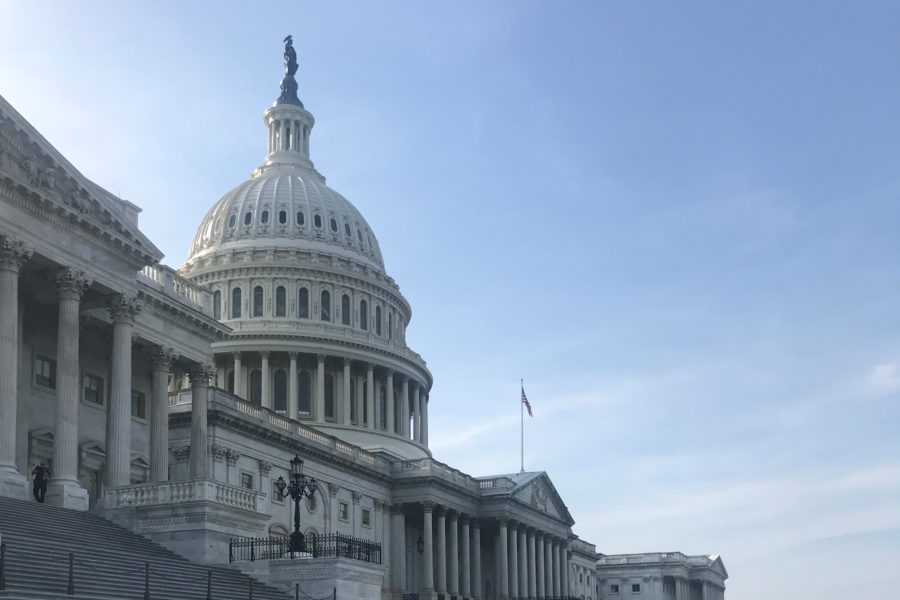
AFA President and CEO retired Lt. Gen. Burt Field and Chair of the Board Kathleen Ferguson addressed Speaker of House Rep. Mike Johnson (R-La.); House Minority Leader Rep. Hakeem Jeffries (D-N.Y.); Senate Majority Leader Sen. John Thune (R-S.D.); and Senate Minority Leader Sen. Chuck Schumer (D-N.Y.) in a letter detailing challenges ahead. Copies were sent copies to the top Republicans and Democrats on the Armed Services, Appropriations Committees,, and defense appropriations subcommittees in each chamber.
Both the House and Senate will return from recess in September with the state of play for 2027 funding in disarray. The Pentagon’s $1.5 trillion request split between two proposals: $1.15 trillion funded through the normal legislative process and $350 billion through reconciliation, a process that only requires a simple majority to clear the Senate, enabling the Republican majority to pass it on a party-line vote. House appropriators largely stuck to that $1.15 trillion request, but the reconciliation now in the works has been cut to $60 billion—mostly for priorities identified in the White House’s supplemental funding request, not the 2027 budget.
That has budget analysts and defense experts openly skeptical that Republicans will be able to push through the $350 billion originally proposed by the White House. Nor does anyone expect Congress to pass the $1.15 trillion regular budget on time. The House and Senate have already passed slightly different continuing resolutions funding the government at fiscal 2026 levels into December and must resolve their differences when they return from recess in September.
The potential impacts for the Air Force and Space Force are huge. More than 6 percent of the Air Force’s budget was supposed to come through reconciliation, and 17 percent of the Space Force’s. That money was meant to fund 14 of the 38 F-35A fighters the Air Force wanted to buy, a new constellation of airborne targeting satellites, and more than half of the construction funds for Air Force military family housing.
AFA’s letter doesn’t advocate for reconciliation or a particular funding approach—just the key priorities included in the Pentagon’s overall request.
“Congress cannot allow the uncertainty of the appropriations and reconciliation process to become a reason to underfund the capabilities and resources our Airmen, Guardians, and military families need,” said Field. “These investments in our Air Force and Space Force are too critical to let slip. Congress must act to ensure our military can meet the pace of threats we face.”
F-35A
The Air Force’s request of 38 F-35As in 2027 is up from 24 in fiscal 2026—but still well short of the 72 experts say is necessary to reverse declines in the Air Force fighter fleet.
AFA’s letter to Congress urges lawmakers to fund F-35A production “at the maximum executable rate possible … not less than 60 aircraft per year.”
To do that, lawmakers would have to add funds to the Pentagon’s request. If that’s not possible, the letter notes that “at an absolute minimum, Congress should provide the full discretionary and mandatory funding requested in the President’s Budget Request for 38 F-35As.”
It’s not just this year’s F-35 production that needs to be addressed, though—Congress is also considering granting the Pentagon authority to negotiate multiyear procurement of F-35s, an arrangement that could allow the military to lock in lower prices for more jets over time. AFA’s letter endorses this proposal, which would be included in the annual defense policy bill.
Space Force
The Space Force’s $71.1 budget proposal is by far the most ambitious in the service’s short history: more than double its 2026 funding. It includes $5 billion for the Resilient Missile Warning and Tracking program, $7 billion for airborne targeting satellites, $1 billion for ground targeting satellites, $4 billion for 22 National Security Space Launch missions, and $1 billion for four new operations centers.
Almost half of the procurement funding in that request was supposed to come through reconciliation, particularly the airborne moving target indicator program—so the uncertainty on Capitol Hill threatens huge portions of the Space Force’s plans.
“As Congress determines whether to provide these resources through regular appropriations, reconciliation, or a combination of the two, there is a significant risk that essential Space Force funding could be omitted, fragmented, or delayed,” AFA’s letter states.
AFA’s leaders urged Congress to fully fund the $71.1 billion topline “regardless of the legislative vehicle used to provide it.”
“The Space Force cannot afford delays in fielding the capabilities and infrastructure Guardians need to deter—and, if necessary, defeat—growing threats in space,” the letter states.
Housing
Among several service member quality of life issues highlighted in the letter, AFA leaders made a particular case for Congress to use its defense budget and policy bills to finish reforms started to the Basic Allowance for Housing, the money given to troops to pay for housing depending on their home station, experience, and number of dependents.
Advocates say BAH can change wildly year to year, is not always aligned with expensive areas where troops are stationed, and the methodology for determining the allowance is outdated.
“AFA urges the Department to complete this work expeditiously and Congress to act on its findings to ensure BAH more accurately reflects the real cost of adequate housing in local markets,” AFA leaders wrote.