


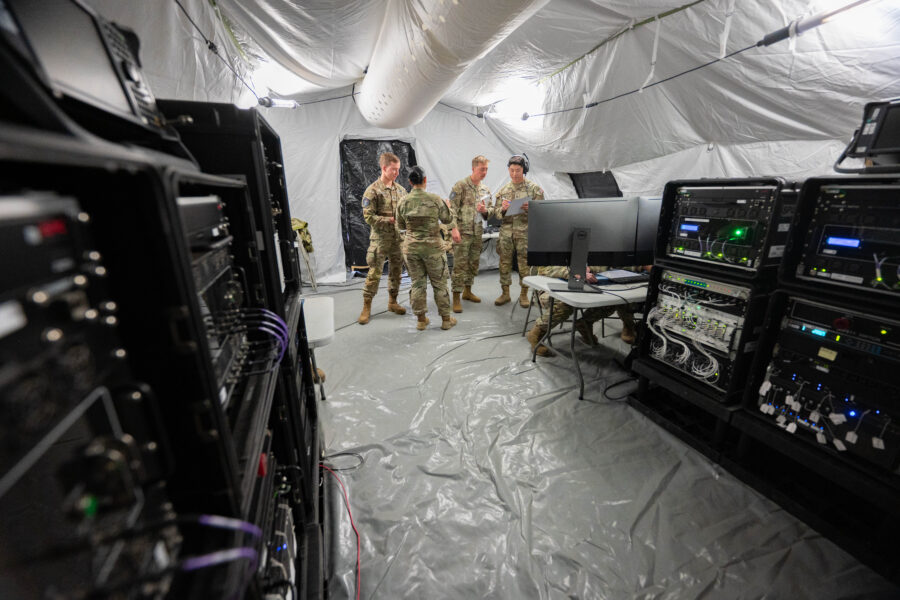
The Space Force activated the 1st Electromagnetic Warfare Squadron earlier this month, a new unit with a few unique characteristics—it is manned mostly by former Air National Guardsmen, and it is the service’s first EW unit to be equipped with two different weapons.
Combat Forces Command said in an Aug. 14 release that the squadron activated Aug. 3 at Peterson Space Force Base, Colo. The squadron falls under Mission Delta 3.
The squadron, which will actually have personnel distributed across five locations, will operate both the new Meadowlands system and the Bounty Hunter weapon. Meadowlands is a mobile, ground-based space electronic warfare system made by L3Harris Technologies that can temporarily detect, identify, deny, disrupt and degrade adversary satellite communications and radars. Bounty Hunter is a kind of listening post and defensive EW system used to detect, characterize, geolocate, and report electromagnetic interference and signal jamming that aims to strike U.S. and allied satellite communications.
Combat Forces Command announced operational acceptance of Meadowlands in June, Air & Space Forces Magazine previously reported, meaning it can be used in combat missions. Meadowlands is actually a “critical upgrade” to the Counter Communications System, as it is both mobile and smaller, Space Force officials said at the time.
Bounty Hunter has been around in some form since the early 2010s and was put into operations in U.S. Pacific Command in 2018 and U.S. Central Command in 2019, hitting initial operational capability in 2020. It has gone through upgrades of its own, officials said last year.
“Combining these functions and systems within single squadrons creates a cohesive combat power and can enable better execution of both missions,” said Charles Galbreath, a retired Space Force colonel and director of space studies at the Mitchell Institute’s Spacepower Advantage Center of Excellence.
The squadron is one piece of a larger EW puzzle that’s critical to space operations.
“Since the command and control of satellites and all information from those satellites travels the electromagnetic spectrum, maintaining spectrum superiority is critical to the Space Force and the preservation of space superiority,” Galbreath told Air & Space Forces Magazine.
In June, Air & Space Forces Magazine reported that USSF wants five new Space Electromagnetic Warfare Tactical Operations Centers. Space Force officials announced last September at AFA’s Air, Space and Cyber Conference that Mission Delta 3, which includes the 1st Electromagnetic Warfare Squadron, had opened the first SEWTOC in Colorado Springs, Colo.
USSF officials did not immediately respond to an Air & Space Forces Magazine query on August 17.
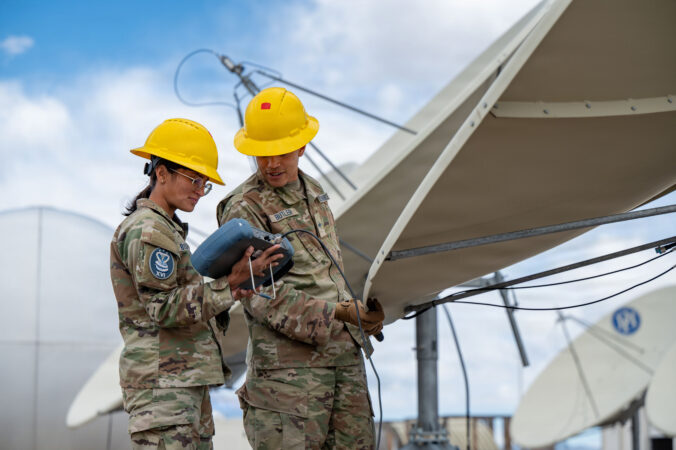
Seasoned Personnel
While the squadron is new, its Guardians are not.
“Our competitive edge is the pairing decades of seasoned EW mastery with the innovation of our newest Guardians,” Lt. Col. Danielle Ryan, squadron commander, said in the release. “We are fusing deep expertise with fresh tactics, advancing our spectrum dominance.”
Of the nine space-focused Air National Guard units whose missions were transferred into the Space Force this past October, five were electromagnetic warfare squadrons, from Hawaii to Alaska. The Space Force has selected 99 Guardsman from all nine squadrons to transfer to the service in full-time roles, and still others may follow in part-time positions.
“The utilization of former [Air Force] Guardsman into the 1st [Electromagnetic Warfare Squadron] speaks to the talent and expertise that resided in the Guard and Reserve,” Galbreath said. “Through the Space Force Personnel Management Acts, these highly training experts can continue to provide effects within their specialty, but in a new status.”
The act, passed with the fiscal 2024 National Defense Authorization Act, created one military personnel management system that lets Guardians move between full-time and part-time status without the cumbersome, legacy methods that often stalled such moves for members of other services in the past.