
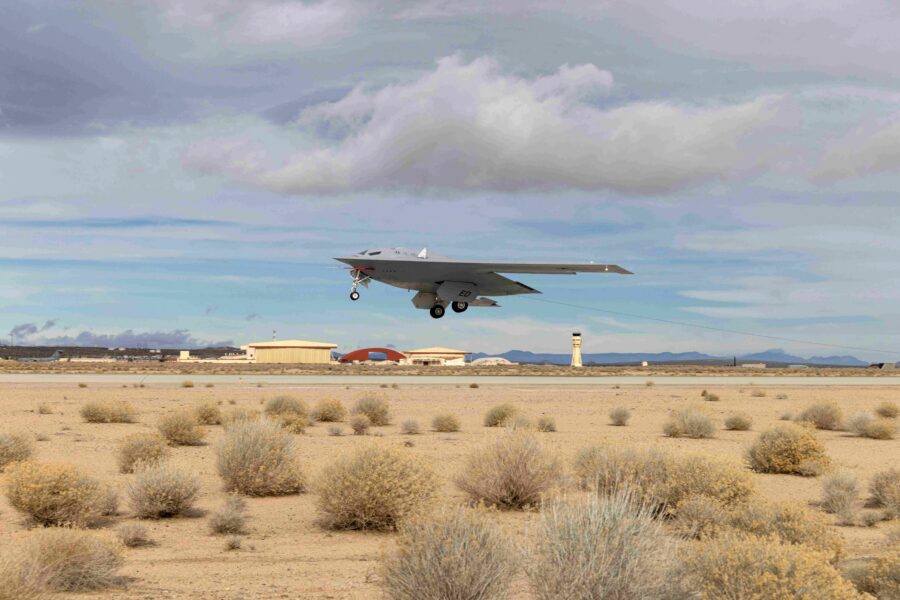
The B-21 Raider stealth bomber flew with both an developmental test pilot and an operational pilot for the first time, a key milestone in its development, the Air Force said June 11.
Beginning operational testing earlier in the developmental process demonstrates the program’s approach to faster weapons development, a senior testing official said.
“We put an operational test member in the pilot seat with an Air Force Test Pilot School graduate in the other,” said Col. Matt Guasco, commander of Air Force Operational Test and Evaluation Center’s Detachment 5 at Edwards, in an Air Force release. “In the history of modern test, we’ve never done that so early in a program.”
Flying with both an operational tester and a developmental test pilot at once blurs the line between the two phases of testing. Developmental testing is used to ensure aircraft fly safely and meet technical specifications, while operational testing focuses on how the aircraft performs its combat missions. The Air Force said the combined testing environment “eliminates the gap between ensuring a jet simply works and ensuring it is ready for combat.”
Gen. Dale White, who oversees the bomber program, said combining the tests for the B-21 “exemplifies the acquisition culture we’re instilling throughout the force.”
“It’s a smarter and faster mindset that leverages modern production and test tools with the proper sense of urgency,” White said. That urgency “challenges old processes and moves us to a more agile acquisition system.”
“In the case of the Raider, it means we’re now that much closer to placing asymmetric lethality into the hands of the warfighter,” said White, portfolio manager for critical major weapon systems including the B-21, the F-47 sixth-generation fighter, the LGM-35A Sentinel nuclear missile, and the fleet of semi-autonomous drones known as Collaborative Combat Aircraft. White reports directly to Deputy Secretary of Defense Steve Feinberg.
The move to bring operational pilots into B-21 testing earlier is the latest example of how the Air Force is trying to leverage operators’ expertise in new weapons programs.
In a July 2024 interview with Defense News, then-Air Force Assistant Secretary for Acquisition, Technology and Logistics Andrew Hunter credited operators with helping to identify a potential shortcoming in early CCA designs. “If [new systems] don’t scratch the operational itch, then we haven’t succeeded,” Hunter said at the time.
Beginning with delivery of the second B-21at Edwards in summer 2025, testers moved beyond flight performance checks and began evaluating critical mission systems and weapons integration.
The Raider Combined Test Force, comprised of Airmen and civilians from the 412th Test Wing’s 420th Flight Test Squadron are leading the testing. AFOTEC Det. 5, and the 53rd Wing’s 31st Test and Evaluation Squadron are also involved, along with representatives of prime contractor Northrop Grumman.
“Bringing operational testers onto the team at this early point now means we can evaluate the bomber’s true combat utility, not just its flying characteristics,” said Lt. Col. Matthew Gray, squadron commander of the 420th and director of the Raider Combined Test Force.
White held an all-call meeting with the test force team June 8, in which he stressed the importance of making sure the B-21 program has the correct resources and is not hampered by bureaucratic holdups. The program must move with “urgency,” he said, without being “reckless.”
“I worry that we don’t embrace urgency,” White told a member of the B-21 team. “I worry that talk is cheap. I worry about the courage to challenge leaders.”