


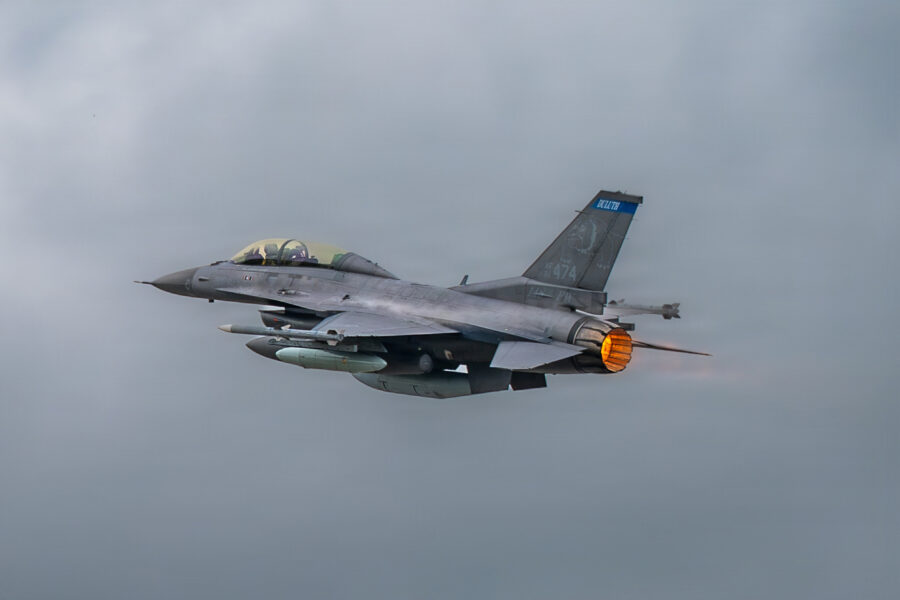
NATIONAL HARBOR, Md.—A fresh National Guard squadron of F-16 Fighting Falcon jets is rotating into the Middle East, seven months into the U.S. conflict with Iran.
Additional F-16s from the Guard are deploying to U.S. Central Command, people familiar with the matter told Air & Space Forces Magazine, likely to replace one or more units in theater. The fresh jets heading to the Middle East include F-16s from the Oklahoma Air National Guard, sources said. The Air Force began rotating combat units in the Middle East earlier this month, with F-35s from the Wisconsin Air National Guard replaced a unit from the Vermont ANG, and F-16s from the Ohio National Guard replacing a squadron based in Europe.
Fighter units’ high operating tempo has wreaked havoc on the Air Force’s intended rotational model over the past year, prompting growing concerns about extended deployments in the Middle East and their long-term implications for readiness. U.S. military officials acknowledge the concerns, which were also flagged in a new Pentagon Inspector General report. AFA’s Mitchell Institute for Aerospace Studies estimates 25 squadrons—around 324 fighters—have deployed so far for Operation Epic Fury.
Those deploying include warplanes based in Europe, where the U.S. maintains three permanently assigned fighter wings flying F-35 Lightning IIs and F-15E Strike Eagles at RAF Lakenheath, U.K., and F-16 Fighting Falcons at Spangdahlem Air Base, Germany, and Aviano Air Base, Italy.
The commander of U.S. Air Forces in Europe-Air Forces Africa, Lt. Gen. Jason T. Hinds, told reporters on Sept. 15 that he and his senior enlisted advisor, Chief Master Sergeant Joshua J. Wiener, have raised their concerns about the high ops tempo with the Pentagon; so has U.S. European Command boss Air Force Gen. Alexus G. Grynkewich, they said.
“One of the concerns the chief and I share all the time is the wellbeing of our men and their family members,” Hinds said during a roundtable at AFA’s Air, Space & Cyber Conference. “That affects readiness, it affects retention, and that’s on the front of our minds. And I’ll tell you: It’s on the front of Gen. Grynkewich’s mind. He’s helped us tell that story back into the Pentagon. Same with the Vice Chief and the Chief of Staff of the Air Force—and I’m grateful for them. We’ve given them some specific examples.”
Aviano’s 555th Fighter Squadron returned home earlier this month, having been deployed since November 2025. In July, the 480th Fighter Squadron at Spangdahlem returned to the Middle East just weeks after coming home when tensions with Iran increased. Some of USAFE’s most stressed units have returned home, and U.S. officials say they will need catch-up periods for upgrades and readiness after aircraft return from the front line.
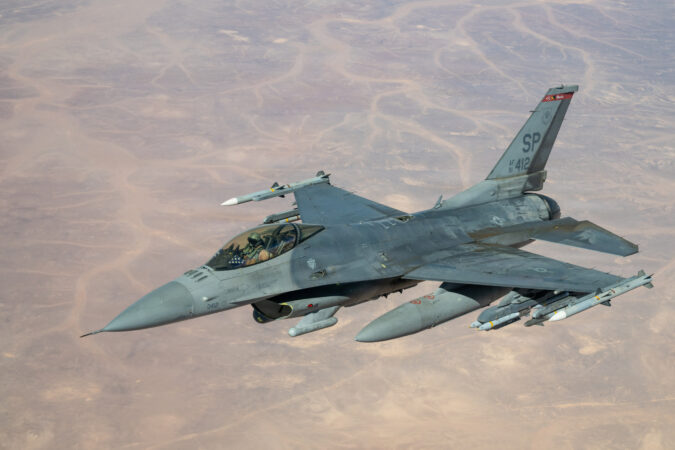
Many of those units have been deployed to the Middle East routinely over the past several years, ever since Hamas’ Oct. 7, 2023, attack on Israel ignited conflict in the region. Those conflicts have extended from Iran in the east, Iraq and Syria to the north, and Yemen to the south. Operation Rough Rider, the U.S. campaign against the Houthi rebels in Yemen in spring 2025, preceded Operation Midnight Hammer in June.
But Hinds said the Air Force has kept up with maintenance requirements for its deployed units.
“I’ve seen really high readiness rates of the airplanes,” he said. “They’re flying their tails off, which means the Airmen that are flying and fixing them are getting a lot of reps and sets of doing their core jobs.”
Yet keeping up the intense rate of deployments could have an impact on future retention, Hinds said. “I’ve seen some of our Airmen where they’ve been deployed to CENTCOM,” he added. “They come back home, and then shortly there shortly thereafter they deploy to CENTCOM again or elsewhere.
“There’s a lot to think about, how you do that effectively to keep them motivated still,” he added. “They’ve been through a lot, things that I’ve never experienced. I’ve never experienced a ballistic missile blowing up 50 feet from me, right?”