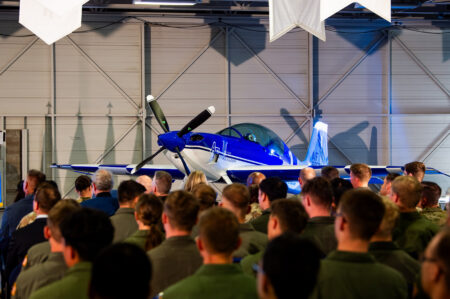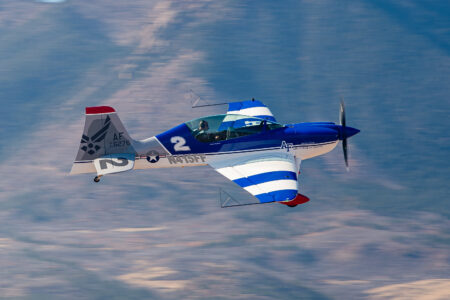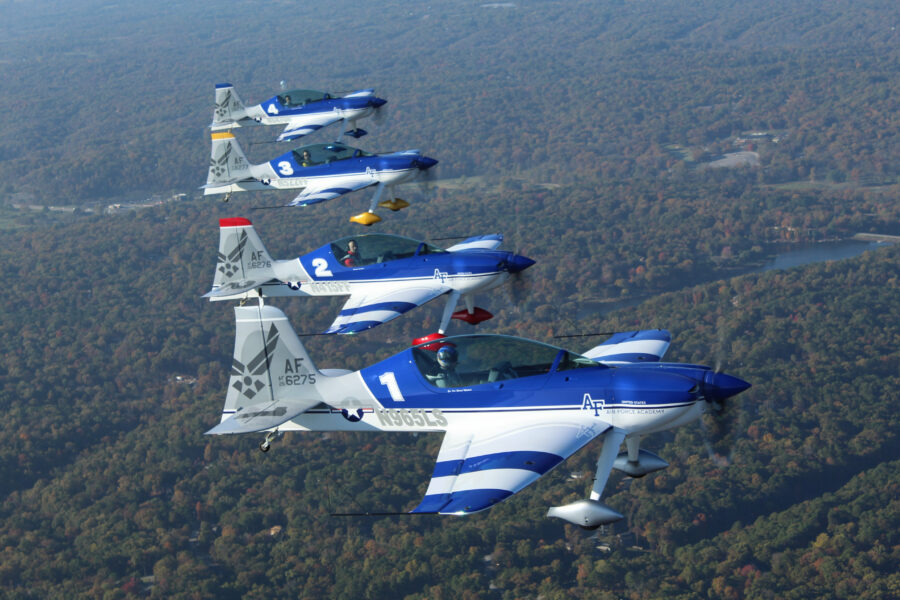
The U.S. Air Force Academy debuted the service’s newest aircraft Nov. 12: the T-19A Kestrel.
Based on the GB1 Gamebird aerial performance plane, the T-19 will bolster the Academy’s advanced airmanship program at a time when leaders hope to get more cadets flying and eventually expand its title-winning “aerobatics” team.
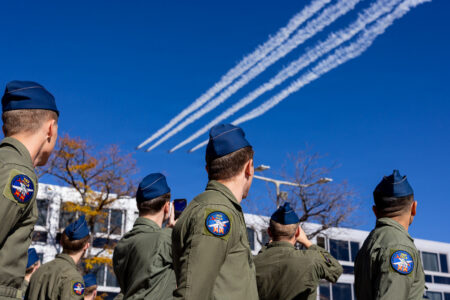
The Kestrel—whose nickname was chosen by a group of cadets—made its public debut in style: four new aircraft flew over the Academy’s noon meal formation, piloted by Air Force Chief of Staff Gen. Kenneth S. Wilsbach; USAFA Superintendent Lt. Gen. Paul D. Moga, Provost Brig. Gen. James Valpiani, and Lt. Col. Evan Backes, one of the initial cadre chosen from Academy staff and the 306th Flying Training Group on campus.
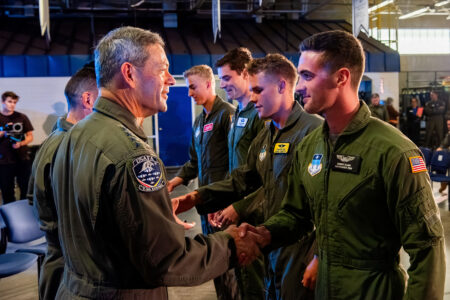
After the foursome landed, they ceremonially handed over the keys to four cadets, one from each class.
“These aircraft will give cadets an opportunity to further develop their airmanship and will ultimately establish a competitive flying team to inspire future Airmen,” Wilsbach said.
The four aircraft were donated to USAFA, officials said, with the whole process only taking 10 months to go from initial idea to delivery. In a statement, Air Force Secretary Troy Meink touted the T-19A’s potential in better preparing Academy cadets for pilot training—just under half of the most recent graduating class at USAFA were selected to attend pilot training after graduation.
The Academy has two main airmanship efforts—the soaring program where cadets teach each other to fly gliders, and the powered flight program, where cadets fly in T-53A Kadet II with a rated officer and can have the opportunity for solo flights. Both have an associated competitive team, but to date, USAFA’s aerobatics team has only flown gliders.
The T-19A has completed military certification flights and is cleared for USAFA operations, the Air Force said. Moga, who took over as superintendent in August, said the initial cadre will serve as the primary demonstration pilots while also developing and executing an aerobatic training curriculum. The long-term plan is to establish a competitive aerobatics team.
“This aircraft will provide an opportunity to train our cadets in ways that were previously not possible,” Moga said. “We will strengthen their aviation skills and develop the confidence, discipline, and leadership required of future Air Force officers.”