
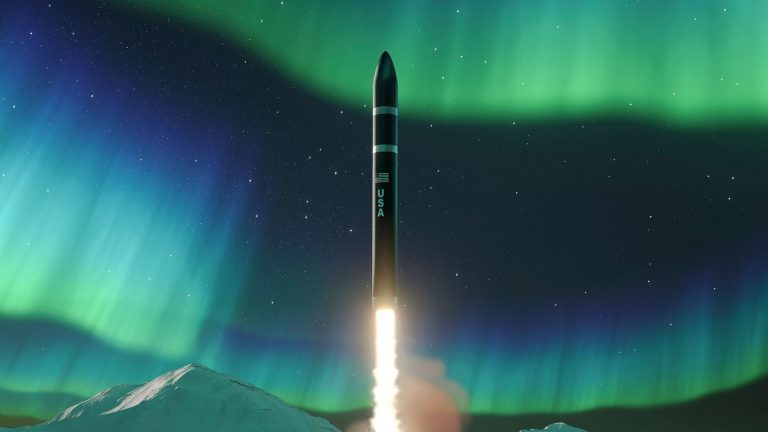
Lockheed Martin on June 1 opened a new assembly facility in Courtland, Ala., where it will produce a new interceptor meant to protect the U.S. from intercontinental ballistic missiles.
The facility will house a digital-centric production line for the Next Generation Interceptor that company officials say can be expanded and reconfigured based on Pentagon demand.
“We have built it specifically with the intent to expand the footprint of the production facility,” Jonathon Caldwell, Lockheed’s vice president and general manager for strategic and missile defense systems, told reporters May 29. “Because [NGI] was born digital, was designed in a digital space with modern manufacturing techniques in mind, including automation and industrial scale, we can rapidly scale the facility up to handle future quantities.”
The Missile Defense Agency awarded the company a $17 billion contract in 2024 to develop and deliver 20 NGI interceptors, which will replace the existing Ground-Based Midcourse Defense System with a modern network of radars, interceptors, and other equipment. Caldwell declined to discuss the potential production capacity of the new facility or the potential growth rate, but said the company “anticipate[s] that there will be a request for increased production rate, and we’re prepared to do that in a timely manner.”
The system is likely to play a major role in the Defense Department’s efforts to develop an advanced missile defense shield called Golden Dome that will link sensors, defensive systems, and interceptors across multiple domains. The Pentagon is requesting nearly $18 billion for the effort in fiscal 2027 and plans to spend at least $185 billion on the program.
MDA Director Lt. Gen. Heath Collins told lawmakers in April that NGI is on track to transition from the design phase by the end of this year, following the completion of a design review in December. From there, the program will move into qualification testing with an eye on initial deliveries in 2028 and the start of flight test in 2029.
That timeline reflects an 18-month delay the agency disclosed in 2025, which it linked to supply chain disruptions and issues with the solid rocket motor design. Collins said he continues to closely watch potential risk with some components—namely the solid rocket motor, inertial measurement unit, and some sensor systems—but is pleased with the progress the program has made over the last year.
“We have no open major liens against the design of the system, which is a plus at this point in time of the program,” Collins said during an April 27 hearing with the Senate Armed Services strategic forces subcommittee. “We are working to buy down those risks and move forward as quickly as possible.”
For Lockheed’s part, Caldwell emphasized that the company has been focused on addressing technical risks and has seen improvement over the last year.
“I believe we have done a rigorous job of burning down the technical risk of the program,” he said. “We’ve had a number of successful test events over the last 18 months with almost every element of the system that are showing that we’re on a good path technically.”
Lockheed’s new assembly building is part of a broader, $250 million investment in expanding its missile defense footprint in northern Alabama, Caldwell said. In May, the company unveiled a new facility in Troy, Ala., where it will quadruple production of the Terminal High Altitude Area Defense system for the Army. That follows an agreement Lockheed and the Pentagon announced in January to grow THAAD production from 96 interceptors per year to 400.
“It’s just another drumbeat in a long series of activities that are happening,” Caldwell said. “Lockheed Martin is committed to building scaled industrial manufacturing systems to bring these missile defense systems to the field at a time of need.”
