
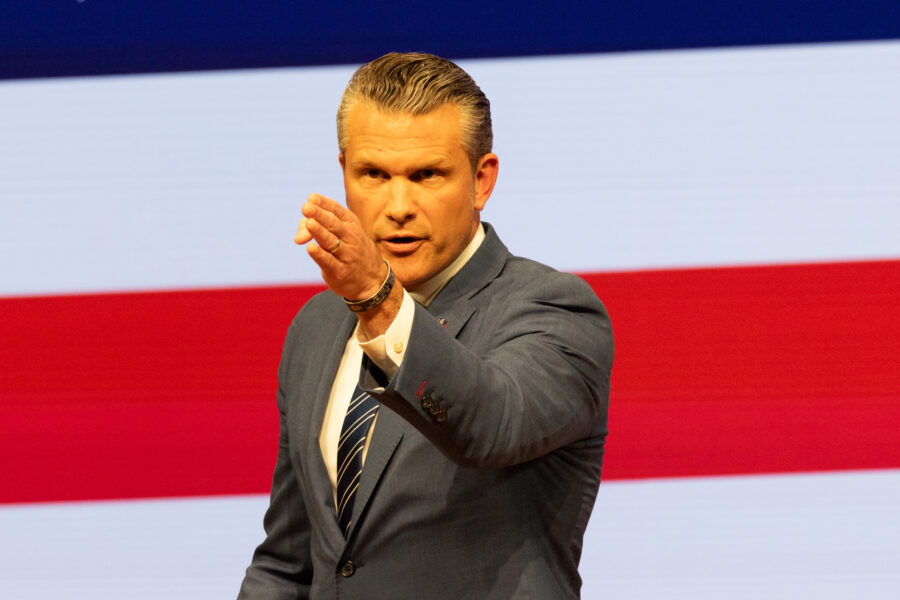
Secretary of Defense Pete Hegseth made a surprise trip to Venezuela to sign an agreement reestablishing military ties between the two countries.
Venezuela state TV broadcast video Nov. 18 of Hegseth greeting acting President Delcy Rodriguez at the presidential palace in Caracas. The new accord covers military cooperation including training and intelligence sharing.
In a meeting with diplomats and military officials from both countries, Hegseth said Venezuela “has gone from our most aggressive regional threat to a compliant security partner.” The change follows January’s Operation Absolute Resolve, in which U.S. forces captured Venezuelan President Nicolas Maduro and his wife and carried them back to the U.S., where they are incarcerated awaiting trial.
Establishing a new U.S.-Venezuela defense accord will enable the two countries “to stabilize Venezuela” and fight drug traffickers, Hegseth said.
Rodriguez voiced hope that the accord would help her country’s armed forces gain “new military technologies” and training.
Air and Space Forces Magazine confirmed Hegseth’s trip hours before the meetings using flight tracking data and calls to people familiar with the matter. Hegseth departed Miami in an Air Force C-32 jetliner en route to Venezuela, but the Pentagon did not issue an official trip notification, nor provide details of the new agreement. A spokesperson for Hegseth did not immediately respond to a request for comment. The Pentagon chief took no media with him on the flight.
Hegseth is not the first senior U.S. official to visit the country since the January raid. Energy Secretary Chris Wright and Interior Secretary Doug Burgum preceded him, as did Gen. Dan Caine, Chairman of the Joint Chiefs of Staff, who made an official visit in June, and Gen. Francis Donovan, head of U.S. Southern Command.
Still, Hegseth said his trip marked the start of a new era. The new pact is a “partnership that will allow America to cooperate with the Venezuelan government and Venezuelan military,” Hegseth said. “Training together, partnering together, sharing intelligence, more defense equipment, and capabilities together.”
The situation in Venezuela remains unsettled, however. Opposition leader María Corina Machado returned to the country in October and no date has been set for the next president election.
The Pentagon’s National Defense Strategy lists security in the Western Hemisphere among the top priorities, and President Trump has repeatedly said that access to Venezuelan oil can mitigate the disruptions to global energy supplies caused by conflict with Iran. Hegseth went further, suggesting during his visit that U.S.-Venezuela cooperation “makes the Strait of Hormuz a non-factor for the Western Hemisphere.”
Venezuela’s oil production suffers from years of neglected infrastructure investment, however, and restoring it will take years.
Hegseth’s trip began with a visit to U.S. Southern Command in Miami and was scheduled to include stops in Columbia and other nations in the region before he returns.