


The Air Force on June 17 identified the eight crew members who died in a fiery B-52H Stratofortress crash at Edwards Air Force Base, Calif., two days earlier.
“It is with profound sorrow and a heavy heart that I can now share the names of the eight extraordinary Americans we lost during Monday’s B-52 crash,” Col. Thomas Tauer, commander of the 412th Test Wing, said in a statement. “They were dedicated professionals, beloved family members and irreplaceable teammates. Our thoughts, prayers and deepest sympathies are with their families, loved ones and fellow airmen, Air Force civilians and mission partners affected by this tragedy.”
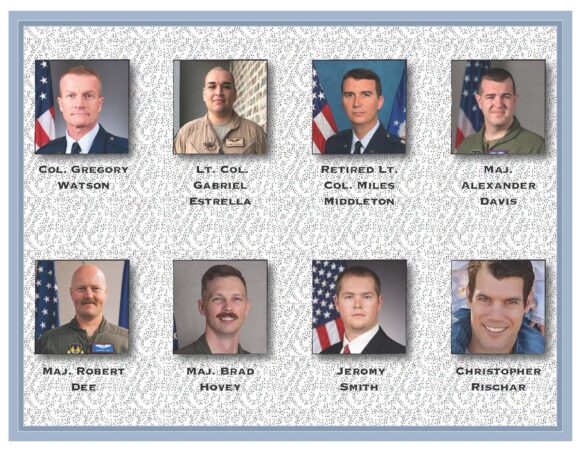
The crew that died were:
- Col. Gregory Watson, 53, a weapon systems officer. Watson was one of two Boeing contractors aboard the bomber and usually worked in Shreveport, La., where Barksdale Air Force Base and its B-52s are located. He was also an Air Force reservist who was assigned to the 10th Air Force at Naval Air Station Joint Reserve Base Fort Worth in Texas.
- Lt. Col. Gabriel Estrella, 40, a weapon systems officer. Estrella was assigned to the Air Force Operational Test and Evaluation Center, Detachment 5, at Edwards.
- Retired Lt. Col. Miles Middleton, 50, a pilot. Middleton was the other Boeing contractor aboard, who worked in Tehechapi, Calif.
- Maj. Alexander Davis, 34, a weapon systems officer at the 419th Flight Test Squadron at Lancaster, Calif., near Edwards.
- Maj. Robert Dee, 40, a pilot assigned to the 419th.
- Maj. Brad Hovey, 35, another pilot assigned to the 419th.
- Jeromy Smith, 32, a flight test engineer at the 419th in Rosamond, Calif..
- Christopher Rischar, 41, a flight test engineer and contractor with JT4 in Lancaster. JT4 provides engineering and technical support to Air Force, Space Force, and Navy test ranges.
“These Airmen were more than coworkers,” Tauer said. “They were friends, mentors, teammates, and valued members of our Edwards and Air Force family. Our immediate focus is supporting the families of the teammates we lost and ensuring that all appropriate resources are available to them during this time of unimaginable loss.”
Boeing released a statement after the crew’s public identification mourning the deaths of their two employees.
“The loss of Miles and Greg is deeply felt across our teams, and our hearts remain with their families, loved ones, and those who worked with them,” the firm’s statement reads.
The B-52 crashed immediately after takeoff at around 11:20 a.m. local time and burst into flames that consumed virtually the entire aircraft. Edwards officials said the same day it was clear that the crash was not survivable.
The bomber was meant to fly a test sortie supporting an effort to upgrade the B-52’s radar, which is part of a broader modernization effort for the six decade-old bomber.
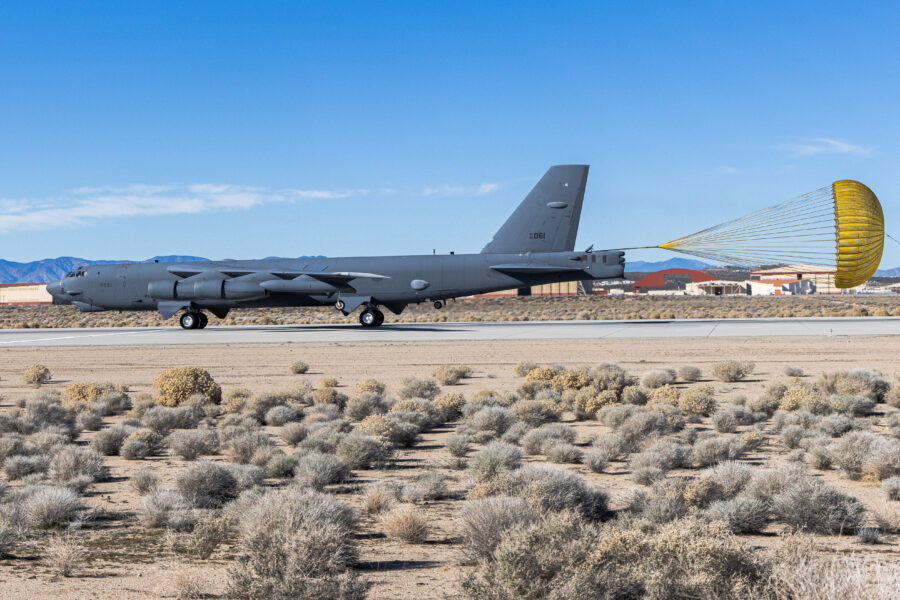
An Edwards spokesperson confirmed to Air & Space Forces Magazine the B-52 that crashed was the bomber that arrived at Edwards in December after flying from Boeing’s San Antonio, Texas, facility after receiving the upgraded radar. Its tail number was 60-0061 and the aircraft was nicknamed “Spirit of Aggieland.”
The airfield at Edwards remains closed while cleanup from the crash continues and will likely stay closed until at least June 18, the base said. Flight test operations at Edwards could resume early next week.
A formal accident investigation board process is now under way, although it could take as long as six months to produce initial conclusions on what caused the crash.