
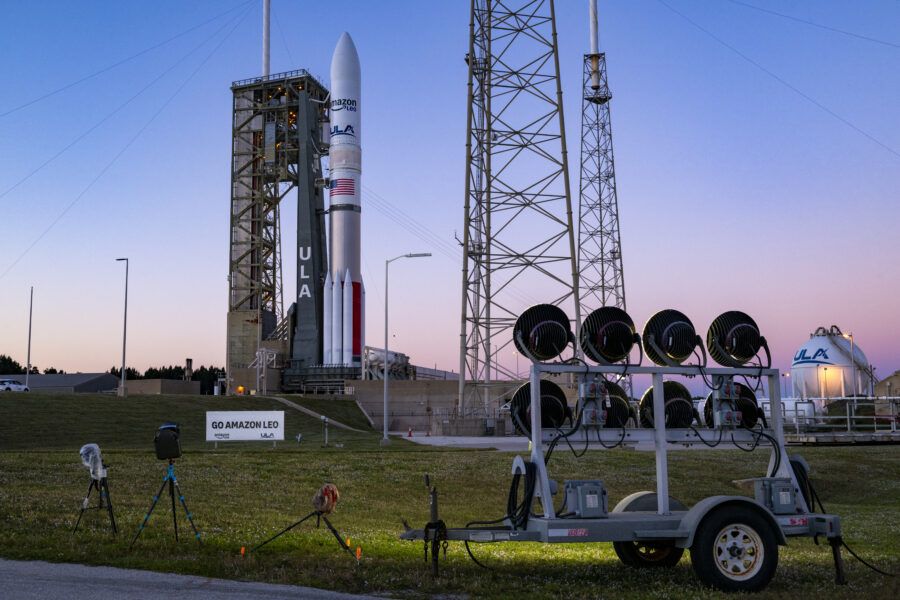
When a United Launch Alliance rocket failed Nov. 15, the explosion did more than destroy one rocket and the 40 Amazon LEO satellites it was carrying: It tightened the bottleneck already constraining Space Force launch capacity and ramped up pressure on ULA.
The Vulcan Centaur launch, the first for that rocket in nine months, followed a lengthy investigation after the nozzles on the Northrop Grumman-made solid rocket boosters suffered an anomaly during a February launch, prompting a grounding. This time, the launch began well enough but went sour about 10 minutes into the flight when, having failed to reach a high enough altitude and develop sufficient velocity, it failed to reach orbit, ULA investigators concluded.
Meanwhile, SpaceX—already the Space Force’s leading launch supplier with a near monopoly on heavy lift—successfully tested its new Starship launch vehicle, further cementing the company as the nation’s premier and dominant launch provider.
Now ULA faces further investigation and the Space Force further launch challenges. ULA statements indicate the problem this time was with the fuel supply to the first stage’s BE-4 rocket engines, built by Blue Origin, so there’s a chance the Space Force’s worries could grow worse. Those engines also power Blue Origin New Glenn heavy-lift vehicle.
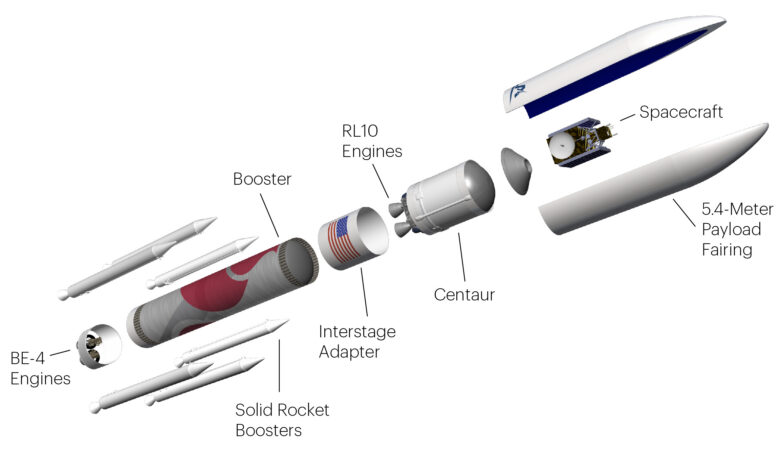
ULA blamed the failure on “inadequate fuel supply from the vehicle to the BE-4 engines, not from the performance of the engines.” That would be good news for Blue Origin, but it leaves cause for concern. Blue Origin’s New Glenn rocket, meanwhile, is already on hold. It hasn’t launched since May, after a rocket exploded on the pad at Cape Canaveral Space Force Station, Fla. Blue Origin has been planning to launch a New Glenn in January 2027, and there is no indication of any change to that schedule.
Still, the incident demonstrates the fragility of a launch ecosystem in which multiple vendors share key components. An issue with the BE-4 engines could threaten two of the Space Force’s three launch options for its most important National Security Space Launch missions.
It also ratchets up “existential pressure” on ULA, said Todd Harrison, a defense space and budget expert with the American Enterprise Institute.
Harrison said the good news is that ULA appears to have resolved issues with Vulcan Centaur’s solid rocket motors. Those devices, built by Northrop Grumman, were blamed for the grounding Vulcan Centaur in February. A Northrop Grumman spokesperson told Air & Space Forces Magazine that their boosters “performed as expected and successfully separated from the Vulcan launch vehicle before [the] anomaly.”
The fact that Vulcan Centaur’s first stage has performed in the past suggests the issue is not a fundamental problem, Harrison said. “It’s comforting that it can work—that whatever failed is not something that was going to fail every single time,” he said. “It was a lower probability event, and it just happened to occur.”
But ULA has bet its future on the Vulcan Centaur. “It’s existential pressure for them,” Harrison said. “This is their only launch vehicle going forward, and every day they’re grounded, they are falling further and further behind on the orders they already have, which is preventing them from taking on any new orders.”
The Space Force voiced support for ULA as an ongoing partner. Brig. Gen. Eric Zarybnisky, the service’s portfolio acquisition executive for space access, said his office remains “fully committed to our partnership with United Launch Alliance and the long-term success of the Vulcan Centaur program. Space access is inherently challenging, particularly when fielding new heavy-lift capabilities designed to support our nation’s most demanding security missions. While the outcome is not what the team worked toward, our focus remains on supporting ULA in a rigorous, data-driven analysis to identify the cause, implement corrective actions, and return to flight safely.”
Meanwhile, USSF has missions it needs to fly. The Space Force has already swapped half a dozen missions from Vulcan to SpaceX’s Falcon 9 or Falcon Heavy rockets, anticipating that ULA could pick up the slack with later missions. But Harrison suggested that strategy may be reaching a breaking point.
“They’re already running up against that limit,” he said. “There are more missions they don’t want to delay, and not much left they can swap. And there’s not much capacity left on the Falcon 9. It’s really operating at almost its max flight rate.”
That raises the specter, Harrison said, that the Space Force and other customers “have to start looking at alternative vendors.”
Right now, however, only SpaceX has launch vehicles cleared to launch NSSL missions. Even if Blue Origin proves it can return to flight with a commercial mission in January, it must still complete the Space Force’s certification process for no-fail NSSL missions. (It will, however, provide an option for less critical missions).
To hedge its bets, the Pentagon is offering $150 million loans to support new rockets from two smaller launch providers, Rocket Lab and Stoke Space. Both are scheduled for first flights in 2027.
Launch remains a challenging business, however, and maturing new launch vehicles rarely happens without hiccups.
SpaceX’s Plans
SpaceX’s Nov. 14 Starship launch was the 15th attempt in three years for the towering 400-foot rocket, emblematic of the company’s approach of frequent testing and rapid refreshes.
The rocket reached low-Earth orbit and deployed its payload of new Starlink satellites, after which its upper stage successfully returned to the launch site in Texas to be caught by mechanical arms on the launch tower. Officials called off an attempt to catch the lower booster stage, but all in all, the mission was hailed as a success.
SpaceX is devoting more time and resources to Starship as it gets closer and closer to full operations—and concurrently backing off its workhorse Falcon that the Space Force and commercial space industry rely on.
According to media reports, the firm has already stopped accepting commercial orders for launches on its Falcon 9 rocket past 2028. The Space Force will have slightly more time, as it can order launches from SpaceX for the current phase of the NSSL program through 2029, with launches taking place up to several years beyond that.
Regardless, however, SpaceX’s Falcon 9 will go away in the not-too-distant future, and Starship isn’t a guaranteed replacement because of its unusual design. When asked by Air & Space Forces Magazine if SpaceX is seeking to certify Starship for national security launches, a Space Force spokesperson deferred to the company, noting “the certification process is initiated by the launch-service provider.” SpaceX did not immediately respond to a query.
Because SpaceX is focused on the continuing buildout of its Starlink constellation, Harrison said, its Starship has a unique “PEZ dispenser” design developed to release the relatively small Starlink satellites in low-Earth orbit, but not conventional large spacecraft typical of many national security launches.
“SpaceX could help ease a lot of the fears by showing a timeline for development of a different Starship version, one that has a payload bay or fairing of some kind that can launch traditional satellites,” Harrison said.
But to meet its own needs and those of NASA and the Space Force could be challenging.
In the meantime, the Space Force’s options are limited. “The government’s got to be looking at what are their options to force SpaceX to keep the Falcon 9 flying for longer,” Harrison said. “You could use the Defense Production Act. I don’t think it’s ever been used like this for a space system before, but you could.”
Under the Defense Production Act, the President can “require acceptance and performance of … contracts or orders ” if he deems them necessary for national security. Essentially, the government could “potentially force a company to accept new work,” Alan Z. Rozenshtein wrote for Lawfare in February, though the limits of this authority are not well-defined and have not been tested.
Others suggest SpaceX could license its Falcon 9 technology to other companies, such as ULA. But Harrison said that could be tricky given SpaceX’s significant institutional knowledge of the vehicle. The government could also require SpaceX to spin off its Falcon 9 operations into a separate business. But Harrison cautioned that would trigger a lengthy bureaucratic process and may not garner the political support necessary to bring it to conclusion.