


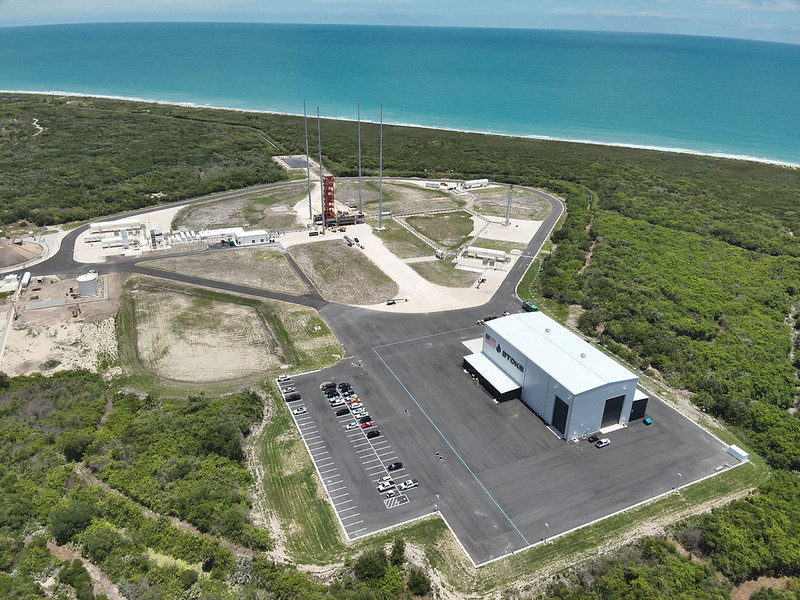
The Pentagon plans to issue a $150 million loan to Stoke Space Technologies, an emerging space launch provider, to help it expand its footprint at Cape Canaveral Space Force Base, Fla.
The Defense Department announced the plan Oct. 26. The loan, managed by DOD’s Office of Strategic Capital, is contingent on Stoke clearing various financial, legal, and technical requirements.
“The proposed loan from OSC, alongside private capital, would support the buildout of the company’s second launchpad at its existing launch complex at Cape Canaveral Space Force Station,” the Pentagon said in a statement. “The OSC commitment to Stoke Space more broadly supports the expansion of U.S. launch capacity, which is required to meet the rising demand for commercial and national security space launch by the United States Space Force.”
The Pentagon established OSC in 2022 to help connect firms developing critical defense technology with private capital. The loan agreement with Stoke is one of several conditional deals OSC has announced this month alone. On Oct. 8, it revealed a plan to issue a $1.5 billion loan to Wolfspeed, Inc. to build advanced semiconductor components and materials, and on Oct. 17, it signed a conditional commitment with Antheia, Inc., to scale its biomanufacturing efforts.
Stoke’s first launch pad, located at the Cape’s Space Launch Complex-14, is slated to host the debut flight of its Nova rocket in “the first part of 2027,” according to the company’s current schedule. That vehicle is a pathfinder for the firm’s future Nova Block 2 rocket—a fully reusable rocket designed to deliver 15 metric tons to low-Earth orbit.
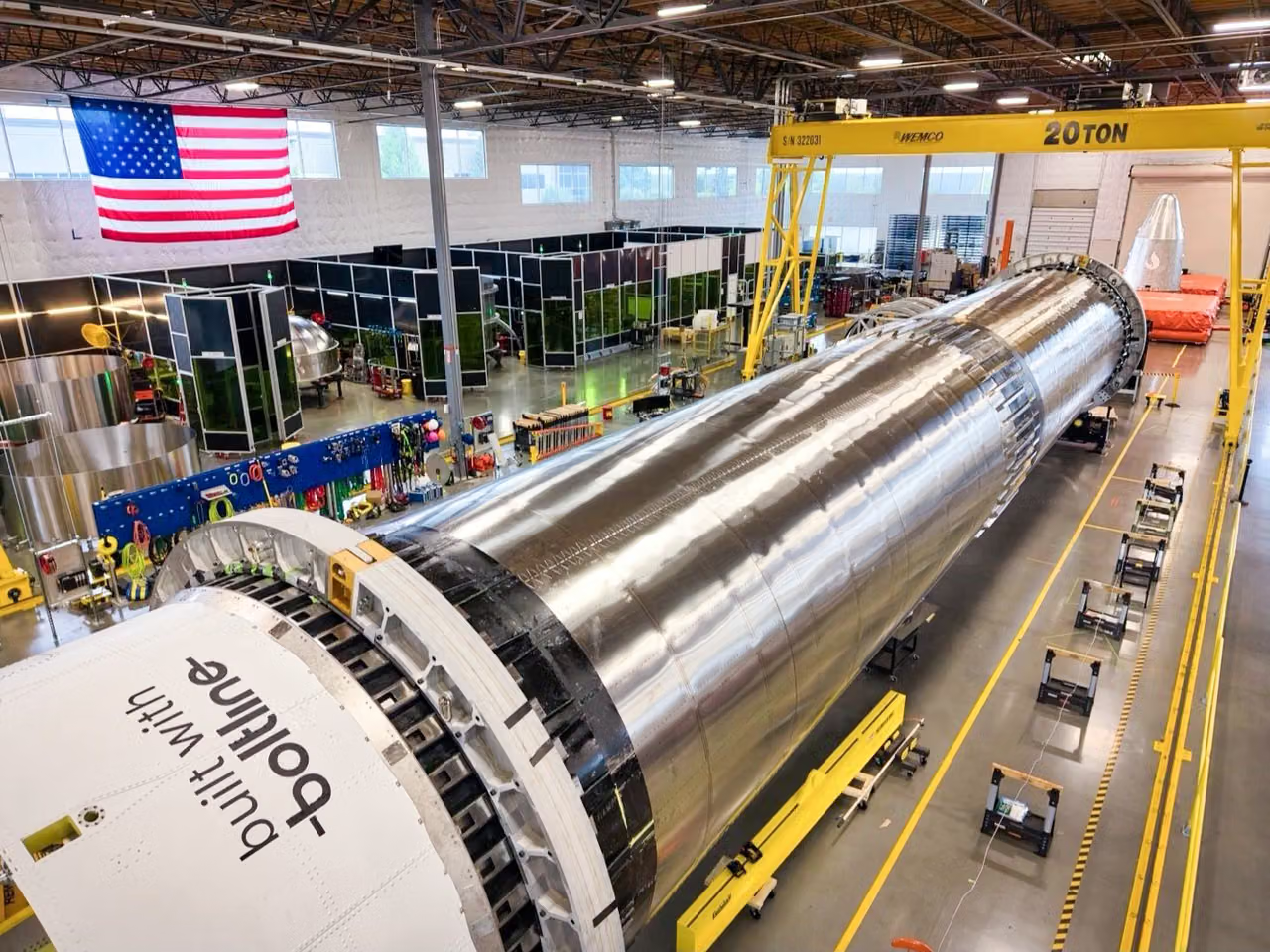
Stoke plans to fly multiple Nova missions in 2027 and 2028 to fuel its plans for Block 2, which it expects will log its first flight in 2029. The company announced in September that it had raised $1 billion in private capital to accelerate development of its Nova line.
The firm hasn’t disclosed when it expects to break ground on the second facility, and a Stoke spokesperson did not respond to questions about those plans or the OSC deal. In September, it said it has started construction of a new payload processing facility that can service both the first Nova iteration, which it calls Pathfinder, and the Block 2 version. The company has also started work on the offshore platform that will recover both rockets after launch.
While Nova has yet to lift off, the Space Force in 2025 tapped the company to compete for missions under its National Security Space Launch Phase 3 Lane 1 contract, which the service uses to fly smaller payloads with less stringent requirements. To be eligible for Lane 1 flights, firms must have flown their rockets at least once; at the time, Stoke projected Nova would launch by 2026.
Space Force officials are eager for new rockets to enter the market amid broader market concerns about a forthcoming launch bottleneck as SpaceX pursues plans to retire its Falcon 9 workhorse and rely on its Starship super heavy rocket to fly mostly internal Starlink missions. Asked during an Oct. 21 media briefing about the service’s concerns about SpaceX’s new business model, Col. Eric Zarynisky, portfolio acquisition executive for space access, said the Space Force has regular conversations with current and potential NSSL providers about their business plans.
“I’m seeing a lot of growth in those new providers, and being able to use those to support the customers that we see coming on in the national security space launch side,” he said. “We’re talking to all of the providers . . . about their future plans and then talking to them about where we see our manifest going. It is an ongoing conversation.”