
The Department of the Air Force failed its latest financial audit in fiscal 2026 along with the overall Pentagon, though officials claim they’re making progress ahead of a 2028 deadline to pass one.
This is also the first time in at least two decades the Department of the Air Force has not published a separate financial report. In a statement to Air & Space Forces Magazine, an Air Force spokesperson said the department plans to resume publishing its own report in 2027.
Those reports are usually hundreds of pages long, detailing the state of the DAF’s General Fund, which supports the Air Force’s core missions and overall operations, and its Working Capital Fund, which provides maintenance services, weapon system parts, and base and medical supplies in support of key functions.
“For the purpose of efficiently focusing resources on achieving clean opinions for both Working Capital Funds and General Fund in fiscal year 2027, the Department of the Air Force completed its FY 2026 financials for inclusion in the Department of War consolidated financial report,” the department spokesperson said, using the alternate approved title for the Department of Defense. “The DAF plans to publish a standalone agency financial report for FY 2027.”
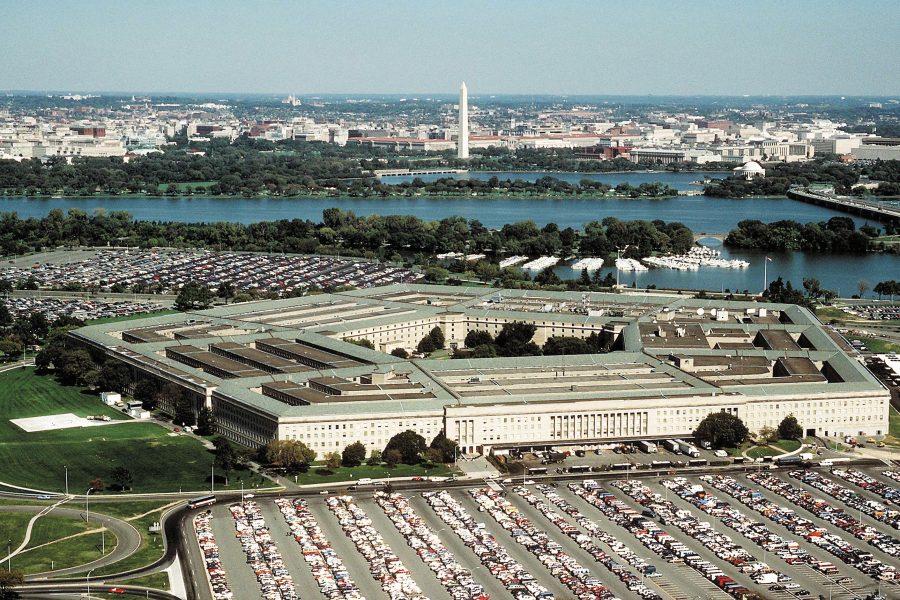
The Pentagon released its 2026 department-wide financial report Nov. 16. For the ninth consecutive year, independent auditors “issued a disclaimer of opinion,” meaning they couldn’t gather enough information from Pentagon management to formulate an opinion on the department’s financial statements.
Congress has given the Defense Department until the end of 2028 to achieve a clean audit.
DOD Comptroller Jay “Jules” Hurst III noted in a Nov. 18 statement that that for the first time, more than half of the Pentagon’s assets and more than 90 percent of its liabilities have or will by February 2027 achieve clean audit opinions.
In a Nov. 12 call with reporters, Hurst also said the Department of the Air Force in particular hopes to record clean audits for both the Working Capital Fund and General Fund in fiscal 2027. That would be a year ahead of schedule for the Working Capital Fund, but a year behind schedule for the General Fund; Air Force leaders had previously targeted 2026.
The Air Force has never produced a clean audit for either fund since 2008.
Hurst cautioned that the 2027 goal for both funds is a reach: “They may not get it in ’27, but they’re likely going to learn a lot of lessons that will set them up for ’28,” he said.
Nevertheless, Hurst said that Ernst & Young, the independent public accounting firm which audits the Department of the Air Force, seemed “optimistic about the Air Force’s progress” in a recent meeting.
“On the Working Capital side, a lot of that focus is going out and doing inventory counts across the country of Air Force assets held in the Working Capital Fund, to making sure those inventories are right, and then of course, valuing those inventories,” Hurst said. “That’s really the secret sauce for the Working Capital Funds, that’s the bulk of the assets.”
The General Fund will require more work, Hurst said, but auditors also remained “optimistic about that.”
The Pentagon said the Air Force is making progress on both accountability for its assets, as well as accounting and valuation of its transactions. But challenges, such as antiquated systems, remain.
In the past, the Air Force’s financial statements have noted “material weaknesses,” or major issues identified by Ernst & Young. The fiscal 2025 financial report, the most recent one published, identified 13 material weaknesses.
The Pentagon is moving away from that metric.
“That’s not a key part of our strategy now, and so it’s no longer an important metric for the department, at least during this two-year surge to get a clean opinion,” Hurst said.
Once the Pentagon gets a clean audit opinion for the first time, Hurst said, it will once again focus on solving material weaknesses “by creating controls and modernizing systems.”
“But for now, it’s not something we’re going to assess ourselves over the next two years,” he said.
The Department of the Air Force reported $261.2 billion in gross operations costs, or $243.5 billion in net cost of operations when $17.7 billion in earned revenue was factored in. The Air Force’s net cost of operations made up more than 24 percent of the military’s overall roughly $1 trillion net cost of operations.
The Pentagon report said the Air Force’s Working Capital Fund “lacked effective design and control activities to prevent and detect material misstatements,” and “did not have a plan or policy to value its inventory.”
As a result, the net inventory balances for the Air Force’s Working Capital Fund “may be inaccurate, unsupported, and incomplete,” the report states. Two other major DOD organizations, the Army and the Defense Logistics Agency, are in the same boat.
The report recommended the Pentagon comptroller office use Joint Task Force-Audit—a newly launched initiative to coordinate work of the audit process—to make sure those Working Capital Funds correctly record inventory transactions and track data.
The report also said the Air Force’s General Fund management didn’t properly support its opening balances and lacked controls to ensure operating material and supply records were complete, accurate, and properly reconciled. Auditors recorded the same issues with the Army and Navy.
The report said the Air Force has “under-executed programmed flying hours” and hasn’t consistently met its minimum aircrew readiness requirements, which makes recovering its readiness a top priority. The report said the Air Force is committed to fund 93 percent of its weapon system sustainment requirements across 110 fielded weapon systems, or $22.6 billion. The Air Force is also on track to fully fund its executable flying hour program, the report said.
The Air Force has the opportunity to rebalance its readiness around weapon system sustainment, training capacity, and executable flying hours, the report said. If the department more effectively aligns its sustainment, training, and operational demand, it said, it can improve aircraft availability and make more progress toward meeting its readiness standards.
But the combination of aging fleets, rising sustainment costs, and industrial base constraints run the risk of stalling the Air Force’s ability to boost flying hours and training, the report said. The Air Force needs to protect stable, multiyear weapon system sustainment funding, set operational demands according to realistic aircraft and maintainer capacities, and expand the industrial base’s support for parts, depot availability, and maintenance.
The report also says creating a fleet of modular, semi-autonomous Collaborative Combat Aircraft fighter drones has the potential to accelerate the Air Force’s ability to achieve affordable combat mass. But speeding up the CCA program too quickly without balancing sustainment of the F-15, F-16, F-22 and F-35 legacy fighters, which the Air Force still relies upon for the bulk of its airpower, could create near-term capability gaps, the report said.
The comptroller’s office suggested the Air Force phase CCAs into the field in deliberate increments to mitigate those risks. The Air Force should also maintain modernization and sustainment funding for current fighters and enforce modular integration standards to reduce schedule and interoperability risks, the report recommended.