
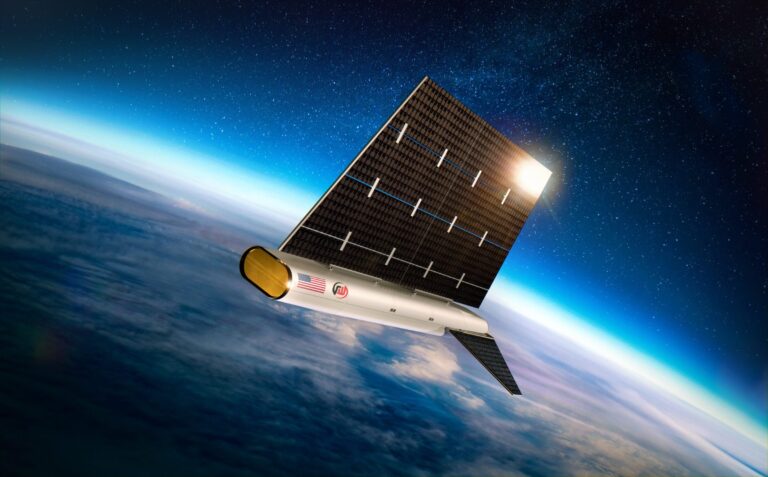
As commercial companies, universities, and research agencies develop new approaches to operating satellites at lower and lower altitudes, the Space Force is taking notice and considering how it might leverage those advances in both the near and long term.
Over the past decade, the Space Force has moved to augment its large, expensive, and highly capable satellites in geosynchronous and medium-Earth orbit with proliferated constellations of smaller, more affordable satellites in low-Earth orbit. The Space Development Agency has started fielding communications and missile warning satellites to LEO, and Space Systems Command is exploring options to launch positioning, navigation, and timing capabilities there.
That military migration to LEO has benefitted from the commercial companies who moved first and proved that fleets of small, relatively cheap satellites could provide viable capability for their customers. Now, as the broader space industry begins to set its sights on even lower altitudes, known as very low-Earth orbit or VLEO, the Space Force is weighing how it, too, might operate in the regime.
While the service hasn’t made any decisions about whether or when it will start launching satellites there, Deputy Chief Science Officer Gillian Bussey said the Space Force characterizes VLEO as an emerging area of interest.
“Fundamentally, when we look out to the future force, there is a place for VLEO,” Bussey told Air & Space Forces Magazine. “I can see it fitting into the overall architecture, but the question is to figure out exactly how and what.”
The space community defines VLEO as roughly between 150 and 350 kilometers above Earth, though some argue it extends slightly further in either direction. Conditions can vary significantly within that range, but generally, space operators have avoided sustained operations due to the challenges of flying there. The presence of atomic oxygen makes VLEO corrosive to most satellites and components, and the density of the air contributes to extreme atmospheric drag, requiring novel propulsion solutions to maintain altitude. It also makes satellites difficult to track.
But flying at lower altitudes has benefits too: faster communication and data transmittal, more precise positioning, and higher-resolution imagery, whether sensors are observing events on Earth or looking up at activity in higher orbits. VLEO satellites could also support the aims of the Pentagon’s Golden Dome program, augmenting existing missile warning, tracking, and defense capabilities and perhaps even acting as space-based interceptors.
Even the extreme conditions in VLEO can carry some upside. The region is often described as self-cleaning because the drag environment causes debris to naturally de-orbit within weeks rather than stick around and create the types of hazards that exist in LEO today. The same atmospheric density that causes drag also partially absorbs radiation, leaving satellites less exposed. That should make them cheaper to build and buy and, crucially, less likely to be impacted by a nuclear detonation in low-Earth orbit—a growing concern after reports in 2024 that Russia is building an on-orbit nuclear weapon.
Those advantages have generated renewed interest in VLEO in recent years, from both commercial industry and the government. Also driving interest: moves by China to put its own satellites there. The country’s state-run aerospace industry is planning to launch a remote sensing constellation to VLEO by 2030. It has also established an industrial alliance to coordinate standards and research in the region.
While the U.S. hasn’t made similar commitments, Western companies and defense agencies have been funding research and demonstrations to better understand how the harsh realities of VLEO impact satellites—testing potential environmental mitigations and validating that projected capability gains are real. Among those innovations are satellites designed to reduce drag, high-power solar arrays, materials engineered to withstand the corrosive effects of atomic oxygen, and air-breathing electric propulsion systems to enable longer-duration missions in the harsher VLEO altitudes.
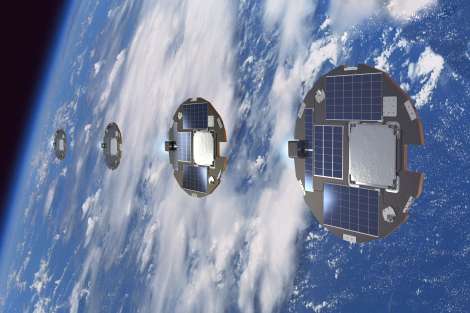
Bussey said many of these efforts are promising and if they prove out, could drive momentum toward VLEO operations within the military. She said her office has fielded inquiries from Congress and the White House on VLEO over the past year, which has generated more discussion within the Space Force.
Full, proliferated constellations are likely longer-term projects and will require further understanding and investment. Bussey stressed that decisions about how and when the service might operationalize a capability are outside of her office’s purview, but said the Space Force needs to better understand the cost and capability trade-offs of operating in VLEO and what altitudes make the most sense for key missions.
“The complicated trade space between altitude and cost and numbers of satellites, it needs to be explored within the Space Force when we look further out to incorporating VLEO into the larger architecture,” she said.
But Bussey said the Space Force could potentially leverage VLEO in the near term for rapid reconstitution. The service has been honing its tactical responsiveness over the last three years, demonstrating the ability to order and launch a payload on short notice—either to replace a degraded satellite or counter a threat with more capacity.
Reconstituting in VLEO adds resiliency, and the size and lower cost of the satellites could give the service more launch options, Bussey said.
“You can use a lot of [commercial-off-the-shelf] components and can be ready to go if something happens and we need to reconstitute,” she said, adding later that “with minimal science and technology investment, the Space Force, if it chooses, can develop a rapid reconstitution capability to enable continued space operations post-[high-altitude nuclear explosion] or massive debris events using VLEO.”
Bussey said that the prospect of China having access to back up capacity there during a catastrophic event that takes out access to LEO is a particular concern for the Space Force.
“The Space Force’s responsibility is to secure our interests in, to, and from space, and that includes all regimes of space where those interests need to be protected,” Bussey said. “China is investing in VLEO . .. I think it creates an unacceptable asymmetry for the United States if China is able to reconstitute and use space, but we are very limited in our ability to.”
VLEO Operations
While the discussion around long-term VLEO operations is a new shift for the Defense Department, flying satellites and other platforms in the lower regions of space is not. In fact, some of the earliest national security space programs resided in lower altitudes.
The Corona program, a joint DOD and intelligence community effort, flew 145 surveillance missions between 1959 and 1972 at an altitude of 100 nautical miles, or 185 kilometers. There, the satellites captured images—mostly of Soviet targets, like missile complexes and nuclear weapons storage sites—and dropped film cartridges down to Earth via a capsule with a parachute. The missions were short-duration, lasting between one and 19 days each.
Jonah Colman, a portfolio lead with the Air Force Research Laboratory’s space warfare directorate, noted that the military still conducts operations at VLEO today, flying and testing ballistic missiles and hypersonic missiles as well as spaceplanes like the X-37B. But those missions—and even the Corona flights—are short-duration, which is a different challenge than the sustained operations the space industry is exploring today.
“The question is more about how much time you are spending in VLEO and what missions you’re doing,” he said.
While the space environment is inherently harsh, the atmospheric drag, atomic oxygen, and even space weather conditions at VLEO are extreme by comparison. Take, for example, drag. A satellite flying at an altitude of around 700 to 1,000 kilometers may see a 3 percent reduction in its total lifetime due to drag; at 400 kilometers, he said, drag could reduce a spacecraft’s service life by double-digit percentages.
Weather variations and solar cycles can create conditions that further complicate that lifespan, and Colman told Air & Space Forces Magazine that more research is needed to understand that impact.
“As you move below that, you could be [losing] half, two-thirds, or three-quarters of your lifetime,” he said. “Understanding the environmental cycles and the timescales on which those things change becomes very important.”
Bussey noted that as the service considers future operations, it will have to weigh the value of proximity that comes with operating at the lower end of VLEO against the propulsion and power needed to sustain those satellites over time.
Many of the projects that industry and DOD are exploring are focused on demonstrating just that: longer-duration missions and the technologies needed to support them.
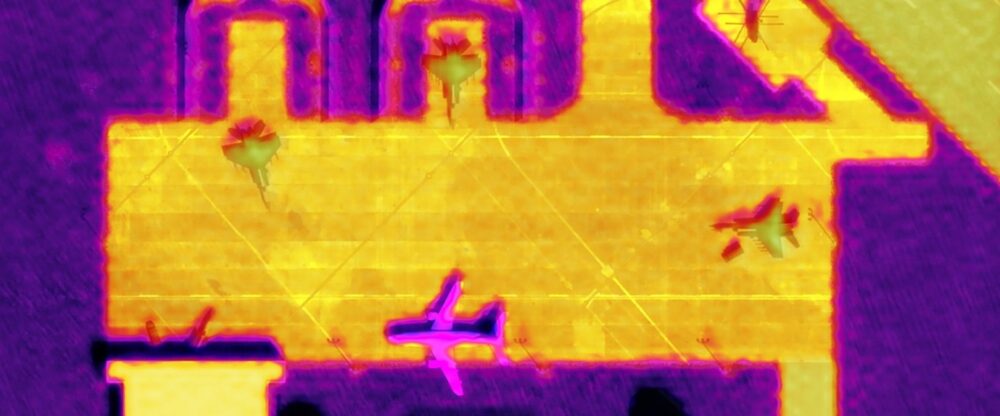
Last year, Colorado-based startup Albedo Space launched a satellite experiment to prove that sustained operations in VLEO are possible—and that spacecraft in the regime can provide high-quality imagery more affordably than the exquisite, multibillion dollar spy satellites the government operates today.
Albedo lost contact with the satellite, dubbed Clarity-1, after nine months due to a radio issue. But it successfully maneuvered from LEO to VLEO and provided data that proved it could operate within VLEO’s extremes for as long as five years, the company said. It captured visual and thermal imagery. The company is now upgrading the satellite’s bus to a higher power configuration, incorporating a new radio, and addressing some of the component issues it faced in orbit. It plans to launch a second mission, Vicinity-1, next year.
The Defense Advanced Research Projects Agency, meanwhile, is working with Redwire and CUA Aerospace to demonstrate air-breathing electric propulsion in VLEO through a program called Otter. Counteracting drag requires thrust and power, which a satellite typically gets through large solar arrays and fuel tanks. But deploying a traditional solar array in VLEO can create more drag and the amount of thrust required for sustained missions makes fuel a less viable option.
DARPA’s idea is to use low-density air as a propellant for the thruster—designed by CUA—without needing an on-board fuel source. The spacecraft, which is based on Redwire’s Sabresat platform, has a flexible solar array configuration designed to minimize drag and power the electric propulsion system.
“Other missions to VLEO have all had a limited duration in the sense that if you’re carrying your own fuel or propellant, when you run out, your mission is over,” Michael Mulqueen, a program manager in DARPA’s tactical technology office, told Air & Space Forces Magazine. “That defines your mission life. With air-breathing propulsion, you’ll never run out of propulsion, so that extends your mission life greatly.”
The agency plans to launch the full Otter mission in fiscal 2028 and fly the spacecraft for at least one year. But DARPA announced Nov. 5 it will also fly a short-duration mission, set to last less than 24 hours, in late 2027 to test the air-breathing technology.
Mulqueen stressed that while the program is moving toward a critical design review and manufacturing, there are still significant risks.
“None of this has been done before,” he said. “There are still technical risks, we’re still doing ground testing as the design matures. I expect to learn things as they go through that and take those learnings and use them to adjust the design.”
Industry’s Inflection Point
Industry leaders told Air & Space Forces Magazine that even though there are still hurdles to clear in VLEO, they expect companies to be flying there in the near future—and that commercial adoption could pave the way for government operations.
Some companies are already starting to make their way to VLEO, with SpaceX perhaps the most prominent firm to reveal plans. In early October, the Federal Communications Commission approved the company’s request to field a 15,000-satellite constellation operating between 326 and 335 kilometers. SpaceX plans to launch the full fleet by 2035. The firm has also started moving some of its existing satellites to lower altitudes—from around 550 kilometers to below 480 kilometers—to avoid collision risks and aid in the deorbiting process.
Spence Wise, senior vice president of business development at Redwire, said a move to VLEO would be a natural continuation of the government’s migration to low-Earth orbit as a strategy to disaggregate missions and build resiliency into its architectures.
“I would say we’re already in the inflection point,” Wise said. “I think even across conversations with the U.S. government and other European governments, we’re seeing the demand and interest to get there as well. … I think very quickly we’ll see them move from that investigation phase to full buildouts.”
Topher Haddad, CEO of Albedo, said he thinks that as the technology proves out and more satellites demonstrated longer duration flight in VLEO, the performance benefits could make it more appealing than LEO.
“In a lot of cases, a VLEO solution can be bid against a LEO solution and meet the requirements in a holistically better way,” Haddad said. “I think we’ll see more VLEO versus LEO as those start to get fielded.”