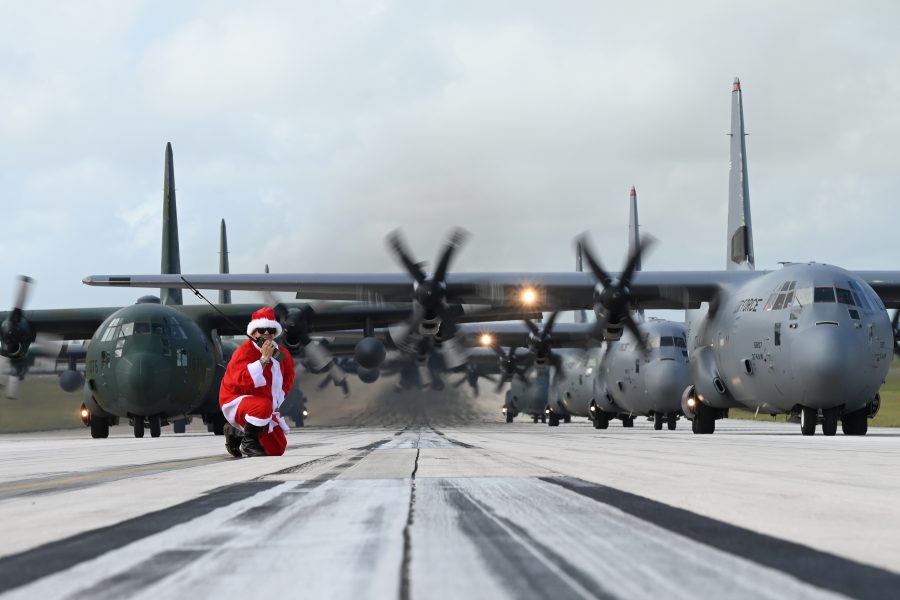
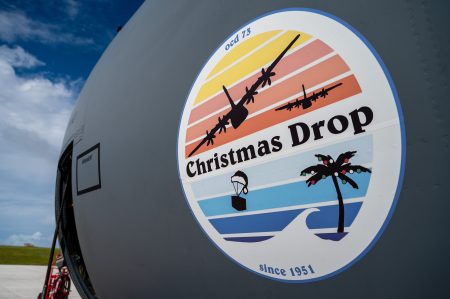
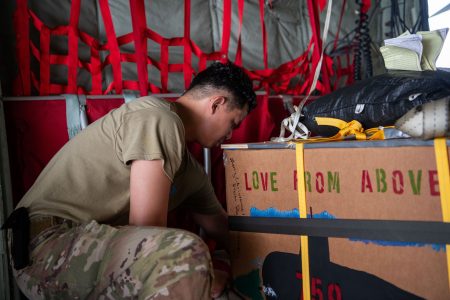
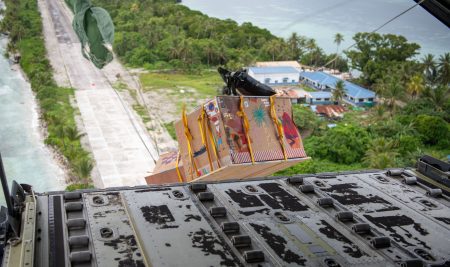
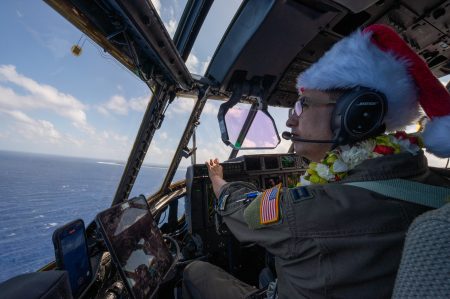
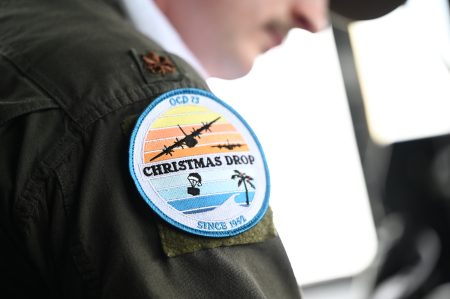
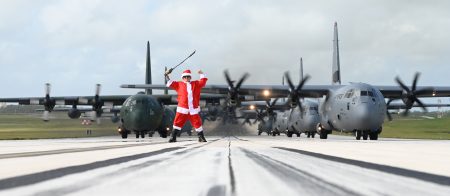
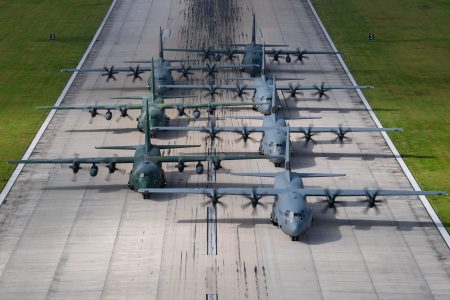
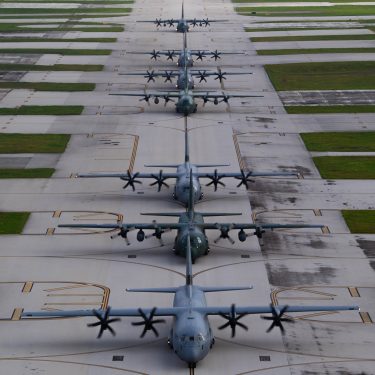
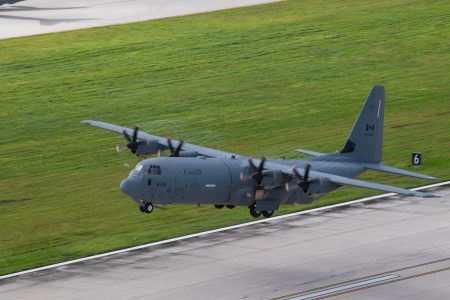
Santa Claus poses in front of a series of multinational aircraft during Operation Christmas Drop 2024 at Andersen Air Force, Guam, Dec. 14, 2024. OCD 24 was designed to enhance trust and increase global stability, security, and prosperity while upholding international law and promoting shared values. (U.S. Air Force Photo by Airman 1st Adasha Williams)
Audio of this article is brought to you by the Air & Space Forces Association, honoring and supporting our Airmen, Guardians, and their families. Find out more at afa.org
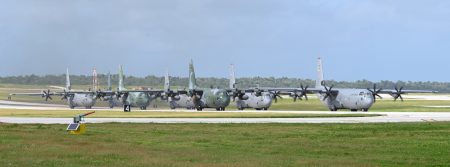
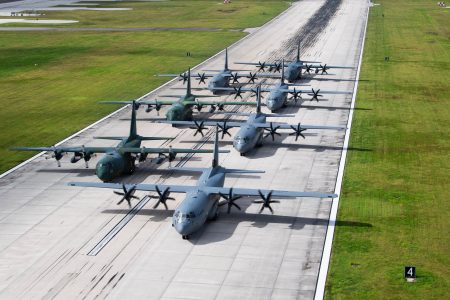
Seven C-130 airlifters from five countries lined up for an “elephant walk” on Guam and then flew alongside each other Dec. 14 to cap off Operation Christmas Drop.
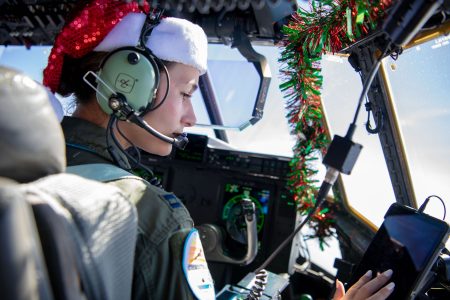
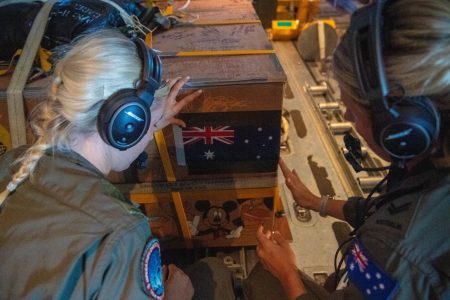
The 374th Airlift Wing at Yokota Air Base, Japan, led the operation. This year, they were joined by aircraft and personnel from the Royal Canadian Air Force, Royal Australian Air Force, Republic of Korea Air Force, and Japan Air Self-Defense Force.
Members of the Philippine Air Force also helped to rig bundles for drops.
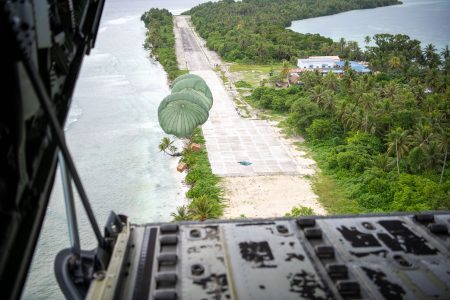
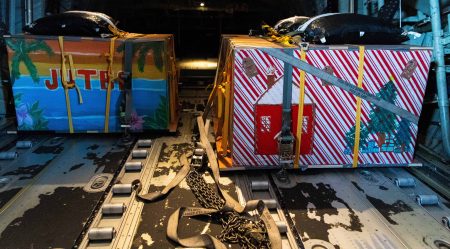
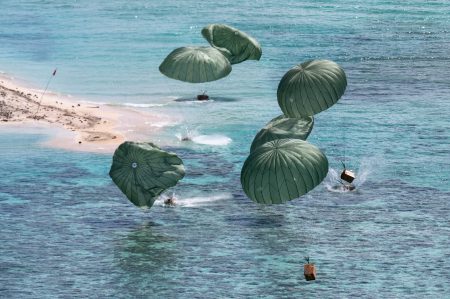
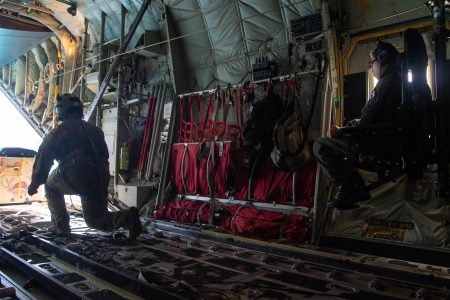
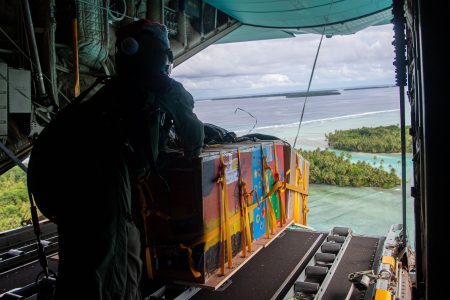
Combined, more than 300 personnel helped drop approximately 77,300 pounds of supplies on more than 58 drop sites over the course of 224 flight hours. The operation ran from Dec. 8-14.
And as has become tradition in the past few years, the participants celebrated the end of the exercise by gathering their C-130s on the runway at Andersen Air Force Base, Guam, for a multinational elephant walk. In 2023, six aircraft from four countries participated. In 2022, seven aircraft from five nations were included.
After that, the crews flew a mission together over the Pacific, practicing airdrops and coordination—highlighting the operational benefits of Operation Christmas Drop.
“Building relationships is critical, especially considering the strategic focus on this part of the world,” Maj. Jon Balfe, commander of the OCD 24 Canadian Detachment, said in a release. “You can’t wait until a crisis happens to figure out how to work together. Flying, planning, and learning from each other now ensures we’re ready when it matters.”
Audio of this article is brought to you by the Air & Space Forces Association, honoring and supporting our Airmen, Guardians, and their families. Find out more at afa.org
BAE Systems has received a contract from Lockheed Martin to install an upgraded Block 4 electronic warfare system into new F-35 Joint Strike Fighters, as well as to retrofit some older jets.
The Air Force has figured out a way for maintainers to inspect what had been a “blind spot” in F-16 engines, after problems in that area led to the catastrophic crashes of two jets in recent years.
The Air Force has begun evacuating stealth fighters, gunships, and special operations planes ahead of Hurricane Isaias expected landfall over the Gulf Coast this weekend.
The Air Force’s B-52 bomber may soon be able to carry up to 20 stealthy long-range anti-ship missiles to strike moving targets at sea, a key capability in a potential fight with China.
A reported surge of MQ-9 Reaper drones to Latin America could widen the scope of intelligence gathering and free up more strike options against cartels in the region, experts tell Air & Space Forces Magazine.
Northrop Grumman has broken ground on a major new production facility for the B-21 Raider, the company and the Air Force announced Oct. 6. The construction comes as a top service official said testing on the bomber is going well in the lead up to its planned introduction into the…
An OA-1K Skyraider II belonging to Air Force Special Operations Command went off the runway while landing at a small Oklahoma City airport Oct. 5 and is waiting to be moved, according to officials and flight tracking data.
More than two dozen F-35 Lightning II fighters are heading to Kingsley Field, Ore., after Air Force Secretary Troy Meink signed the official record of decision to base the jets there on Oct. 5, clearing the last bureaucratic hurdle for the Air National Guard base to host the service’s third…
✓
Thank You!
Check your inbox to verify your email address and finish setting up your AFA account.
★
Welcome Back!
An account with this email already exists. Please log in to continue.
Subscribe to the Air & Space Forces Daily Report
The latest news from Air & Space Forces Magazine, as well as news from other leading publications, delivered right to your inbox every morning!
We’re sorry, there has been an error. Please review your input or try again later.