


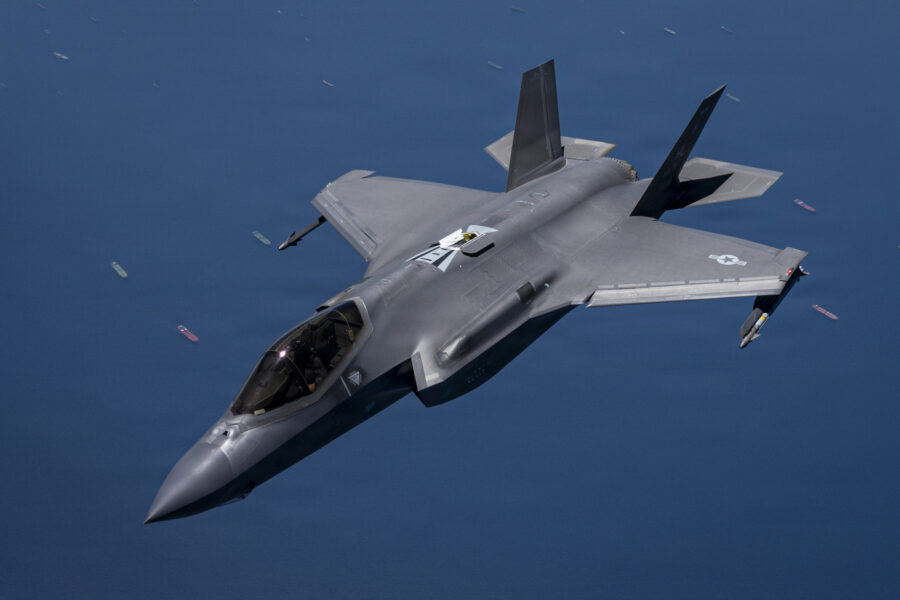
The U.S. and Iran exchanged fire on June 2 in an intense back-and-forth, marking the fifth day in just over a week that the two nations traded blows.
Iran launched drones and missiles at U.S. forces and commercial shipping, and the U.S. responded by shooting down the projectiles and launching airstrikes on Iranian military facilities.
American officials insist that an “ongoing ceasefire” between the two sides remains in effect. But the fresh round of fighting amid the stalled diplomacy between the U.S. and Iran is likely to test both sides’ restraint.
The latest flare-up started June 2 when a U.S. aircraft fired an AGM-114 Hellfire missile to hit the engine room of an empty oil tanker attempting to run the American military blockade of Iranian ports to reach Iran’s Khang Island, a tactic the U.S. also used to disable a separate vessel May 29. The U.S. has fired on a number of ships to disable them at sea, often using aircraft. Those incidents have not typically prompted a significant response from Iranian forces. The U.S. has disabled six vessels and turned around 122 since the blockade began April 13, according to the U.S. military.
But the latest fighting turned into the heaviest tit-for-tat exchange since the ceasefire took hold in early April. In a statement, U.S. Central Command said there were “attempted attacks by Iran across the Middle East.” The command condemned what it called “unwarranted Iranian aggression.”
American officials said Iran launched three one-way attack drones towards commercial ships that were transiting the Persian Gulf. The U.S. shot down the drones. U.S. forces then conducted what it called “self-defense” airstrikes on an “Iranian military ground control station” on Qeshm Island, which is located just off the coast of Iran in the Persian Gulf near the Strait of Hormuz. Iranian military sites on the island have been attacked repeatedly by the U.S. over the past week.
Just “moments” after the drones were shot down, Iran fired ballistic missiles at Kuwait and Bahrain, according to a statement from CENTCOM. Both Gulf countries house U.S. military bases. Two missiles fired toward Kuwait fell short or broke apart in the air. Three missiles launched at Bahrain were intercepted by U.S. and Bahraini air defenses, CENTCOM said. The missiles did not hit their target, according to the American account. Last week, Iran targeted Ali Al Salem Air Base in Kuwait with a ballistic missile, prompting a sharp rebuke from U.S. officials.
Iran’s Islamic Revolutionary Guard Corps blamed the U.S. for the altercation for its attack with a Hellfire on the tanker, the M/T Lexie, which was sanctioned earlier by the U.S. for transporting Iranian oil. In response, the IRGC said it shot missiles at a vessel “belonging to the American-Zionist enemy.”
The IRGC statement added that the subsequent U.S. airstrikes on what it called a “communications tower” on Qeshm Island led it to launch ballistic missiles towards the U.S. 5th Fleet Headquarters, which is in Bahrain, and an air base where U.S. planes and helicopters are stationed, an apparent reference to Ali Al Salem Air Base. CENTCOM said the missiles never reached those facilities.
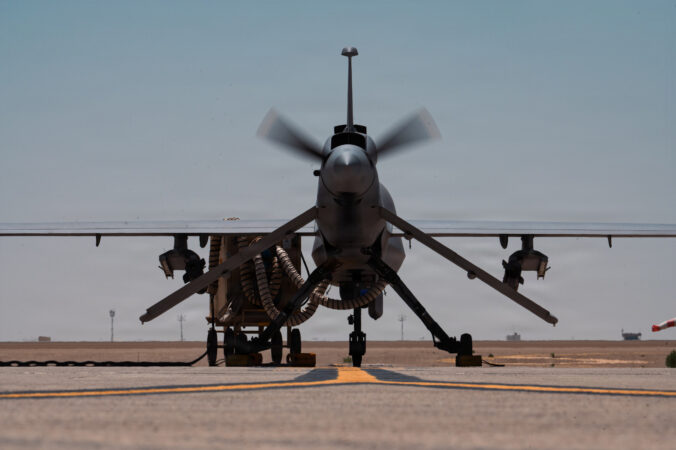
On May 30 and 31, the U.S. launched a series of “measured and deliberate” airstrikes on Goruk, Iran, and Qeshm Island, according to CENTCOM, after Iran downed an MQ-1 drone. U.S. fighters responded by targeting Iranian air defenses, a ground control station, and two one-way attack drones that CENTCOM said posed a threat to commercial ships. The U.S. and Iran also traded blows on May 25 and May 27.
The Iranian salvo did not appear to be the end of the latest matter. Later in the evening, Iran launched yet more drones at Kuwait, according to CENTCOM, further testing the ceasefire.