
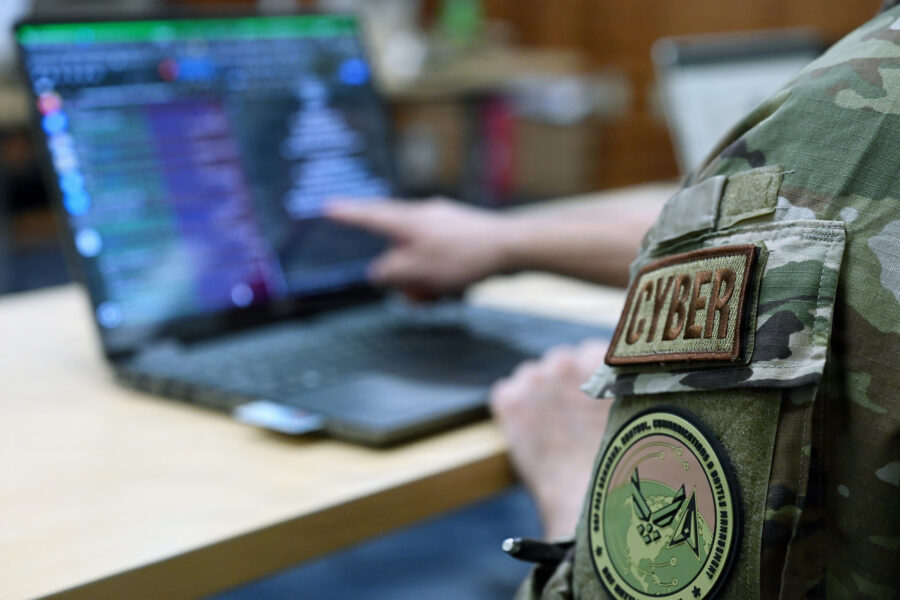
Almost a decade ago, the Air Force created Kessel Run in 2017 as a military-commercial partnership and Airmen-led “software factory” in response to the service’s troubled rollout of the Air Operations Center 10.2.
The name, a nod to the Star Wars movie franchise, references a smuggling route that hero Han Solo bragged about making in “12 parsecs.” It also served as a reminder for Airmen coders to move fast and overcome complex software demands under intense pressure and tight timelines through bureaucratic obstacles, much like the space monsters, asteroids, gravity distortions, and stellar anomalies that often doomed pilots attempting to make the Kessel Run.
The program scored early wins with “Jigsaw,” a cloud-based tanker aircraft planning application, and spawned a network of software factories across the Air Force. NATO adopted Jigsaw in 2020, and planners used the first cloud-generated Air Tasking Order via the Kessel Run All Domain Operations Suite, KRADOS. Personnel also injected real-time software updates for command-and-control work during the chaotic U.S. withdrawal from Afghanistan in August 2021.
A month later, Kessel Run signed a formal user agreement with Air Combat Command that put the fledgling but successful organization into the Pentagon’s software acquisition pathway.
Then, in 2025, Kessel Run shifted from its small teams of Active-duty Coders to a “government-led, vendor-managed” model. This February, KR kicked off its most ambitious efforts yet under the new model, an effort to create the “next generation” of the Air Operations Centers that integrate artificial intelligence, machine learning, and data fusion.
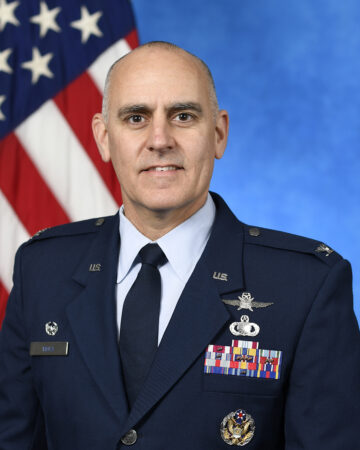
Col. Brian Viola took the helm at Kessel Run in June and is now charged with taking the baton from past leaders while sprinting ahead as the Air Force seeks a modernized AOC to serve as the key nodes in its updated command and control network.
Viola has spent his career at the Air Force Research Laboratory, National Security Agency, and the Idaho National Laboratory, and previously served as commander of the 346th Test Squadron at Joint Base San Antonio-Lackland, Texas, which runs independent operational testing and evaluation of cyber capabilities. He also served as the inaugural leader of the Air Force Life Cycle Management Center’s “Platform One,” also based in San Antonio, the Department of the Air Force entity that provides Development, Security, and Operations as a service.
Viola sat down recently with Air & Space Forces Magazine to talk about where Kessel Run has been and where it’s headed.
Editor’s Note: This Q&A has been edited for length and clarity
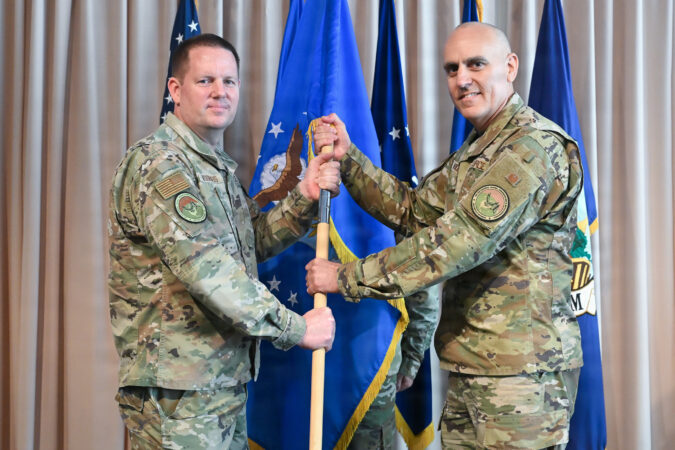
Q: What has changed for the mission of Kessel Run since its shift from an Airmen-led software factory to its life for nearly the past two years as a “government-led, vendor-managed” model?
A: I would not say that Kessel Run’s mission has changed at all. But as far as organic delivery for Kessel Run, we’re no longer a software factory. Our mission is to deliver the AOC weapons system. What does that look like in a software-defined future? How do we iteratively deliver capability in that space? Kessel Run has had several transitions. Most notably is the pivot from organic, software delivery, blue-suited developers doing code to a contractor-led model today.
Q: What changed that led to this transition?
A: If you rewind five to eight years, the acquisition transformation has also drastically changed the landscape. Technology has changed as well. In a previous job at Platform One, we were standing up the first really [Continuous Integration/Continuous Delivery] pipeline within the Department of Defense to deliver software at speed. Industry has kind of latched onto that. That’s a commodity these days. There are vendors downstairs; you could just go buy a platform today. You could kind of even see that in cloud space over the past, you know, eight to 10 years, where you had [Defense Information System Agency], private clouds. Now you can just go purchase that as a commodity. I think from a Kessel Run standpoint, what we’ve really done is we’ve just changed to adapt to the current landscape.
Q: With modernizing the AOC, are there other partners, allies, industry or commercial operations that USAF can draw on for ideas?
A: I’m in the planning stages of going to check out an airline’s global operations center. I don’t know whether the answer is that industry already does what AOCs do, or whether airlines do that, but they manage tens of thousands of flights a day. They deal with weather around the globe. They deal with pilots and flight attendants who get sick. They have a snowstorm and have to optimize for tomorrow by repositioning their aircraft in the right places. They’re optimizing for fuel costs and passengers. The real question that I have is: are the tools to do that, and what the AOC needs, drastically different? Can we use the same algorithms with different weights to optimize for different things?
Q: How does AI fit into what Kessel Run is trying to do with the AOCs?
A: I think there are two places where AI is very applicable. One is accelerating capability production, capability delivery, and partnering with the defense industrial base. We can leverage that smartly. And the other place is: how do you integrate that into operations? We’re in constant conversation with the AOC commanders, with [Air Combat Command], and even at the Department of the Air Force level on what’s available. What is enterprise-level? What can we leverage, and then how do we apply it to the problem set? If somebody has a new capability, I’m not going to turn a blind eye. If the Department of War has a capability we can leverage against a problem set, then I think Kessel Run has the right culture to push boundaries where needed to deliver that capability to the warfighter.
Q: The Air Force recently announced that Kessel Run had partnered with Air Combat Command and Air Education and Training Command on the Aerospace Readiness Enterprise System aimed at aircrew readiness. What should we know about ARES and how it relates to AOC modernization?
A: Where I find it very interesting is when you look at that problem set of aircrew readiness through a larger lens that includes the AOC, fully acknowledging that aircrew readiness during peacetime looks one way, and another during war, but many of the fundamentals remain during times of war. For instance, you need to have crew rest. You need to be able to turn maintenance on platforms. People need to be certified. You need to get people in and out of theater. When we talk about dynamic mission replanning in the AOC, that’s often weighted by what assets you have available. Optimizing those assets will be paramount. But if you optimize your assets agnostic of what you’re trying to accomplish, and vice versa, you’re probably going to come up with some kind of suboptimal solution. What we’re trying to do is drive synergies across that space. While we’re trying to do aircrew readiness, and that in itself is a problem to solve, we are also keeping an eye on how we operate in a dynamic environment, not just on day-to-day operations, which is dynamic enough, but also in wartime operations, and trying to pull those two together.