


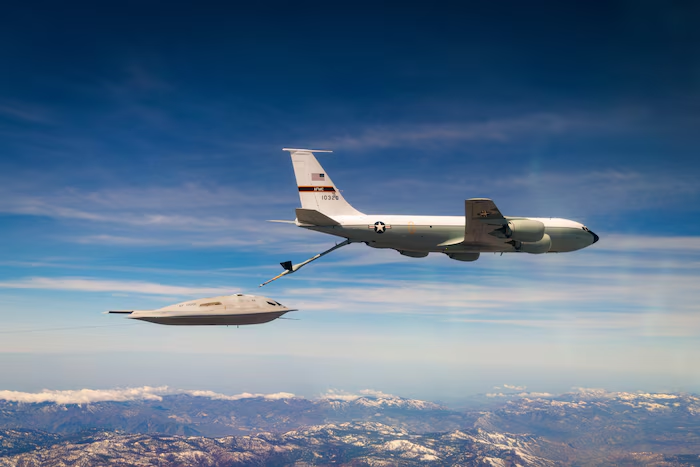
The Air Force released new photos of the B-21 Raider conducting aerial refueling tests with a KC-135 Stratotanker—confirming a key milestone in the new long-range strike bomber’s development and offering a rare glimpse of the secretive aircraft’s features.
Contractor Northrop Grumman and USAF announced the tests April 14 but did not specify when the first refueling occurred or when the released photos were taken. A service spokesperson did not immediately respond to a query.
The confirmation of the B-21 Raider’s readiness to perform inflight refueling comes just over a month after aviation enthusiasts spotted the new bomber flying with a KC-135 over Edwards Air Force Base, Calif. Officials said at the time that it was a “close-proximity flight,” meaning the B-21 never actually locked into the KC-135’s boom.
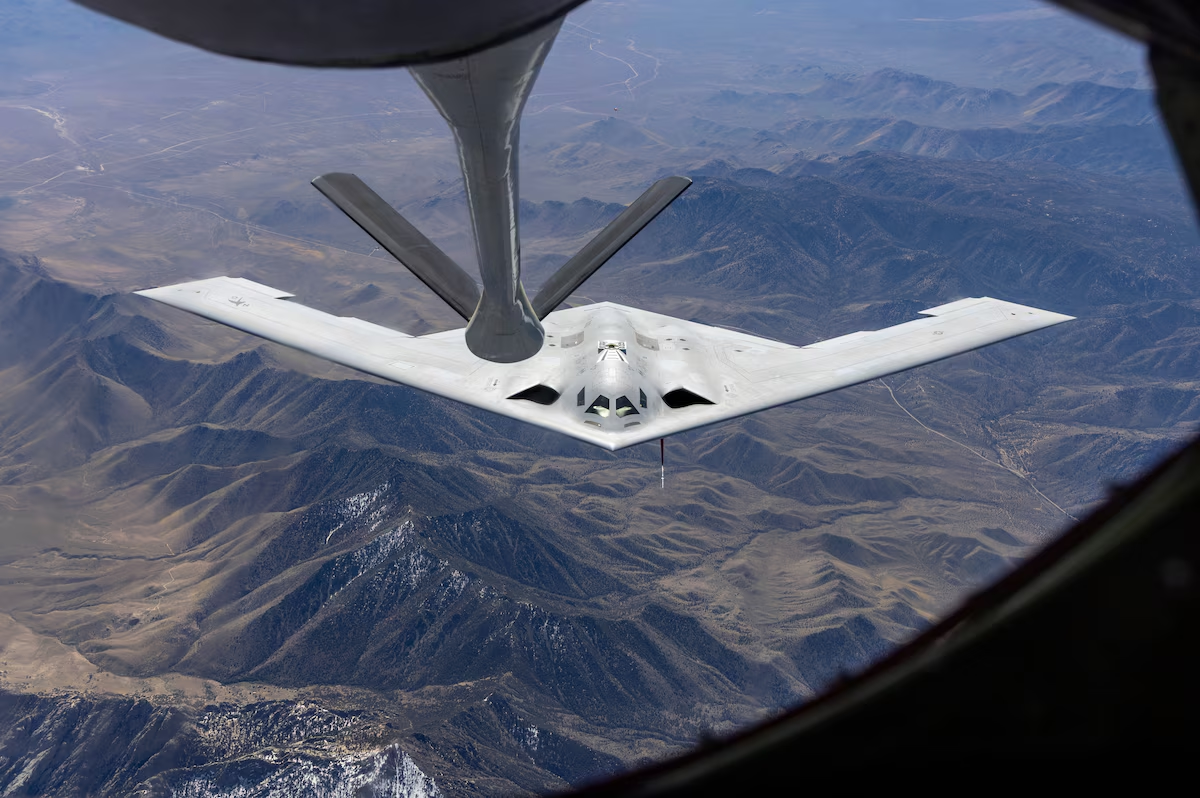
One of the newly released photos—taken from the KC-135—offers the best view yet of the B-21’s top. Some features like the bomber’s unique cockpit windows and its more deeply recessed engine inlets were already known from previous official images, but the photo does offer the best view yet of the exhaust area, seemingly confirming a more rounded shape quite different from the B-2’s boxy slot exhausts, with no special material visible behind them like on the B-2. The new image also shows just how different the B-21’s rear is from the B-2, coming to a single point instead of a more “scalloped” design.
The images also show that the bomber being tested is the first tail delivered to the Air Force, AF-0001, back in early 2024. That airframe is being used to test the B-21’s airworthiness and handling qualities and is still outfitted with a test probe extending forward from the bottom and a trailing cone to collect data.
There are currently two B-21s known to be in flight test. The second aircraft arrived at Edwards in September 2025, and officials said at the time the second aircraft would allow them to start testing weapons and mission systems.
The first B-21 bomber is expected to be delivered to an operational base in 2027, the Air Force announced in February.
The 1950s-era KC-135 is expected to fly until at least 2050, so it is expected to refuel the B-21 for at least a few decades so the “sixth-generation” bomber can perform its global strike mission.
“This capability ensures we can deliver penetrating long-range strike anywhere in the world, at any time,” Air Force Global Strike Command boss Gen. S.L. Davis said in an announcement. “For our bomber crews and the combatant commanders they support, this is about endurance and mission readiness.”
The B-21 consumes a fraction of the fuel used by legacy aircraft such as the B-2 Spirit, making it the “most fuel-efficient bomber ever built,” the announcement states.
“The B-21’s fuel efficiency is one of the core components of its lethality” Air Force Chief of Staff Gen. Kenneth S. Wilsbach said in the announcement. “This long-range strike bomber will reduce the demand on our tanker fleet and free up assets to support the joint force. This will provide a wider range of employment options and the deterrence our nation requires.”
The Air Force announced a $4.5 billion deal in Northrop Grumman in late February to accelerate production of B-21 bombers by 25 percent. Congress approved the additional funding for the deal out of the as part of its reconciliation package—officially called the One Big Beautiful Bill Act—last summer.
Gen. Dale White, the Pentagon’s direct reporting portfolio manager for critical major weapon systems, said the B-21’s progress exemplifies the principles of the Air Force’s transformed acquisition approach.
“The B-21 program is the leading edge of the acquisition mindset we are instilling across the force,” White said in the announcement. “Every test proves the success of empowering our leaders to deliver integrated capability from the start. The program’s use of digital engineering and modern production processes is delivering a mature, highly capable system, giving us confidence as we continue to smartly scale our production capacity at the speed of relevance.”