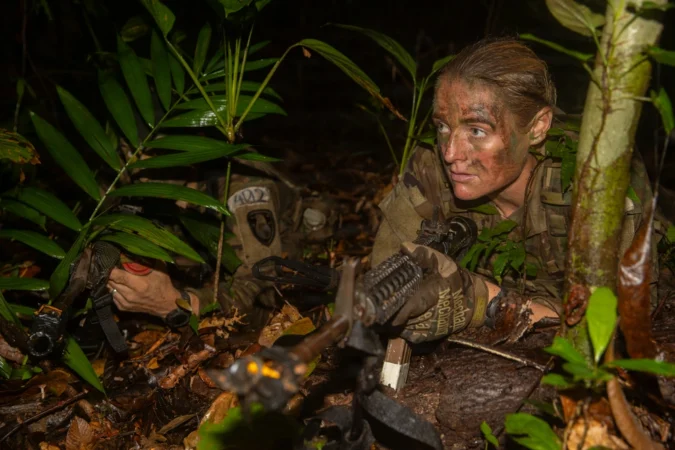

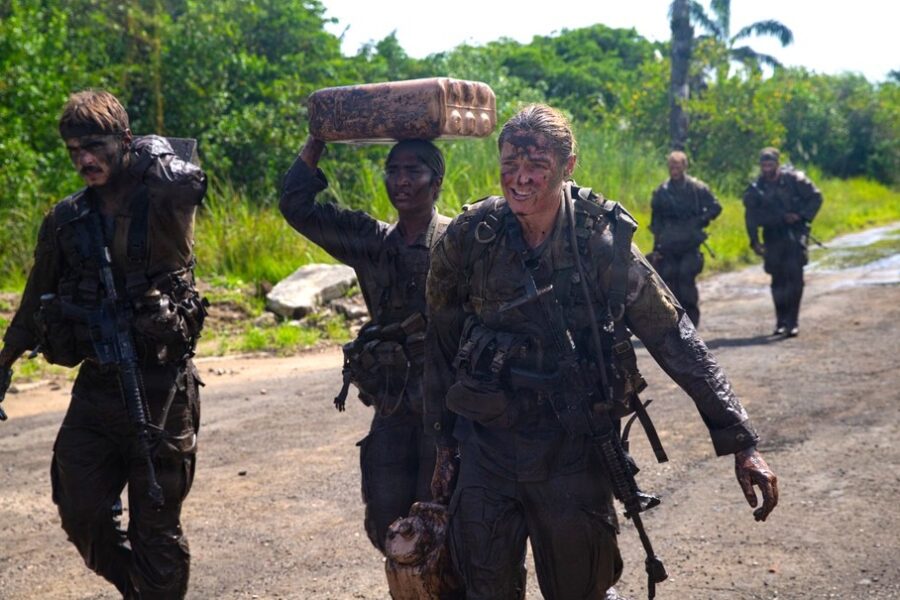
Space Force Maj. Alyson Gleason and Capt. Stephen Richard just gave their highly technical service a tougher image by becoming the first Guardians to endure 18 punishing days of training to graduate from the Jungle Operations Training Course in Panama.
The jungle warfare course was reestablished in 2025 after a 26-year interval and officially opened in January to prepare service members for the rigors of combat in jungle environments, like those found in the Pacific theater.
The Panamanian jungle is known for its extreme heat and humidity, heavy rainfall, swarming insects, poisonous snakes, and dense, rugged terrain that is impassible in some places.
Throughout the experience, students must cope with hanging vines and branches, often covered in needle-like thorns that tear uniforms and puncture leather gloves. The jungle floor is either covered with thick, sticky mud or numerous hidden trip hazards.
“It was incredible,” Gleason, who is assigned to Space Force Headquarters at the Pentagon, said in a Sept. 25 announcement. “I saw the opportunity; I wanted the chance to work with the Army and the Panamanian partners down here, and I thought this would be a unique place to challenge myself.”
The jungle school is an updated version of the original U.S. Army course that was held at the Jungle Operations Training Center at Fort Sherman, Panama, from 1953 until Sherman was turned back over to the Panamanian government in 1999. The new course is held at Fort Sherman’s former location, now called Aeronaval Base Cristóbal Colón, Panama.
The three-phase course is similar to the original course except that Panamanian instructors now teach phase one, which focuses on jungle skills such as knot-tying, shelter-making, and water purification that are critical for operations in demanding, triple-canopy jungle conditions.
Phase one also requires students to complete a series of swim tasks in the Combat Water Survival Assessment, wearing standard combat uniform, boots, fighting load carrying equipment, and a rubber M4. In the same uniform, students must complete a timed land navigation course as well as a five-kilometer, or three-mile, run in under 40 minutes.
U.S. instructors lead phase two of the course, which covers individual movement techniques and small-unit infantry tactics adapted for limited visibility conditions and restrictive jungle terrain. The phase covers ambushes, casualty evacuations, and waterborne operations such as river crossings. The scenarios challenge teams of U.S. and Panamanian students’ decision-making under stress, according to the course’s fact sheet.
In phase three, student squads go through a three-day jungle exercise that includes tasks such as attacking an enemy mortar position, conducting ambush and reconnaissance missions, and finally the “Green Mile” course—which is actually about three miles long—that features obstacles and other challenges that require teamwork to complete.
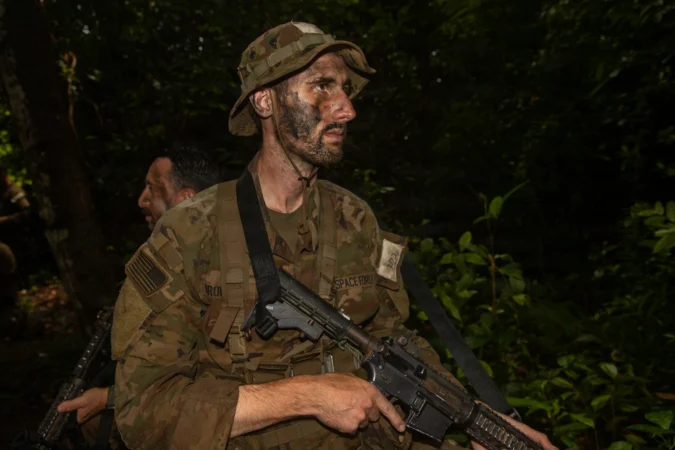
The course mostly attracts Soldiers and Marines, but it is beginning to graduate members of other services where the primary mission is not combat arms. Gleason’s and Brown’s participation in the course reflects the expanding opportunities for members of the Space Force to train with other military services and partner nations, according to the announcement.
“I feel grateful for coming here to the jungle, because I try to go through every experience I can,” said Brown, who is assigned to the 392nd Combat Training Squadron at Schriever Space Force Base, Colo. “Not everybody is going to get the opportunity, so when that door opens, I think you should always take it.”
Gleason and Brown follow Air Force Staff Sgt. Duchaine Paul, who became the first Airman to graduate from the grueling course in May. At the time, Paul was assigned to the 824th Base Defense Squadron at Moody Air Force Base, Ga.
Gleason said she wasn’t disappointed with the challenge. “The jungle is a beast that we don’t get to tackle very often as Space Force officers.”