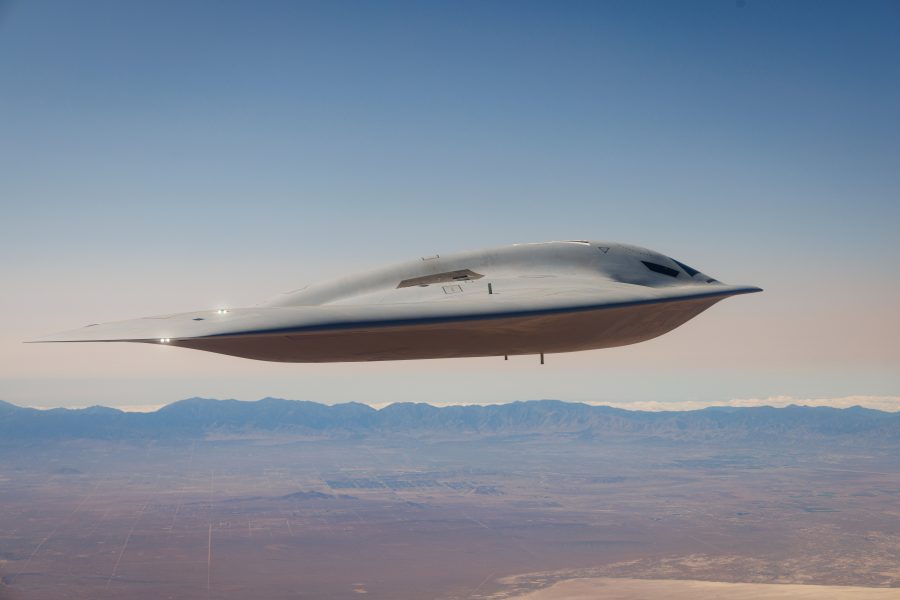
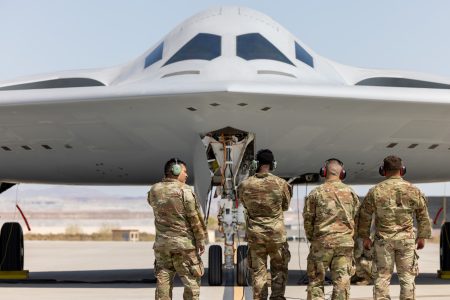
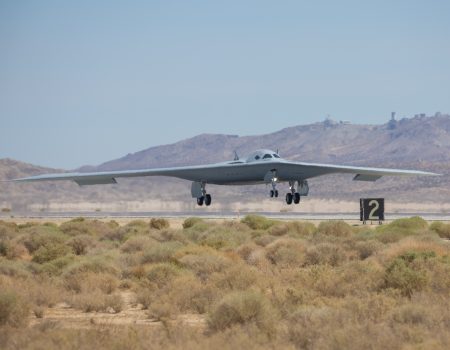
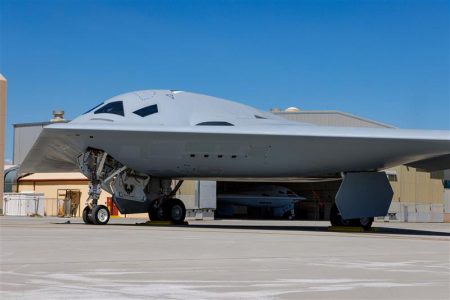
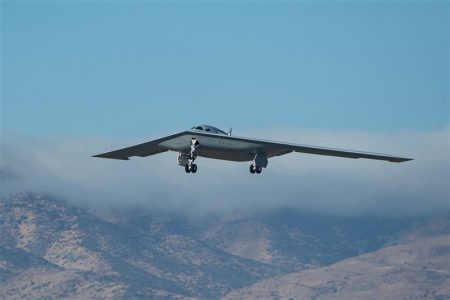
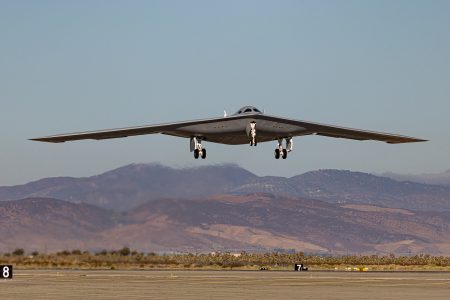
A second B-21 Raider, the nation’s sixth-generation stealth bomber, joins flight testing at Edwards Air Force Base, Calif., Sept. 11, 2025. The program is a cornerstone of the Department of the Air Force’s nuclear modernization strategy, designed to deliver both conventional and nuclear payloads. (Courtesy photo)
Audio of this article is brought to you by the Air & Space Forces Association, honoring and supporting our Airmen, Guardians, and their families. Find out more at afa.org
The Air Force released half a dozen new photos of the second B-21 bomber to fly Sept. 12, giving observers and aviation enthusiasts another glimpse of the secretive and hotly anticipated Raider.
The photos, showing the new tail taking off from Palmdale, Calif., and landing at Edwards Air Force Base, Calif., are relatively low-resolution but show off the aircraft’s distinctive delta shape, unusual cockpit windows, tall, triangular doors on its upper surface—one on either side—which open to provide more air to the engines during ground operations, takeoff, and landing, and and some of its control surfaces.
One of the images even shows the second B-21 tail taxiing while what appears to be the first tail is partially visible in a hangar.
Of note, the images also show this B-21 relatively unadorned.
The first aircraft sported extra test equipment on its first flight, with a probe coming out the front and trailing a lengthy cable from the upper surface of the tail. It also featured the emblems of Air Force Materiel Command, Global Strike Command, and the 412th Test Wing behind the cockpit windows, and its tail number and nickname—“Cerebrus”—on the front landing gear door.
In contrast, the second B-21 appeared to have none of those things.
The absence of the testing equipment may mean this will be the radar cross section test aircraft, used to test the B-21’s stealth. It could also mean it is more operationally configured.
One image does appear to show an emblem painted on the inside of the front landing gear door—a Spartan-style helmet with wings.
The Air Force has revealed little about the B-21’s characteristics and capabilities but claims it is the world’s first sixth-generation aircraft.
Photos released by the service or snapped by aviation spotters offer smalldetails on the aircraft, including tidbits on its estimated size, number of weapons bays, control surfaces, exhausts, and more.
Audio of this article is brought to you by the Air & Space Forces Association, honoring and supporting our Airmen, Guardians, and their families. Find out more at afa.org
BAE Systems has received a contract from Lockheed Martin to install an upgraded Block 4 electronic warfare system into new F-35 Joint Strike Fighters, as well as to retrofit some older jets.
The Air Force has figured out a way for maintainers to inspect what had been a “blind spot” in F-16 engines, after problems in that area led to the catastrophic crashes of two jets in recent years.
The Air Force has begun evacuating stealth fighters, gunships, and special operations planes ahead of Hurricane Isaias expected landfall over the Gulf Coast this weekend.
The Air Force’s B-52 bomber may soon be able to carry up to 20 stealthy long-range anti-ship missiles to strike moving targets at sea, a key capability in a potential fight with China.
A reported surge of MQ-9 Reaper drones to Latin America could widen the scope of intelligence gathering and free up more strike options against cartels in the region, experts tell Air & Space Forces Magazine.
Northrop Grumman has broken ground on a major new production facility for the B-21 Raider, the company and the Air Force announced Oct. 6. The construction comes as a top service official said testing on the bomber is going well in the lead up to its planned introduction into the…
An OA-1K Skyraider II belonging to Air Force Special Operations Command went off the runway while landing at a small Oklahoma City airport Oct. 5 and is waiting to be moved, according to officials and flight tracking data.
More than two dozen F-35 Lightning II fighters are heading to Kingsley Field, Ore., after Air Force Secretary Troy Meink signed the official record of decision to base the jets there on Oct. 5, clearing the last bureaucratic hurdle for the Air National Guard base to host the service’s third…
✓
Thank You!
Check your inbox to verify your email address and finish setting up your AFA account.
★
Welcome Back!
An account with this email already exists. Please log in to continue.
Subscribe to the Air & Space Forces Daily Report
The latest news from Air & Space Forces Magazine, as well as news from other leading publications, delivered right to your inbox every morning!
We’re sorry, there has been an error. Please review your input or try again later.