


Airship 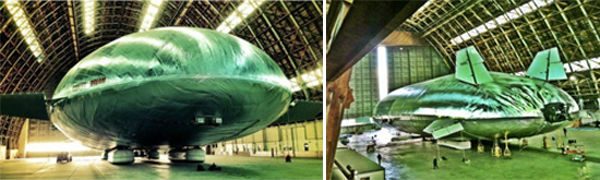 maker Aeros of Montebello, Calif., last week completed a ground-handling demonstration of its 230-foot-long Pelican “aeroscraft,” a rigid, variable-buoyancy air vehicle prototype designed to haul massive amounts of cargo. The company is developing Pelican under Pentagon sponsorship. The demo showed that the 36,000-pound Pelican “can move without assistance from ground personnel, controlled from the cockpit and using its air-bearing landing gear,” said Aeros CEO Igor Pasternak in a Jan. 4 posting at the news page of the company’s website. He said Pelican was heavier than air for the demo. This was the first of four contractual demonstrations that the company expects to finish this week, said Pasternak. The remaining three are: a vertical takeoff, offloading payload—both without taking on ballast by varying the vehicle’s buoyancy—and then showcasing the vehicle’s lightweight aeroshell, which does not rely on pressurization for rigidity. Pelican is designed to be a “true” vertical-takeoff-and-landing platform “at the maximum payload of 66 tons with no infrastructure requirements,” states the website. It ‘s meant to operate “at low speed, in hover, from unprepared surfaces, and off-load with minimum ground handling,” according to the website. Montebello is east of Los Angeles.
The top Air Force commander on on the Japanese island of Okinawa has clamped down alcohol and issued a curfew for junior enlisted Airmen and Guardians at Kadena Air Base for the next month. The order came roughly two weeks after a U.S. Marine was arrested for allegedly robbing and…