
The Guts to Try
I was heartened by the language Gen. Dan Caine used for the toast to the Doolittle Raiders [“Verbatim: A Heroe’s Toast,” May/June, p. 12]—“They proved that if you have the guts to try, great things can be done by the United States of America.”
I wonder if General Caine knows that “The Guts To Try” is the motto of the 1st Special Operations Wing, based at Kadena Air Base, Japan. This motto was adopted by the 1st SOW after their participation in the failed 1980 Operation Eagle Claw mission attempting to rescue the 52 American hostages held in Tehran.
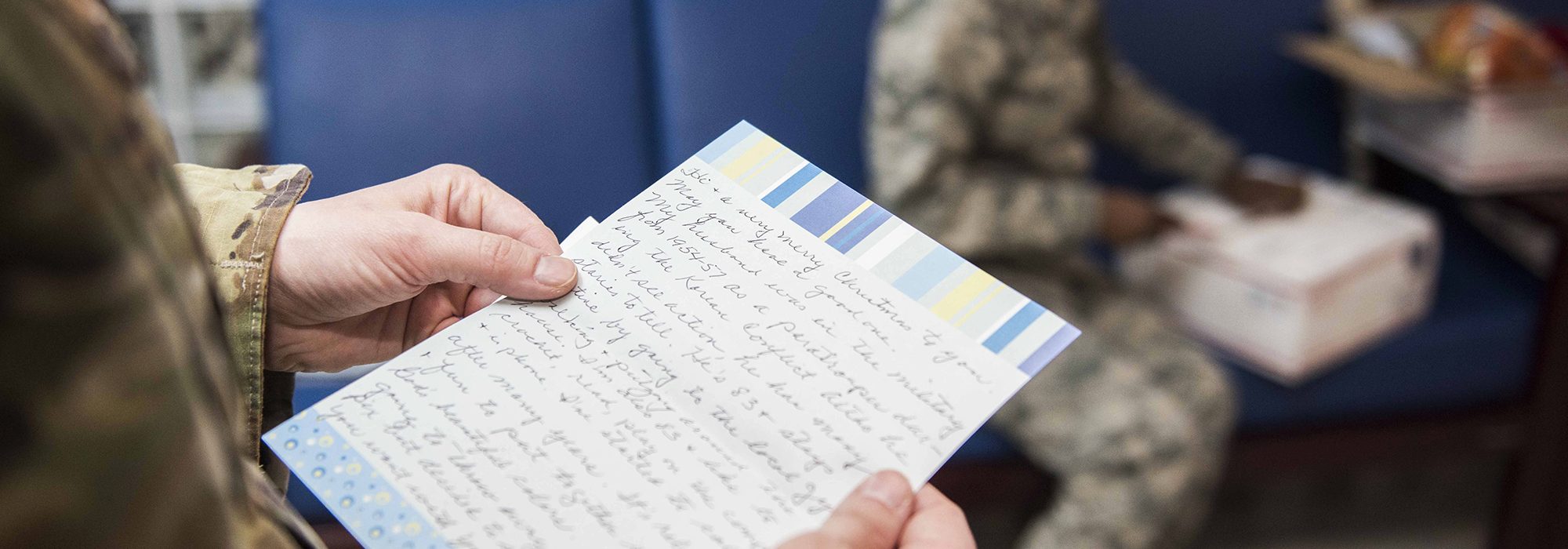
The motto was taken from the handwritten note on the top of two cases of beer given to crews by a detachment of British airmen after they returned to Masirah Island the next morning. It read: “To You All, From Us All, For Having The Guts To Try.” I was an MC-130E pilot in the 1st SOW, when it was at Clark Air Base, Republic of the Philippines, from 1983 to 1986.
The Doolittle Raid was one of history’s greatest Air Force Special Operations missions. John Wayne once said, “Courage is being scared to death—and saddling up anyway.”
The guts to try indeed.
Maj. Harold L. Gilbert,
USAF (Ret.)
Tampa, Fla.
History Repeats Itself
Regarding the May/June 2026 Almanac issue’s editorial, “Go Big on Airpower, p. 2,” I agree with your demand to fully modernize the Air Force’s aging fleet. That is why I totally disagree with your statement that the B-52H Stratofortress bomber and KC-135 Stratotanker, which have both been flying for over 60 years, “remain crucial elements in American Airpower.”
Both are Cold War relics that belong in the Davis-Monthan Air Force Base, Ariz., Boneyard, with occasional guest appearances on “Antiques Roadshow.” I got a close-up and personal look at both aircraft while stationed at Loring Air Force Base, Maine, from 1964 to 1966.
As a public affairs officer for the Strategic Air Command’s 42nd Bomb Wing, I accompanied reporters on KC-135 “orientation flights,” and I flew on a B-52H as an observer after completing altitude chamber training at Westover Air Force Base, Mass. I’m glad the Air Force is retiring some KC-135s. But I’m stunned that the Air Force plans to extend the life of all 76 B-52s until 2050, at a cost of $48.6 billion.
That money should instead be spent to buy higher volumes of new aircraft, like the B-21 Raider bomber. Trying to “modernize” the B-52 is like trying to transform a Ford Model T into a Formula One racing car.
The B-52H was a state-of-the-art warplane when I was in the Air Force, but the eight-engine behemoth is now a dinosaur of defense. It belongs in storage, not in flight.
The Air Force should spend its funds wisely on the newest aircraft, not on wasteful Cold War nostalgia.
Richard Reif
Flushing, N.Y.
Next-Next Generation
I disagree with much of Col. Kyle Pumroy’s article, “Military Human Spaceflight is Key to U.S. Space Superiority” [May/June, p. 27], starting with the title. I found no compelling argument to support the title’s premise, so I turned to the complete paper at Mitchell Institute. Not much joy there either.
It appears that the author’s fundamental rationale for sending Space Force Guardians into space—military human spaceflight—is that the Chinese are doing it and they are ahead of us. He is backed by a Space Force leader who has stated that putting Guardians in space is on the service’s “to-do list.”
While I certainly agree with the national policy to maintain and defend our all-important space capabilities, and to achieve space superiority in both civil and military aspects, how we choose to do this is complex and evolving. To those ends, military space capabilities must deter, resist, and if necessary, employ offensive systems against an enemy. I strongly question that human military spaceflight is a “key” way to do it or that it should be a national security imperative.
While I can’t imagine what might comprise lunar operations 30 to 40 years from now—including Chinese “Taikonauts” claiming territory and threatening civil space exploration—I can counsel the Space Force planners as they continue to contemplate military human spaceflight, just as the Air Force did for over 60 years.
I note the author’s statement, “Developing Guardians for human spaceflight must not compete with resources … needed to develop remote systems to counter Chinese space activities in the near term.” There will be no competition.
My human spaceflight experience (on the ground) assures me that the resources needed for military human spaceflight—near term or far term—will dominate all resources, just as they did and have always done in NASA. Some of this can be explained by our very culture, our DNA. We have demonstrated we will do everything in our power, spare no expense, and spend as much time as necessary to ensure there is no loss of life when conducting space operations. I don’t know if the Chinese have the same culture.
Military human spaceflight runs contrary to the strategies being pursued by the Space Force since its inception. With the exception of resilience of unmanned on-orbit architectures, these strategies include assured access to space, rapid replenishment of space assets and others. Employing man-in-the-loop will either negate or, at best, seriously impede these strategies.
The military services have contributed immensely to past NASA human spaceflight programs by providing astronauts and other significant resources, from Project Mercury to the space shuttle. Some national security shuttle missions even employed all-military crews. The Space Force has continued this type of support on the International Space Station. The author recommends expanding this practice as a start of a Space Force military human spaceflight program.
My observation: Any astronaut who serves a NASA function is not available to perform his/her military functions, sometimes for the remainder of their careers should they elect to stay in NASA. The small Space Force workforce will be more impacted than the other services with each service member selected to be a NASA astronaut.
If the Chinese military wants to employ their humans in critical functions in near-space or even on the moon, we should cheer them on. The more Taikonauts the Chinese military employs, the more critical military space functions that rely on humans, the more vulnerable they will be to our unmanned counterforce systems.
Col. Dennis Beebe,
USAF (Ret.)
Solvang, Calif.
