
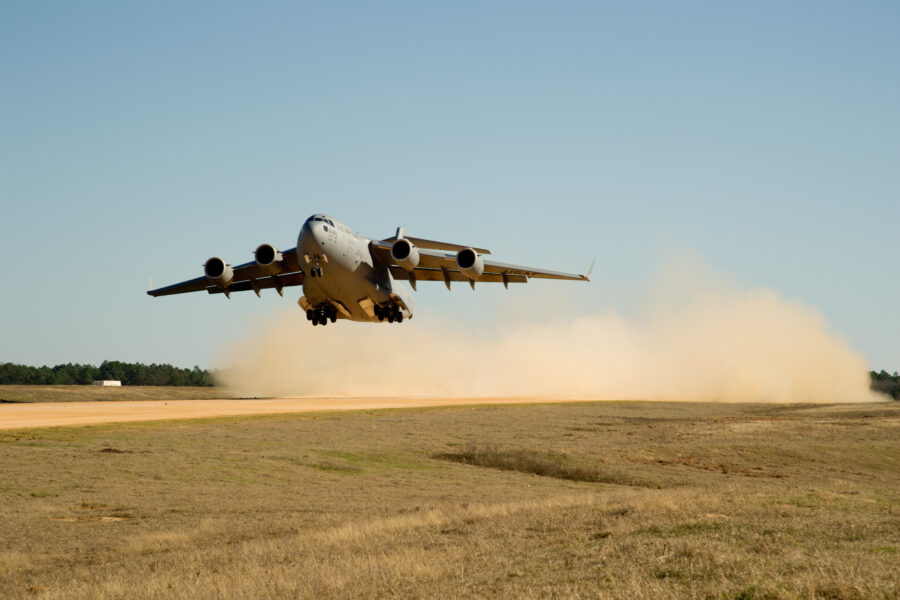
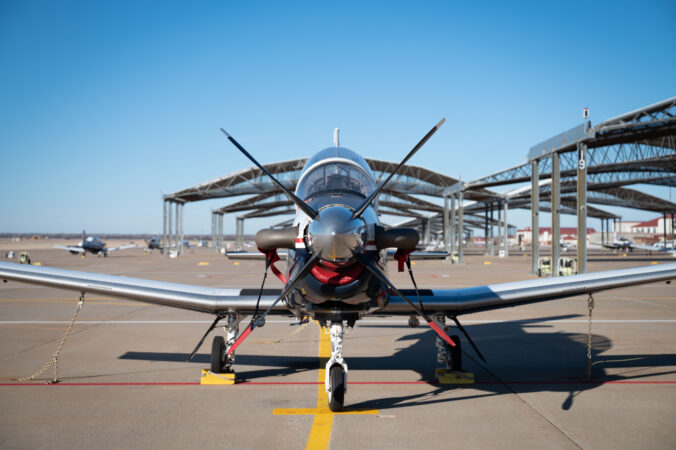
The Air Force has issued a $100 million contract to combine its long-disjointed systems for managing aircrew readiness with software that is expected to reach initial operational capability next year, starting with the T-6A Texan II and the C-17 Globemaster III.
The new software, dubbed the Aerospace Readiness Enterprise System, will merge legacy training, scheduling, and readiness platforms, some of which continue to require manual inputs, which are used throughout major commands.
Once fully deployed, ARES will connect tens of thousands of personnel, cutting hours of flight scheduling into minutes while providing leaders with real-time tracking and automated paperwork, according to an Air Education and Training Command release.
Right now, the service relies on a swath of legacy software platforms like Patriot Excalibur, Puckboard, and the Graduate/Training Integration Management System, to track the different elements of aircrew readiness, scheduling, and other items—meaning leaders lack a comprehensive snapshot of readiness across the fleet.
The Air Force Life Cycle Management Center and AETC announced a collaborative effort to revamp the aircrew management process in an April release, saying the software factory Kessel Run would take the lead.
“Every pilot’s first impression of the Air Force is how we manage our aircrew, and we see an opportunity to modernize that experience,” Col. Brian Benton, then the AETC Command Integration Center lead, said in an April release. “ARES is our commitment to delivering a modern solution. With AETC accounting for approximately 45 percent of the Air Force’s flying hours and an enterprise user base of approximately 149,000 Airmen, getting this right is a top priority.”
Prototype testing began in earnest this past spring using both aircrew and non-aircrew operators from AETC, Air Combat Command, Air Mobility Command, and Air Force Global Strike Command. That phase concluded after about 90 days and was followed by user testing.
“We’re building a system that has to work for the Airmen on the flightline, at the speed of our operations,” said Col. Ryan Vetter, Benton’s successor, said in a June release. “By letting our pilots and schedulers test-drive ARES now, we ensure the warfighter’s voice is baked into the final product before we make any long-term commitments.”
The tool should smooth out kinks in legacy systems and speed up how aircrews are managed and deployed.
“ARES accelerates decision-making beyond basic scheduling by paving the way for predictive mission readiness, utilizing trend analysis and modeling for more accurate long-term timeline planning and risk analysis,” an AETC official told Air & Space Forces Magazine in an email.
“Streamlining flight operations into a single platform directly returns valuable time to squadron personnel,” the official added. “Currently, aircrews and schedulers must navigate several disconnected systems to build, deconflict, and finalize schedules.”
The Kessel Run-driven project awarded the contract to VivSoft Technologies, a 15-year-old company headquartered in Herndon, Va. VivSoft has supported USAF’s Platform One and, in 2024, nabbed a follow-on contract with the Air Force Life Cycle Management Center to integrate its ENBUILD accelerator within Platform One.
VivSoft representatives did not respond to a request for comment.
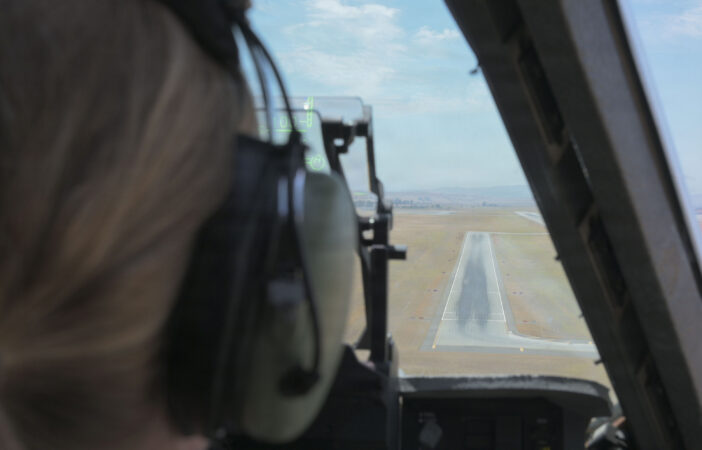
The company and Air Force are actively building an Artificial Intelligence-assisted Mission Engine to validate safety parameters during high-volume flying operations.
The mission engine is still in active development, but once fully fielded, the engine is designed to “automate the cross-referencing of pilot qualifications, currency requirements, and rest periods to flag potential safety violations instantly,” the AETC official said.
The official rollout begins at AETC in 2027 with beta testing involving aircrews for the T-6A Texan II and the C-17 Globemaster III, officials said. They’re planning to reach full operational capability by 2028 within AETC. Work on the contract is to conclude in 2030.
ACC has funded the project, working with Kessel Run and other major commands, including Air Force Special Operations Command, according to the April release.
“This effort represents a fundamental shift in how the Air Force approaches flight operations,” Benton said. “Developed on a modern Software-as-a-Service platform within the Air Force’s new Operations Enterprise Architecture, ARES is designed to provide a one-stop shop for an Airman’s entire career.”
Managing aircrew readiness has been an issue for years now. In 2016, the Government Accountability Office noted that USAF lacked an enterprise-level measure of pilot proficiency. The GAO again noted the findings four years later in its 2020 report on the Ready Aircrew Program.
At the time of the 2020 report, USAF responded with proposed fixes, including creating a common data architecture and aligning training with the National Defense Strategy.
ARES will integrate with the larger Air Resource Tool Enterprise Mission Information System. ARTEMIS is a combined master logbook and crew member human resources and medical record in one system and is in the process of fully replacing the 1990s-era Aviation Resource Management System, or ARMS.
