
The 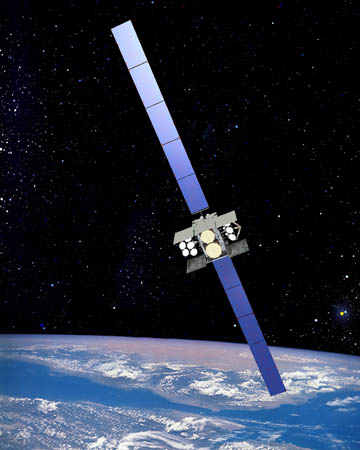 United States has joined with five nations to form a nearly 20-year multilateral partnership for the Wideband Global Satellite Communications constellation. “This agreement builds upon a similar and hugely successful model established with Australia,” said Heidi Grant, USAF’s deputy undersecretary for international affairs, Tuesday during a briefing at the Canadian embassy in Washington, D.C. The memorandum of understanding between the United States, Canada, Denmark, Luxembourg, the Netherlands, and New Zealand went into effect on Jan. 12. The agreement supports procurement of the Air Force’s ninth WGS communications satellite, scheduled for launch 2017. It also provides the international partners with immediate access to the communications throughput of the three WGS satellites already on orbit, said Grant. Canada has agreed to invest $396.5 million in the WGS program. Denmark will provide $62 million, Luxembourg $49.6 million, the Netherlands $49.6, and New Zealand $62 million. Such space partnerships are exactly what the 2011 National Security Space Strategy calls for, noted Grant. The Air Force is set to launch the fourth WGS satellite into space later this week. Australia joined the WGS program in November 2007. (See also Wideband Satellite Family Gets Wider.)
An important U.S. Air Force E-3 Sentry AWACS command and control plane was among the aircraft damaged in a March 27 Iranian missile and drone attack on Prince Sultan Air Base, Saudi Arabia, people familiar with the matter told Air & Space Forces Magazine.