


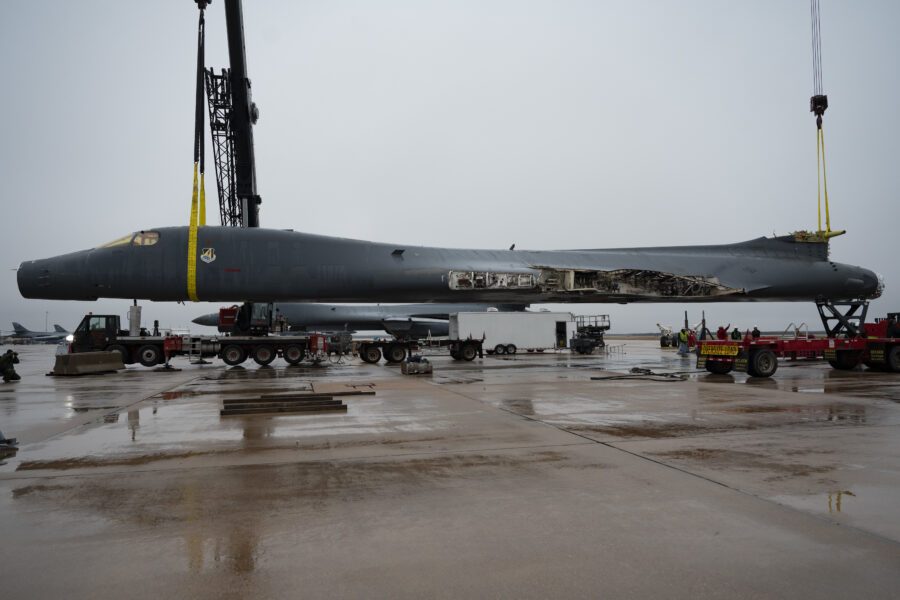
One year into a new campaign to boost readiness rates for the B-1B Lancer and B-52H Stratofortress bombers, Air Force Global Strike Command is claiming some early wins and planning to forge ahead with more improvements.
The North Star Readiness Campaign, launched in summer 2025, is mostly focused on coordinating maintenance and supply logistics for two of the most in-demand but stressed fleets in the Air Force. AFGSC is teaming up with Air Force Materiel Command and the Defense Logistics Agency in an effort to streamline the supply of spare parts and engineering support, break down logistical barriers, and improve how depots operate to allow B-1s and B-52s to be repaired and maintained faster.
The drive to improve readiness is needed, officials say, to help keep the B-1 flying through 2037 and the B-52 even longer than that while the Air Force builds out its new fleet of B-21 Raiders. The B-1 fleet’s average age is approaching 40 years old, and the B-52 fleet average is past 60 years old. What’s more, the Air Force has had more and more trouble over the years keeping the jets mission capable.
The Air Force no longer releases statistics on airframes’ mission-capable rates—the percentage of time an aircraft is available and able to carry out its mission—but in 2024, B-52s were available 54 percent of the time, and B-1s were even lower at 43 percent. Both had been on a steady downward trend.
“The North Star Readiness Campaign is our commitment to ensuring the warfighter has the nation’s bomber force ready to go at a moment’s notice,” Global Strike commander Gen. S.L. Davis said in a Sept. 8 statement from the Air Force. “This is a team effort. It brings together the operators at Air Force Global Strike Command, the acquisition and sustainment experts at Air Force Materiel Command, and our logistics partners at the Defense Logistics Agency to focus on one thing: operational readiness.”
In its Sept. 8 release, Global Strike did not detail new mission capable rates for the bomber fleets. But the command did note some progress.
The B-1, for example, has frequently suffered from “mission-impacting part problems.” MICAPs, as they are known, occur when a part that is necessary for an aircraft to be mission capable fails, and the spare or repair part is not available. At the start of the North Star Readiness Campaign, the B-1 fleet had more than 450 MICAPs, the Air Force release states. Now, that figure is down to about 160.
This has allowed maintainers to spend less time working on immediate emergencies on the B-1 and instead concentrate more on high-priority backorders and emerging trends on failures on the aircraft.
Another sign of progress are daily meetings between DLA representatives, supply chain officials, logistics readiness squadrons at the base level, and flightline maintainers to figure out which parts are being delayed and fix problems faster. By clearing procedural logjams, the release states, the command has been able to speed up some shipment timelines from more than a week to two or three days.

The campaign is unfolding at Air Force is increasingly worried about its ability to keep enough bombers in the air—and as some of its key platforms are showing their age.
The B-1 fleet, which now numbers 45 aircraft, was flown extremely heavily and worn out during the Global War on Terror. Over the last five years, the Air Force retired 17 of its most exhausted B-1s, in part to allow maintenance Airmen to concentrate on the healthiest Lancers.
The B-52, meanwhile, is famed for its longevity but is increasingly showing its age. The 75-aircraft fleet’s Pratt & Whitney-made TF33 engines are original, dating back to when the bombers rolled off the production lines, and commonly break. Many of the companies that made spare parts for the B-52 have closed or otherwise stopped making them, forcing the service to find other sources for parts—and even cannibalize other non-flying Stratofortresses for usable parts.
The Air Force is now in the midst of a massive modernization effort for the B-52, which will ultimately see its engines, avionics, radar, cockpit displays, and other key components replaced. This upgrade, which is extensive enough the Air Force will redub the bomber the B-52J, is intended to keep the bombers flying into at least the 2050s.
The Air Force said insight from maintainers who work on these planes every day is crucial to the readiness campaign. Flightline maintainers are providing information that is helping to refine maintenance processes and more quickly move critical parts to where they need to be, the Air Force said.
Chief Master Sgt. Shane Anderson, change management lead for the North Star Readiness Campaign, said one example was the way Airmen built a playbook to allow the “phase maintenance” process—or an extensive maintenance overhaul regularly scheduled for when an aircraft flies a certain number of hours—to be performed much more efficiently, without compromising safety or security.
“The [readiness campaign] started as a concept at the strategic level, but we have also received ideas directly from the flight line,” Anderson said. “They are the ones with the hands-on experience, and we would be remiss if we didn’t leverage their expertise to drive these improvements.”
The campaign also aims to expedite the parts availability for critical B-1 structural and avionics components, while working with AFMC and DLA to “streamline depot-level maintenance cycles.”
“These targeted efforts are designed to maximize the B-1’s operational readiness, ensuring it remains a lethal and highly visible conventional global strike option,” the Air Force said.
The Air Force also said the campaign is helping leaders anticipate future issues that might hurt the bombers’ readiness before they flare up into problems that grind missions to a halt.
The unified approach to improving maintenance is crucial to make sure the strategic bomber fleet remains able to project airpower, the release states.
“By modernizing these incredible platforms and ensuring our maintainers have the parts and support they need, we are sending a clear message to our adversaries and allies alike that the United States’ long-range penetrating strike capability is, and will remain, second to none,” Davis said.