


Technicians 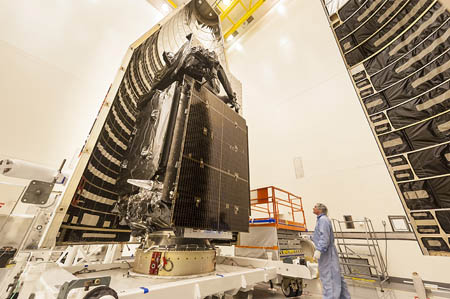 encapsulated GEO-2, the Air Force’s second Space Based Infrared System geosynchronous orbit satellite, in its payload fairing in preparation for its planned launch next week at Cape Canaveral AFS, Fla., announced prime contractor Lockheed Martin. An Atlas V rocket is scheduled to carry GEO-2 into orbit from the cape on March 19, according to the company’s March 12 release. The encapsulation took place on March 4, states the release. GEO-2 is slated to join GEO-1, the first SBIRS satellite, on orbit. There are also several SBIRS payloads operating on classified intelligence satellites in highly elliptical orbits. Like GEO-1, GEO-2 features both an infrared scanning sensor for covering wide areas of the Earth and a staring sensor for focused coverage of a smaller area. SBIRS satellites are designed to detect ballistic missile launches and other infrared activities of interest to the defense and intel communities. Northrop Grumman supplies the sensor payloads. (See also SBIRS Satellite Arrives at Launch Site.)
The top Air Force commander on on the Japanese island of Okinawa has clamped down alcohol and issued a curfew for junior enlisted Airmen and Guardians at Kadena Air Base for the next month. The order came roughly two weeks after a U.S. Marine was arrested for allegedly robbing and…