Audio of this article is brought to you by the Air & Space Forces Association, honoring and supporting our Airmen, Guardians, and their families. Find out more at afa.org
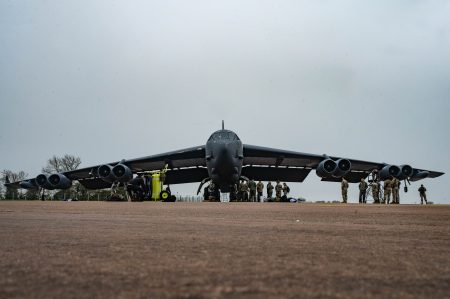
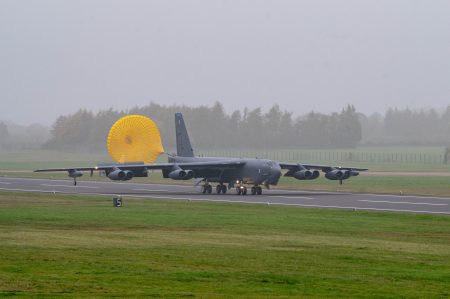
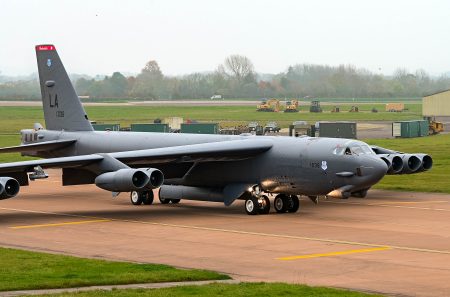
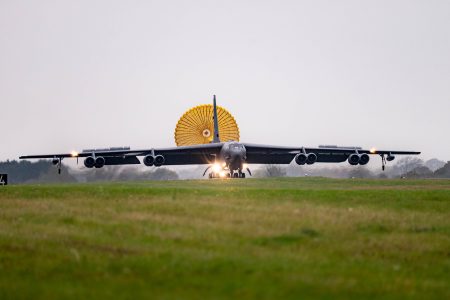
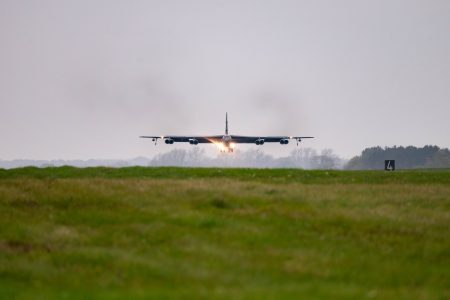
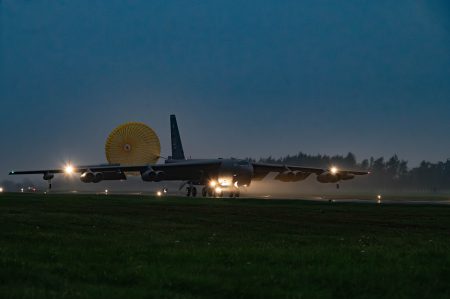
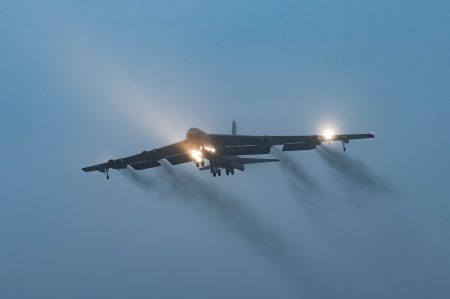
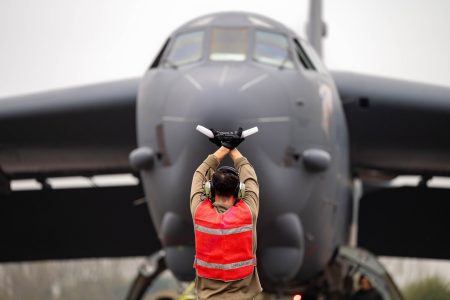
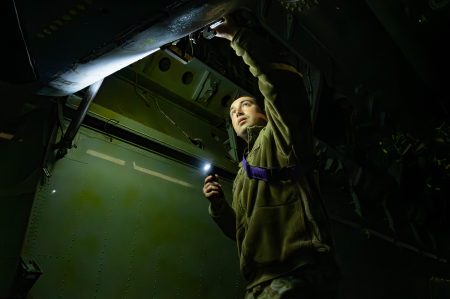
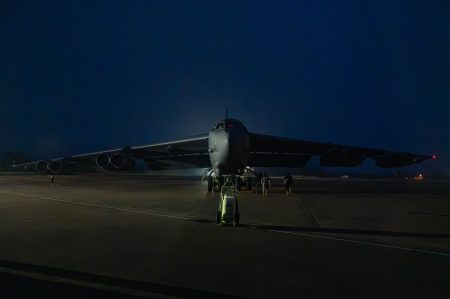
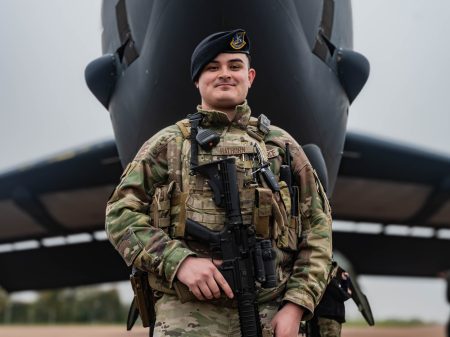
Ten B-52 Stratofortresses are currently deployed across Europe and the Middle East, representing nearly 15 percent of the entire U.S. Air Force fleet and an even larger chunk of combat-ready B-52s available.
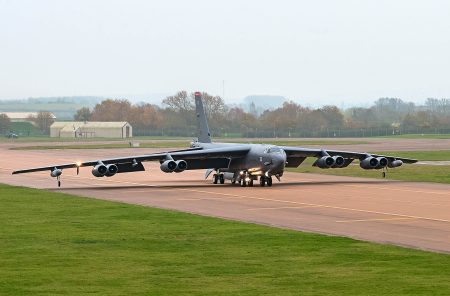
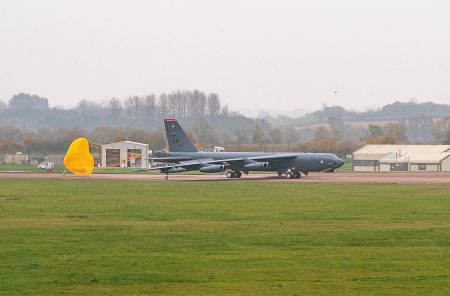
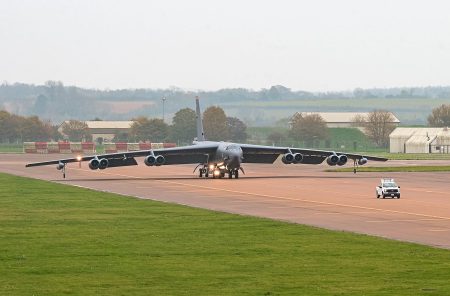
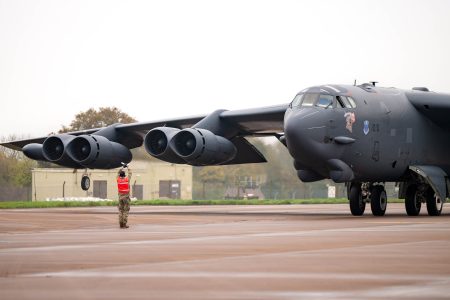
U.S. Air Forces in Europe announced Nov. 8 that four B-52s have deployed to RAF Fairford, U.K., for a Bomber Task Force. Air & Space Forces Magazine previously reported that B-52s were deploying to Europe, but the Air Force had not disclosed the total number or their operating location.
That deployment comes on top of six B-52s that landed in the Middle East a few weeks ago to deter Iran and its proxies in the region.
USAF regularly sends bombers around the globe for task force deployments, and it is not unprecedented for bomber deployments to overlap.
But the sheer number of B-52s currently deployed overseas marks a high since the Air Force implemented Bomber Task Forces several years ago.
The Air Force has 76 B-52s in its inventory, so 10 deployed equals 13.2 percent of the fleet.
But of those 76, there are several constantly being cycled through depot maintenance, and several more are dedicated to testing weapons and upgrades like the bombers’ new engines and radar. On top of that, the fleet had a mission capable rate of 54 percent in 2023, which measures the percentage of time an aircraft is able to perform at least one of its core missions.
Taken together, and the 10 B-52s currently deployed could represent upwards of a quarter of the combat-ready fleet.
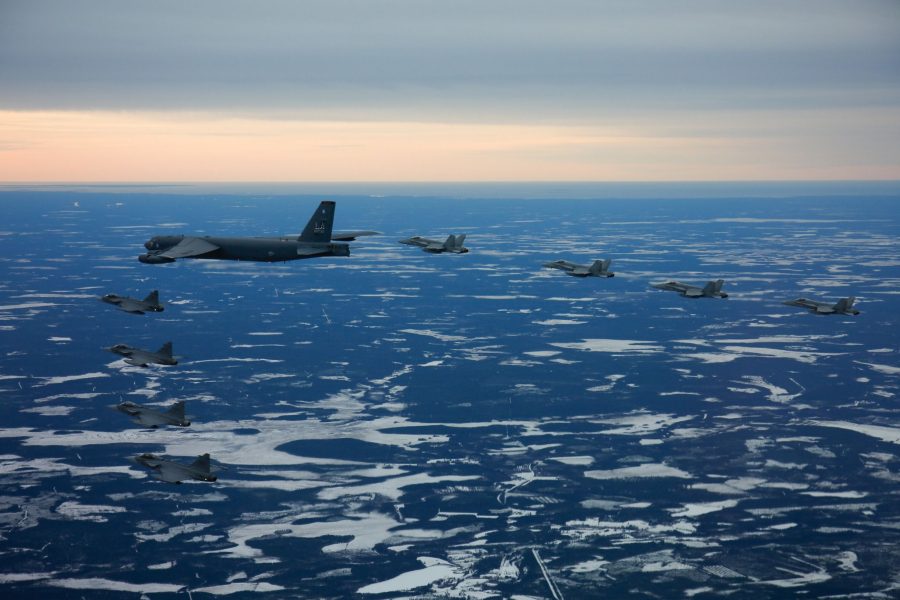
The bombers that went to Europe kicked off their deployment by flying alongside Finnish F-18 Hornets and Swedish JAS 39 Gripens—a noteworthy integration with NATO’s two new allies in the Arctic region.
“This Bomber Task Force mission exemplifies our unwavering commitment to our European Allies and partners. Together, we build stronger, more strategic relationships that reinforce security and stability across the region,” Gen. James Hecker, commander of USAFE, said in a statement.
Audio of this article is brought to you by the Air & Space Forces Association, honoring and supporting our Airmen, Guardians, and their families. Find out more at afa.org
A U.S. Air Force F-22 pilot controlled a YFQ-44A Fury Collaborative Combat Aircraft this month while both aircraft were in flight, according to an Oct. 16 release, another milestone in the service’s ambitious CCA efforts.
The Marine Corps recently conducted its first-ever “ripple” release of eight Small Diameter Bomb IIs from an F-35B, a key early step in proving out the capability for all F-35 variants.
The Air Force will field operational prototypes for an autonomous drone to replace its MQ-9 Reaper in 2028, Secretary of the Air Force Troy Meink said Oct. 14.
One of the Air Force’s critical B-2 Spirit stealth bombers has returned to Whiteman Air Force Base, Mo., after an extensive course of maintenance to restore its stealth coating and preserve its structural integrity.
BAE Systems has received a contract from Lockheed Martin to install an upgraded Block 4 electronic warfare system into new F-35 Joint Strike Fighters, as well as to retrofit some older jets.
The Air Force has figured out a way for maintainers to inspect what had been a “blind spot” in F-16 engines, after problems in that area led to the catastrophic crashes of two jets in recent years.
The Air Force has begun evacuating stealth fighters, gunships, and special operations planes ahead of Hurricane Isaias expected landfall over the Gulf Coast this weekend.
The Air Force’s B-52 bomber may soon be able to carry up to 20 stealthy long-range anti-ship missiles to strike moving targets at sea, a key capability in a potential fight with China.
A reported surge of MQ-9 Reaper drones to Latin America could widen the scope of intelligence gathering and free up more strike options against cartels in the region, experts tell Air & Space Forces Magazine.
✓
Thank You!
Check your inbox to verify your email address and finish setting up your AFA account.
★
Welcome Back!
An account with this email already exists. Please log in to continue.
Subscribe to the Air & Space Forces Daily Report
The latest news from Air & Space Forces Magazine, as well as news from other leading publications, delivered right to your inbox every morning!
We’re sorry, there has been an error. Please review your input or try again later.