
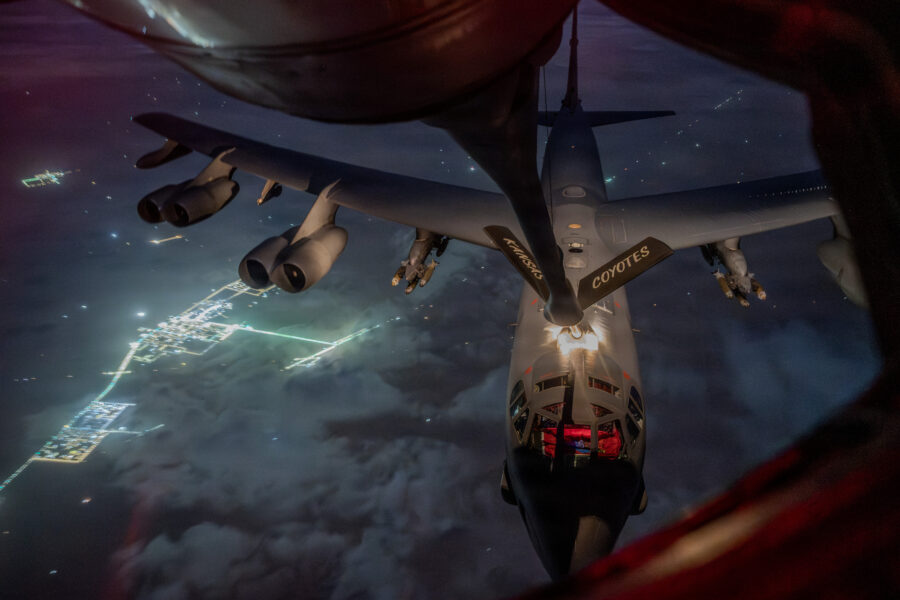
The Air Force expects to start modifying its first B-52H Stratofortress bomber with new engines and other upgrades later this year, following a successful review of the Commercial Engine Replacement Program’s design.
The Air Force Life Cycle Management Center on May 4 announced it has completed a critical design review for the CERP program, finalizing its design after years of work and paving the way for modification to begin.
Lt. Col. Tim Cleaver, the CERP program manager, said in a release that the completion of the review is a pivotal moment in the effort to revamp the venerable Boeing-made B-52 with new Rolls-Royce F130 engines.
“This CERP critical design review is the culmination of an enormous amount of engineering and integration work from Boeing, Rolls-Royce, and the Air Force that will enable the B-52J to remain in the fight for future generations,” Cleaver said.
Boeing, which originally built the B-52 and is the prime contractor on the CERP, is now procuring and manufacturing parts. The company will start modifying the first two B-52Hs with their new engines and other upgrades at its San Antonio, Texas, facility, with the first arriving later in 2026.
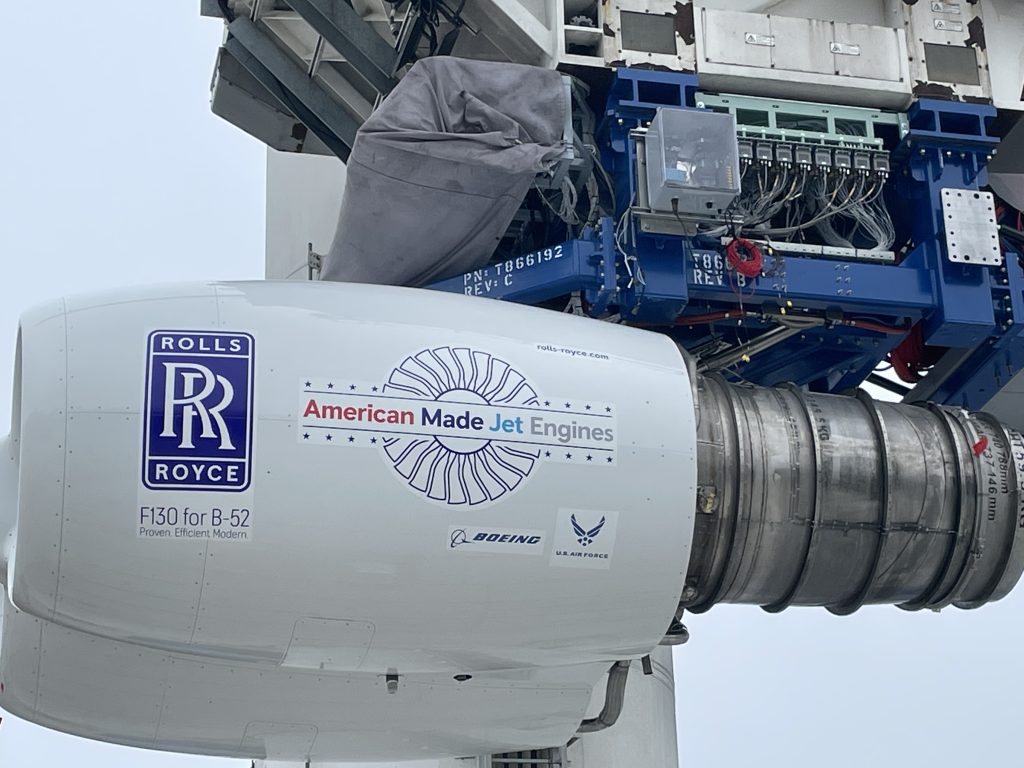
Once Boeing finishes upgrading those two bombers, they will fly to Edwards Air Force Base, Calif., for extensive testing and validation of the new systems. When the testing is done, the Air Force will shift its focus to updating the rest of the Stratofortress fleet.
The B-52H has been in service for roughly 65 years, since the height of the Cold War, and 76 now remain in the fleet. But the bomber is increasingly showing its age; its TF33 engines are original to the early 1960s, and spare parts are harder and harder to come by. In 2024, the last year for which data was available, the mission capable rate for the B-52 was less than 54 percent
To keep the Stratofortress flying at least into the 2050s, the Air Force is pushing forward with a top-to-bottom revamp extensive enough to merit redesignating it as the B-52J. While the centerpiece of the overhaul will be new engines, it will also include digital cockpit controls, engine generators capable of more power capacity, avionics systems, a new radar, landing gear, weapons, and other upgrades.
Rolls-Royce said in its own statement May 4 that the completion of the design milestone shows the modernization program is on track and will be successful.
“This milestone reflects the strength of our partnership with the U.S. Air Force and Boeing applied to a shared mission,” said Jennifer Schwerin, Rolls-Royce’s director for early life cycle and naval programs-defense. “Together, we are delivering on the Commercial Engine Replacement Program with pace and precision, keeping the B-52J modernization on track and reinforcing confidence in the critical capability it will provide to the warfighter into the 2050s.”
The Air Force in December 2025 awarded Boeing a contract worth more than $2 billion to start the B-52 engine replacements. The entire re-engining process is expected to cost around $15 billion, and the Pentagon inspector general has estimated that a dozen B-52 modernization programs will cost a combined $48.6 billion.
Eventually, the Air Force plans to maintain a two-bomber force consisting of the B-52J and at least 100—but likely more—B-21 Raider stealth bombers. The Air Force plans to retire the B-1B Lancer and B-2A Spirit sometime in the 2030s, though fiscal 2027 budget documents show the service is now planning to keep them longer than originally expected.