


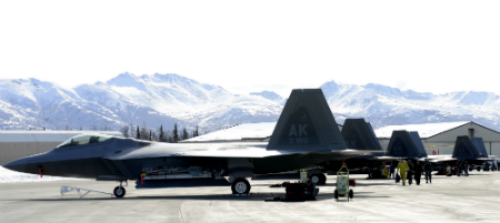
 Air Combat Command announced on Thursday that F-22s have resumed normal flight operations following the fleet-wide completion of modifications to aircrew life-support equipment, including the pilot’s upper pressure garment and related hoses, valves, and connectors. This eliminates the need to restrict Raptor flight operations to within a 30-minute flying distance from an airfield suitable for landing, states ACC’s April 4 release. F-22 crews have also resumed aerospace control alert missions in Alaska after technicians installed the new Automatic Backup Oxygen System on Raptors assigned to Joint Base Elmendorf-Richardson. All F-22 are expected to have the ABOS modification by July 2014. ACC officials have incrementally removed altitude restrictions for F-22s fitted with ABOS, but restrictions will remain in place for training flights for those F-22s not yet equipped with ABOS, states the release. The Pentagon imposed flight restrictions on the F-22 fleet following a series of incidents in which Raptor pilots experienced conditions like dizziness and nausea in flight. Those led to a four-month grounding of the F-22 fleet in May 2011. Investigators subsequently determined that a deficient quantity of oxygen to the pilots caused the physiological incidents. Resumption of normal flight operations hinged on installation of the new equipment to improve the oxygen flow. (See also We Now Have an Explanation.)
The Air Force is shoring up its cyber defenses both on and off base for critical infrastructure such as water and electrical power, and industry experts are calling for more, even specialized, dedicated microgrids offsite to support USAF operations in case of a total blackout caused by cyberattacks.
