
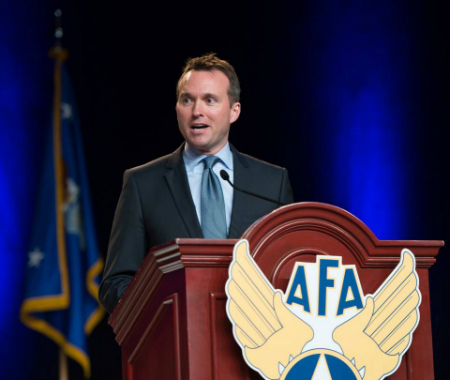
 In his opening address on Monday at AFA’s 2013 Air and Space Conference in National Harbor, Md., Acting Secretary Eric Fanning provided a full-throated defense of airpower and its importance to the joint force. Before the Wright Brothers achieved manned flight, warriors tried to break through heavily defended lines. Since then, airmen have been finding new ways to fly over them, said Fanning. Both the Army and Navy eventually had to react to the revolution in warfare that airpower demanded, with the Navy experimenting with flattop aircraft carriers during the interwar years and the Army Air Corps developing what became the B-17 Flying Fortress. From mobility to close air support to global strike, the Air Force must capitalize on a future that has an “airpower bias,” said Fanning. It is important not to just work around the edges of the system, but make innovation a central tenet of the service’s future. “We are in a classic interwar budget drawdown, even before the war has ended,” said Fanning, noting that the Air Force’s inherent strengths as a service give him great confidence in the future. “The Air Force has become the service all others rely upon,” he said.
The Air Force has embraced new technical approaches like open mission systems and rapid software updates for cutting-edge aircraft like the B-21 and Collaborative Combat Aircraft. Increasingly, though, the service is also working to apply these to its older, “legacy” aircraft, officials said this week.