
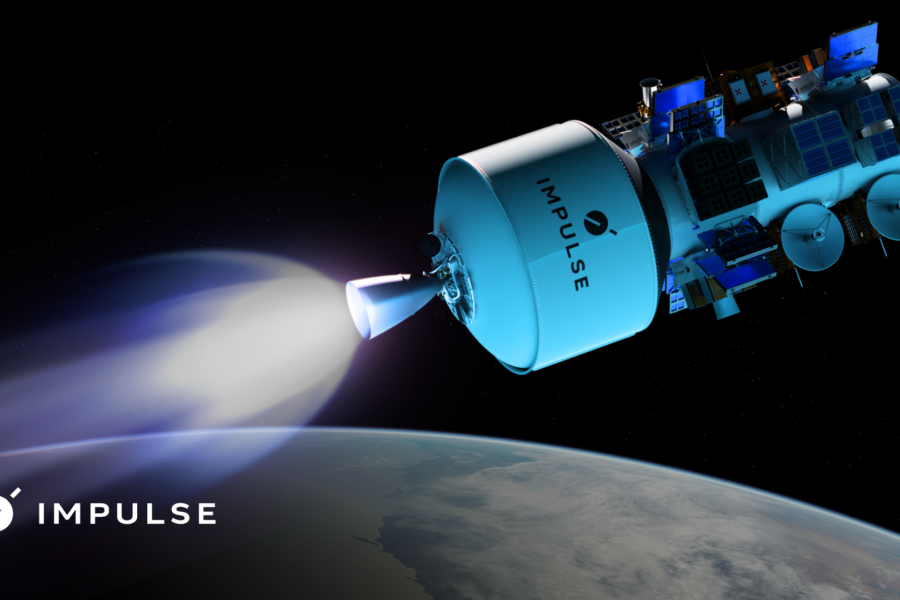
The Space Force has tapped startup Impulse Space for two new tactically responsive space missions, the latest in a series meant to build the service’s agility in orbit.
Impulse announced the $28 million contract award Aug. 12, saying it will provide two of its Mira spacecraft for missions in low-Earth orbit dubbed Victus Salo 2 and 3. The firm was already awarded a contract in October 2024 to provide a Mira for Victus Salo 1.
Mira is an orbital maneuver vehicle, or OMV; it is prepositioned in space to carry payloads or other assets from one orbit to another. All three Victus Salo missions will involve Mira spacecraft carrying government-provided payloads in low-Earth orbit, the firm said in its release.
The first Victus Salo mission is set for launch in 2027, Impulse said. When the Space Force announced the contract for that mission in 2024, it said it was hoping to launch in fall 2026. The second and third Salo missions have no public timeframe.
Impulse is also working on another tactically responsive space mission, Victus Surgo, that will involve a Mira spacecraft launching into a geostationary transfer orbit, with an end goal of ending up in geosynchronous orbit.
Victus Surgo and the Victus Salo series are expanding the scope of the Space Force’s tactically responsive space effort. The initial mission, Victus Nox, focused on speeding up the process for preparing to launch a satellite, going from launch orders to liftoff in 27 hours in 2023. Victus Haze, which launched in June, cut the timeline down to just 17 hours and added more maneuvers, as the Rocket Lab Pioneer satellite conducted rendezvous operations with a Jackal spacecraft built by True Anomaly and launched the month before.
These upcoming missions will focus less on rapid launches—Victus Salo 1 and Victus Surgo will hitch rides of SpaceX’s Falcon 9 rocket—and even more on the ability of spacecraft to quickly respond to developments once they are in orbit.
In space, maneuverability is often described as “Delta-V,” or a spacecraft’s ability to change its velocity. Mira has a Delta-V of 850 meters per second for a 100-kilogram payload.
“Mira’s agile, high Delta-V capabilities can support the United States Space Force’s work to increase the tactical responsiveness of assets on orbit through these missions,” Eric Romo, Impulse Space President and COO, said in a statement.
Impulse, founded by an early SpaceX employee, is growing its Space Force ties quickly. Just last month, the firm was added to the National Security Space Launch program. Its Helios vehicle, slated to fly in 2027, is a high-energy upper stage designed to transport payloads from low-Earth orbit to higher orbits—a first for the NSSL program. The company said in a statement that the plan is to partner Helios with a standard medium-lift rocket.
