
The Space Force has added two startup firms to its National Security Space Launch program, increasing the competitive field for “commercial-like” missions to seven providers.
The service added Impulse Space and Relativity Space, both based in southern California, to its vendor pool for the program’s “Phase 3 Lane 1” contract, a new feature of the NSSL program meant to give the Space Force more lift options for lower-risk missions and to broaden the launch industrial base.
“This is critical at a time when our launch cadence is rapidly increasing and our customers are relying on us to deliver everything they need to provide for the security of our nation and allies,” Col. Eric Zarybnisky, acting portfolio acquisition executive for space access, said in a July 8 statement. “Today’s awards create new partnerships that further expand our industrial base; improving our resiliency and responsiveness so that we can reliably deliver critical defense capabilities on orbit for the security of our nation.”
The firms each received $5 million to fund initial on-ramp efforts before eventually being eligible to compete for up to $5.6 billion in Lane 1 contracts. They join five other companies in the vendor pool: SpaceX, United Launch Alliance, Blue Origin, Stoke Space, and Rocket Lab.
To qualify for Lane 1 competition, a company’s rocket has to have flown or the firm needs to have a credible path toward flight. Relativity is building a reusable medium-lift rocket, Terran R, that it expects to launch for the first time late this year.
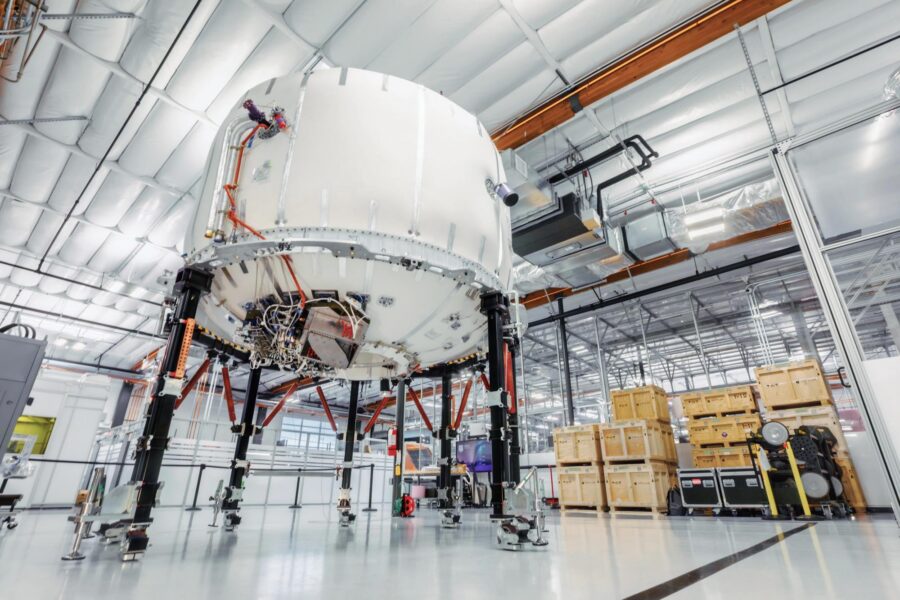
Impulse, meanwhile, is largely focused on orbital transfer vehicles, with its Helios vehicle selected for Lane 1. Helios, slated to fly in 2027, is a high-energy upper stage designed to transport payloads from low-Earth orbit to higher orbits—a first for the NSSL program. The company said in a statement that the plan is to partner Helios with a standard medium-lift rocket.
“This award is a big validation of the capabilities we’re delivering at Impulse, and we’re honored to support national security objectives for our country,” said Eric Romo, president and COO of Impulse Space. “Pairing Helios with a standard medium-lift launch vehicle offers a more operationally flexible and cost-effective path to high-energy orbits than other solutions. We look forward to providing a new option for assured access to space for the Space Force.”
The Space Force’s Phase 3 acquisition strategy includes two competitive tracks, or lanes. While Lane 1 is reserved for commercial style launches with less stringent requirements, Lane 2 is for more demanding, high-value missions to be flown by rockets certified to carry national security payloads. To date, SpaceX and ULA are the only Lane 2-certified providers, but Blue Origin with its New Glenn rocket is in the midst of that validation process.
The Space Force expects Lane 1 to include approximately 30 missions. It started ordering Phase 3 launch services in fiscal 2025 and plans to issue new, competitive task orders to its vendor pool annually through at least fiscal 2029.