
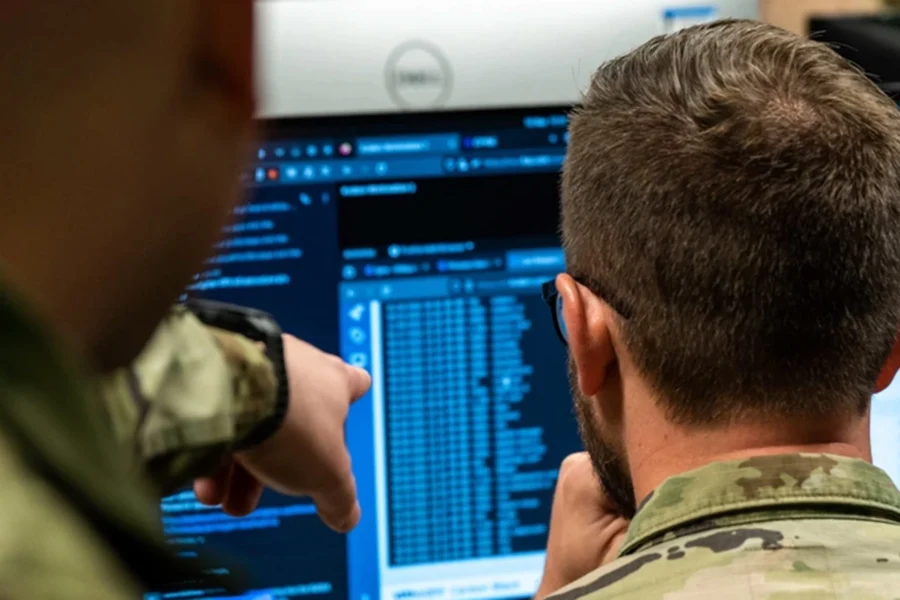
A new collaborative digital environment could change the way the Space Force—and possibly the broader Defense Department—designs and tests capabilities.
Space Systems Command has been working with General Dynamics Information Technology since 2023 to develop the platform, called Project Enigma, for its Evolved Strategic Satellite Communications program—a fleet of nuclear command and control spacecraft that will replace the legacy Advanced Extremely High Frequency satellite constellation. Because many aspects of the program are classified, SSC needed a secure environment where its prime contractor Boeing and other industry partners could share and validate designs.
That process previously involved industry building models, burning them to a CD and then sending that to the government—and sometimes spending weeks or months communicating back and forth about a design, according to GDIT’s Senior Director for Air and Space Forces Travis Dawson, who described the approach as “very ‘90s.”
“That process was very antiquated, obviously,” said Dawson, who told Air & Space Forces Magazine in an interview that Enigma reduces that timeline from months to minutes. “Being able to stand this environment up for them has greatly increased productivity and has saved them a lot of time.”
The Pentagon has been working toward greater adoption of digital engineering for years, encouraging programs to use digital tools to design and test complex systems in a virtual environment. While major systems like the B-21 Raider have used digital modeling to speed up development, adoption has been slow and many program teams are siloed, with contractors using different tools that aren’t compatible—which adds time and costs money.
Dawson said he’s hopeful that platforms like Enigma can help address some of those barriers and lead to more widespread use of digital engineering. The company recently completed a prototype of the system and SSC has been using it operationally for several months. ESS contractors are using the platform today, and Dawson said they’ve reported back that it’s significantly reduced their workloads. SSC said in a statement that Enigma “represents a leap in how government and industry work together.”
“With unified access to critical platforms, stakeholders can co-develop solutions, share insights, and innovate while maintaining strict security controls and compliance at the highest classification level,” SSC’s statement said. “Enigma ensures ESS capabilities are developed faster, smarter, and with high integrity, while maintaining industry-leading security.”
GDIT’s Enigma prototype contract ends in November, after which the company expects to transition to a multiyear production contract, Dawson said. The platform is scalable, which means the Space Force could choose to onboard more companies or program offices. Dawson said there’s also been interest from other parts of the department, though no decisions have been made about expanding Enigma’s use.
“The government does own this,” he said. “If they say, ‘Yes, we want to entertain supporting the Army or supporting the Navy and any of their digital engineering needs, we can certainly do that for them—as well as any of the other organizations within the Space Force.”
