


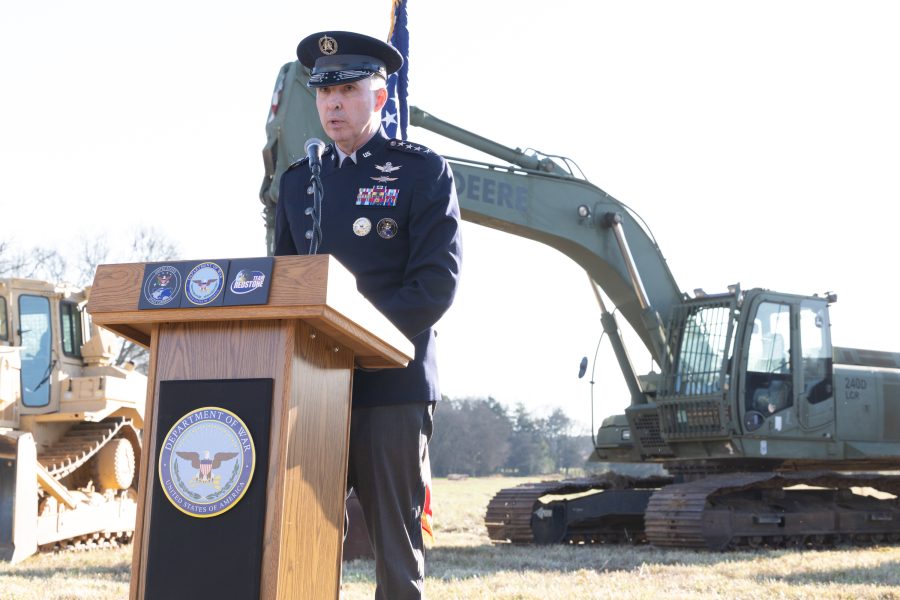
U.S. Space Command officials say they’re on track to relocate 200 personnel from Colorado Springs, Colo., to Huntsville, Ala., by the end of this year as part of a multiyear transition of the command’s headquarters.
In the year since President Donald Trump announced U.S. Space Command would stand up its permanent headquarters in Huntsville—reversing a decision by former President Joe Biden to keep the command in Colorado—SPACECOM has made fast progress on its goal to relocate its 1,800 personnel there by 2031.
During a recent tour of SPACECOM’s temporary facilities at Redstone Arsenal, officials told reporters that more than 100 personnel already have moved from the provisional headquarters at Peterson Space Force Base, Colo., many of them intelligence professionals. Other functions have also started to migrate, and by 2028, officials expect half of the command’s workforce to be based in North Alabama.
“Since the president announced on the [Sept. 2] last year that we were moving our headquarters here to Redstone, we have been moving with speed and enthusiasm to get established,” SPACECOM Commander Gen. Stephen Whiting said Aug. 13. “While we’re executing this move, we have been relieved of none of our day-to-day mission requirements, and I’m very proud of the command executing the mission requirements in support of the joint force and the nation.”
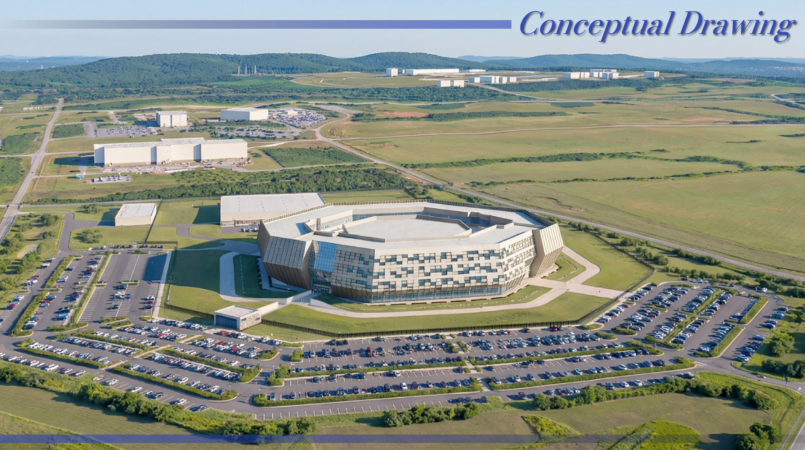
Whiting spoke with reporters at the site that will eventually host the command’s first-ever purpose-built operations hub, designed to house space operators and international partners in a single location. The Pentagon’s fiscal 2026 budget includes $951 million to support design and early military construction for the building; SPACECOM expects to break ground at the 64-acre site next year and be ready to move in by 2032.
Building a facility designed specifically for SPACECOM’s operational needs will be a welcome change, Whiting said. Since being reestablished in 2018, SPACECOM has operated from a number of buildings scattered miles apart that make up its provisional headquarters. In the command’s first instantiation, from 1985 to 2002, it also lacked a purpose-built headquarters.
“To get this facility is going to be an incredible accelerant to our mission,” Whiting said. “It’s going to take a lot of work and effort to get it right.”
Purpose-Built Headquarters
While Redstone already houses a number of military and government organizations—including the Missile Defense Agency, the Army’s Space and Missile Defense Command, and the FBI—SPACECOM is the first combatant command to reside on the installation. Other organizations may have more of a bent toward weapons development or research and engineering, but Space Command is operations-focused, bringing together partner agencies across the Defense Department and the intelligence community, as well as allied militaries. That brings unique communications and security requirements.
Col. Raymond Ruscoe, deputy director of SPACECOM’s “Redstone Transition Team,” said building the facility—and executing the move—will be no small feat.
“There’s absolutely nothing easy about any of this,” Ruscoe told reporters. “We’re trying to shoehorn our operation into a base that was not built for what we are looking to do, and then we’re trying to build probably one of the most complex and expensive military construction projects that has happened in a really long time.”
Yet plans are progressing on schedule so far and the command has been granted special authorities to go fast.
“We’re not just running with scissors in our hands—we’re running fast with scissors in both of our hands, and nobody has told us to stop yet,” Ruscoe said. “Nobody has said the expectations that we are pushing the envelope in either personnel or facilities is outside the realm of the possible.”
Another challenge of the transition is managing headquarters operations across two installations and seven facilities. The command has grown accustomed to functioning in temporary workspaces over the past several years, as Congress, DOD, and three successive presidential administrations waffled on where it would be headquartered. Still, maintaining continuity is a hurdle.
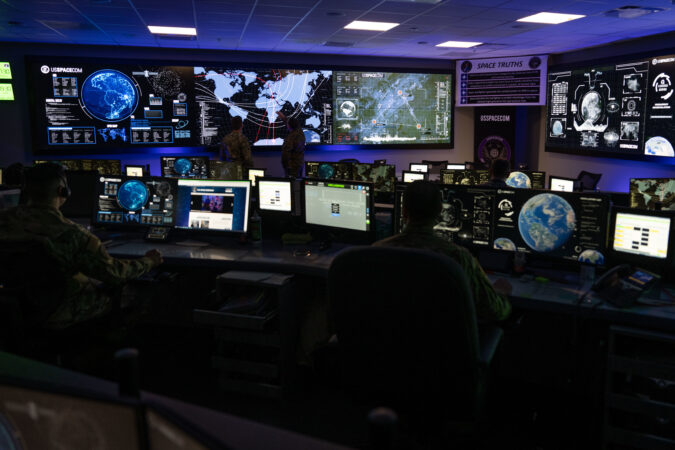
Whiting said SPACECOM is equipping its temporary workspaces with the collaboration tools needed for geographically dispersed operations.
As commander, he is traveling to Huntsville at least every six weeks and expects that to increase moving forward, noting that his home base needs to be wherever the command’s Joint Operations Center is located. That center is SPACECOM’s main command-and-control node and will not relocate to Huntsville until the permanent facility is complete in 2031. So up to that point, the commander will remain based in Colorado.
Relocating Personnel
While it’s still too early to tell how many personnel will opt to move across the country to Alabama, SPACECOM and local community officials say they’ve been encouraged by the number of personnel who have already committed to relocate.
Space Command has encouraged civilian personnel to commit to the move, offering relocation and retention bonuses to those who volunteer.
“We are trying to do everything we can to incentivize our workforce,” Whiting said in February at AFA’s Warfare Symposium. “I’ve said to our civilian workforce, I want to make this decision as difficult as it can be for them because we’re putting our money where our mouth is that we need their expertise to sustain our mission.”
Michael Ward, senior vice president of government and public affairs at the Huntsville/Madison Chamber of Commerce, said he and his team have traveled to Colorado Springs to meet with Space Command personnel who he said show enthusiasm for the move.
Ward said people are often surprised to learn about Huntsville’s quality of life and education system, built over decades of growth dating back to 1941 when Redstone Arsenal was established. Since then, the city has attracted other federal government agencies, including NASA’s Marshall Spaceflight Center, Army Materiel Command, MDA, and the FBI—which is projected to relocate another 4,000 personnel to the region over the next few years.
That means Huntsville generally has the housing, utilities, and other infrastructure in place to manage an influx of new residents, along with the cultural and recreational attractions that can draw newcomers to the region.
“This is not our first rodeo,” Ward said. “This is something that we’ve been planning for and anticipating for a long time. … I think we’re pretty well positioned.”