


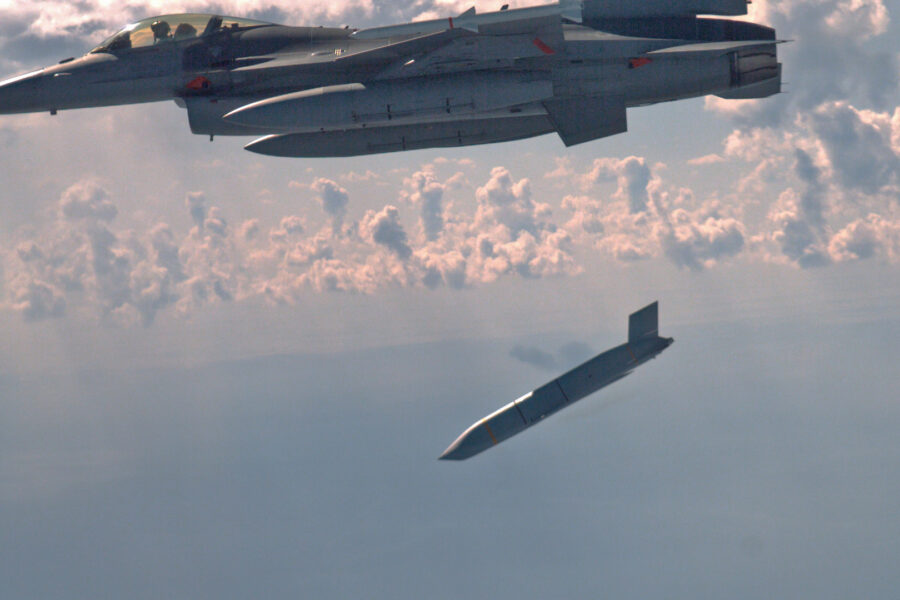
The Pentagon announced framework agreements for new multiyear deals with three companies to mass-produce more affordable, less exquisite air-to-ground missiles for the Air Force, part of a larger strategy to bring cheaper firepower to a future fight.
The deals, announced July 15, seek to stabilize the department’s demand signal to industry and provide a steady stream of missile production.
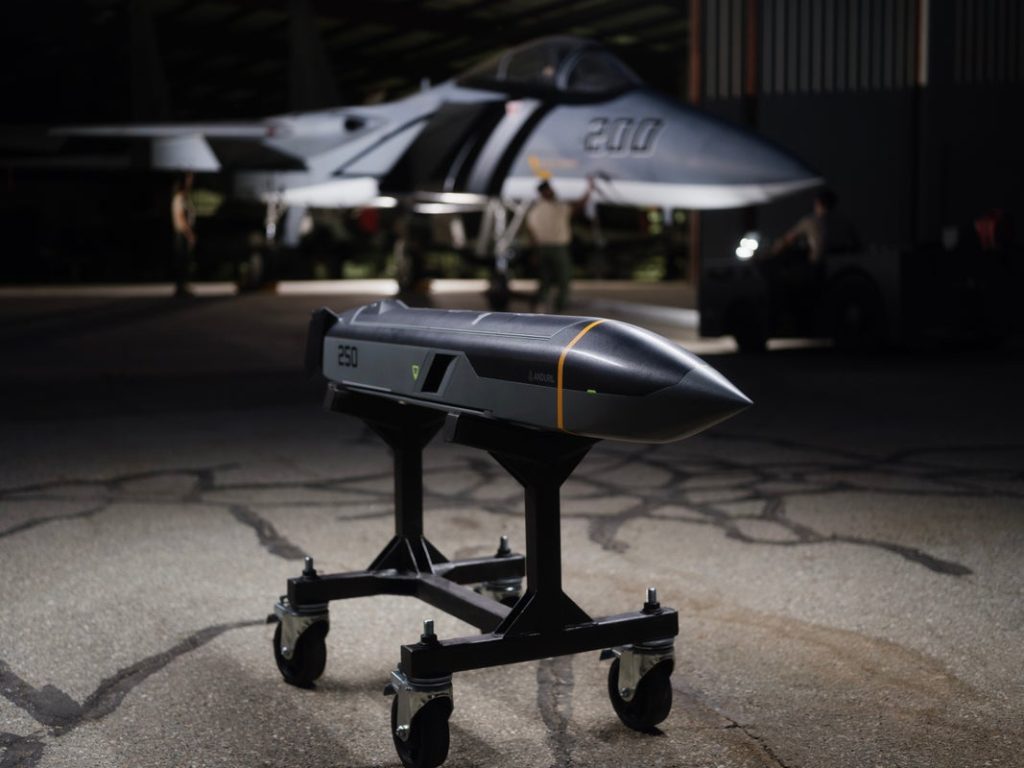
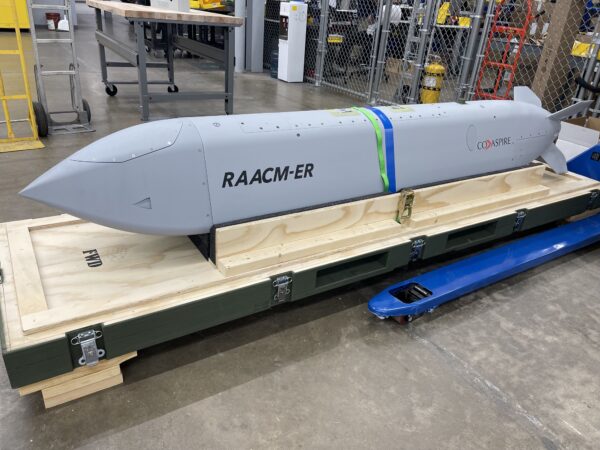
The Pentagon expects to receive a total of 8,000 missiles annually once production ramps up for its three selections—Anduril’s Barracuda; CoAspire’s Rapidly Adaptable Affordable Cruise Missile, or RAACM; and Zone 5 Technologies’ AGM-188 Rusty Dagger.
“The Arsenal of Freedom of the 21st Century requires doing business differently,” Michael P. Duffey, Undersecretary of Defense for acquisition and sustainment, said in a statement. “Today’s announcement showcases the Acquisition Transformation Strategy in action, expanding the defense industrial base, fielding capabilities faster, and attracting private investment to fund innovation and increase manufacturing output.”
The framework agreements allow the three companies to complete testing and qualification for the Family of Affordable Mass Missiles, the Air Force’s new program to significantly expand its munitions stockpiles. The USAF Portfolio Acquisition Executive office for Weapons at Eglin Air Force Base, Fla., will oversee FAMM. That office is currently commanded by Brig. Gen. Robert Lyons III.
Congress authorized the Defense Department to award five-year production contracts for FAMM as part of the fiscal 2026 National Defense Authorization Act. In its release, the department said it is seeking seven-year authorization in the fiscal 2027 bill. The July 15 agreements are for seven-year deals, subject to authorization, to “be awarded upon the successful validation and competitive selection of the munitions.”
The deals and the modular way companies are building these more affordable missile options could give the Air Force both short- and long-term solutions to the problem of rapidly depleting missile stockpiles.
“That is going to enable the Air Force to expand its vendor base, which means it’ll have a much more stable vendor base, and can that can produce larger numbers of these weapons in short periods of time, and that’s a huge opportunity of the Air Force, not just to refill its munition stocks that have been recently depleted or fairly well depleted in current operations … but to also prepare for future conflicts, to be frankly more ready, which creates a better deterrence posture as well as ability to conduct air campaigns if necessary, and if necessary, even more than one theater simultaneously,” retired USAF Col. Mark Gunzinger told Air & Space Forces Magazine.
Gunzinger, who now serves as Mitchell Institute for Aerospace Studies’ Director of Future Concepts and Capability Assessments, published a report in 2020 calling for longer strike capabilities in the bomber fleet, in part because his analysis showed that nonpenetrating aircraft with high-end but low-density missiles such as the Joint Air-to-Surface Standoff Missile-Extended Range would only be effective if the conflict lasted seven days or less.
The Pentagon’s Munitions Acceleration Council, established in 2025 to rapidly increase production for exquisite munitions such as the Army’s PAC-3 MSE defensive interceptors and Precision Strike Missiles, the Navy’s Standard Missile-6, and the Air Force’s JASSM, worked with the Economic Defense Unit and the Air Force on the framework deals, according to the release.
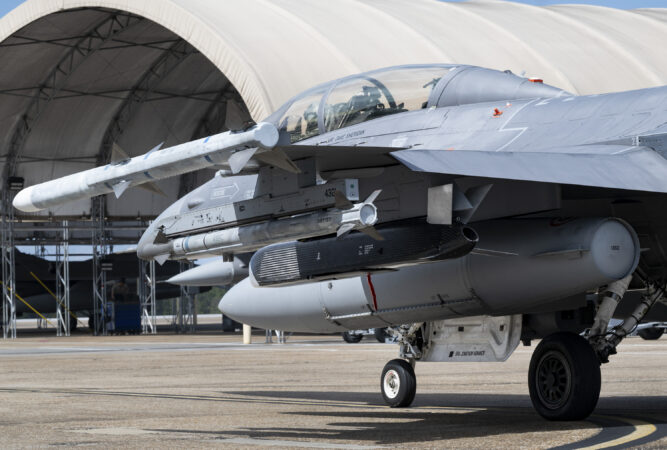
The Air Force is currently focusing efforts on FAMM-Lugged, for fighter aircraft, and FAMM-Palletized, for airlift aircraft, with ranges of 250 to 500 miles. But efforts are underway to extend the range of the affordable munitions in another effort known as FAMM-Beyond Adversary Reach.
“Barracuda-500 is specifically designed to expand the United States’ stand-off strike capability,” according to an Anduril release. “By augmenting existing critical munitions inventories with a more affordable, producible, and flexible option, Anduril is enhancing America’s arsenal of munitions, ensuring that we have the capability required to deter our adversaries.”
“The inclusion of CoAspire in this groundbreaking FAMM program [multiyear authority] underscores CoAspire’s ability to revolutionize our country’s strike capabilities, offering a long-range solution that can be deployed across multiple platforms,” said Doug Denneny, CoAspire CEO and founder.
“Modern conflict has made one thing clear—the ability to rapidly scale production without sacrificing capability is critically important for air superiority,” said Thomas Akers, CEO and CTO for Zone 5. “Rusty Dagger is built to deliver affordable, adaptable, highly survivable, incredibly lethal and rapidly deployable weapons that give the U.S. and our allies the ability to outpace and overwhelm evolving threats without being constrained by cost or production limitations.”
Anduril is based in California. CoAspire is located in Virginia. Zone 5’s U.S. office is in California, but the Norwegian company Kongsberg acquired Zone 5 in June.
Anduril, CoAspire and Zone 5, along with Leidos, were also previously selected for an Army program known as the Low-Cost Containerized Missile program for ground-launched missiles that the Army can use to knock down aerial threats. The missiles being delivered are similar in most ways to those for the FAMM program.
In its 2027 budget request, USAF is targeting $355 million for procurement of 1,000 FAMM missiles, according to budget documents. Budget projections show plans to acquire 28,000 FAMM missiles over the next five years, with a price tag of $12.6 billion:
- 2028: $1.85 billion for 5,300 missiles
- 2029: $2.3 billion for 5,920 missiles
- 2030: $4.03 billion for 7,700 missiles
- 2031: $4.13 billion for 7,990 missiles
The Need
In the first five weeks of Operation Epic Fury, the U.S. military struck an estimated 13,000 targets, some with multiple munitions.
An April report by the Center for Strategic and International Studies estimated that U.S. forces used more than 1,100 JASSMs out of an estimated 4,400 in the inventory before the conflict. The report also noted that the JASSMs take two years to go from order to delivery.
But years before the war, the Air Force began to look at ways to shift from exclusively buying exquisite, expensive munitions such as the JASSM and add cheaper options to its tool kit, Gunzinger said.
That gives commanders more options, especially when looking at targets and strike packages. It also complicates things for an adversary.
“If you launch enough of them, then that causes an adversary to expand its defenses against our cheap munitions because the adversary doesn’t know if the inbound weapon is JASSM-ER or a FAMM,” Gunzinger said.
Recent Efforts
The three nonprime defense contractor missile offerings are not just now coming onto the scene. For example, the Air Force integrated and tested Zone 5’s Rusty Dagger through the Air Force’s Extended Range Attack Munition program in March.
The Air Force selected CoAspire’s RAACM for development under Other Transactional Agreement methods in late 2025, also including integration and flight testing on USAF aircraft.
In August 2025, the U.S. State Department announced an $825 million foreign military sale deal for Ukraine to buy up to 3,350 ERAMs built by Zone 5 Technologies and CoAspire.
Anduril’s Barracuda-500 completed its first successful flight test in a pallet-launched configuration in September 2024. It has conducted “dozens” of successful flight tests since then, according to its release. The Air Force added Anduril, which is also competing for both the hardware and software contracts on the Collaborative Combat Aircraft, to the FAMM-L effort in February.
Those FAMM-L ground and flight tests are scheduled in the coming months, according to an Anduril spokesperson.
FAMM Origins
The current FAMM program traces its USAF origins to service efforts to find affordable cruise missiles to drop via pallets from cargo planes such as the C-130 and C-17 in Air Force Research Laboratory experiments known as “Rapid Dragon,” which debuted in 2019 out of a previous program known as “Franklin,” which sought to build cruise missiles for $100,000 per round as compared to the the JASSM-ER, which can cost between $1.5 million and $2.6 million each.
Personnel loaded first dummy and later live rounds into a specialized container on an airdrop platform. Aircrews then release the container, and it deploys a parachute. The weapons then deploy, ignite their engines, and seek their targets.
In April, the Air Force Life Cycle Management Center renamed the effort “Dragon Cart” and made it an official program of record.
“This program provides the operational ambiguity, adversary deterrence, and additional command options to maximize operational effects,” JiaJia Lee, the new Dragon Cart program manager, said at the time in an AFLCMC release. “It gives us the option to transform mobility aircraft into powerful strike platforms, unlocking capabilities we wouldn’t normally have in how we employ our airlift fleet.”
Dragon Cart is slated for fielding in 2027, according to the release.
Extended Range
While FAMM-P and FAMM-L are the focus for now, the Air Force wants to keep pushing the technology’s capabilities while keeping it relatively affordable.
The Air Force Life Cycle Management Center posted an April 20 notice seeking information from industry on an affordable cruise missile capable of flying more than1,200 miles and striking slow-moving ships, dubbed FAMM-Beyond Adversary Reach.
According to the notice, the center wants a weapon capable of speeds of at least 537 miles per hour and receiving midcourse navigation updates. And the service wants companies capable of delivering 1,000 to 2,000 missiles annually.
Air & Space Forces Magazine Pentagon Editor Chris Gordon contributed to this article.