
The 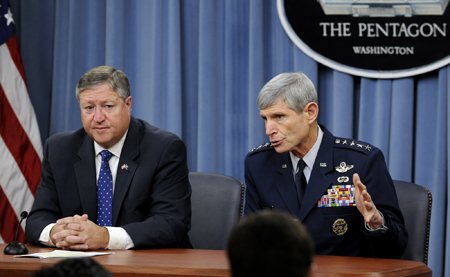 Air Force’s proposed force-structure changes will affect more than 60 installations in virtually every state and territory, though 33 states will be directly impacted, according to the service’s newly released white paper detailing these plans. Chief of Staff Gen. Norton Schwartz said during a Pentagon briefing on Feb. 3 the service has accepted a slightly higher than moderate risk by proposing such extensive changes, though he said he was confident the Air Force would still be able to fulfill surge requirements and meet continuing rotation demands. Among the changes, officials plan to retire or reclassify five A-10 squadrons, one F-16 squadron, and one training/support-coded F-15 aggressor squadron in order to get down to 54 combat-coded fighter squadrons. They seek to phase out 65 of the oldest C-130 transports, leaving a fleet of 134 C-130Js and 184 C-130Hs. They also plan to retire 20 KC-135s, maintaining a fleet of 453 tankers. Click here to continue reading on the aircraft reductions. (Donley-Schwartz transcript) (See also Trading Size for Quality from the Daily Report archives.)
A Golden Dome task force established under U.S. Northern Command earlier this year has a broad remit, which includes fielding the capability to defend the U.S. against missile and drone attacks, its leaders said this week. Some of the primary focuses right now are ensuring Golden Dome can defend itself…