

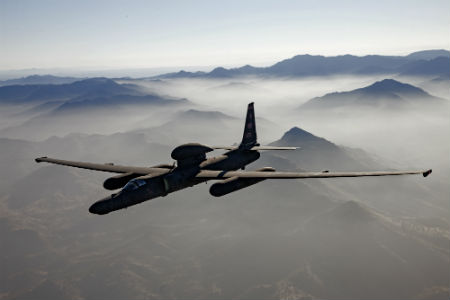
 Orlando, Fla. The U-2 remains a high-demand asset in combatant commands around the world because of its flexibility and survivability, Lockheed Martin U-2 Director Melani Austin told reporters Thursday at AFA’s Air Warfare Symposium here. Austin touted U-2 mission success rates, flexibility, and potency in anti-access, area-denial environments. Earlier this year, the U-2S fleet completed a 10-band, multispectral electro-optical-infrared sensor communications gateway, Austin said. In Fiscal 2013, the U-2S had a 97.6 percent mission success rate in US Central Command; a 97.3 percent success rate in US European Command; and in US Pacific Command a 95.7 percent success rate. In addition, the U-2 is modular, and has a host of sensor suites it can fly with, from the SYERS II (multispectral) sensor to the optical bar camera and a signals intelligence suite. It also is survivable in a denied environment, emphasized Austin. Global Hawks, on the other hand, can only carry one sensor at a time, she noted. “You don’t always have access to [Global Positioning Systems] and satellites” in an A2/AD scenario, she noted, and this makes U-2S the only high-altitude system capable of accomplishing its mission in such a scenario.
In the small world of Air Force weather specialists, combat weather specialists are a niche unto themselves, deploying with Army ground units to provide forecasts and, if need be, fight alongside those Soldiers. For Staff Sgt. Francisco Estrada, the hardest part of the job isn’t the possibility of ground combat,…
