
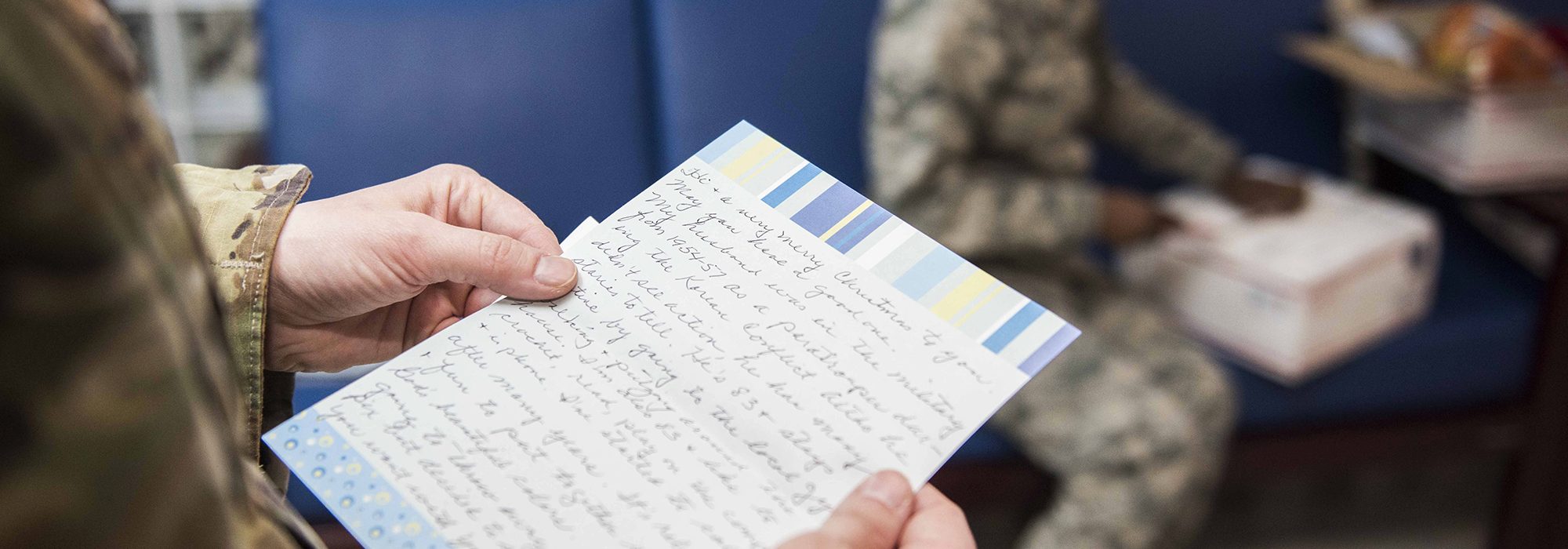
We love letters! Write to us at letters@afa.org. To be published, letters should be timely, relevant and concise. Include your name and location. Letters may be edited for space and the editors have final say on which are published.
One Way Nukes
Thanks to John Lowery for his great article “The One-Way Nuclear Mission” [October/November, p. 104]. Brought back fond memories of my Super Sabre days. I wasn’t among the first Victor Alert guys in Europe discussed in Lowery’s article but I did sit on the bomb there in late 1965. I had just completed gunnery training at Luke AFB, Ariz. (that included the LABS [low-altitude bombing system] ) and was assigned to Myrtle Beach where I was told to quickly study up on a nuclear target and brief the wing commander and DO for certification. I was then off TDY to Incirlik AB, Turkey, arriving in December 1965. We had the newer F-100D symmetrically configured with the bomb on the centerline and 275-gallon fuel tanks on the wing intermediate stations. It was still a one-way mission, and I remember my termination point was some small airstrip out in the middle of nowhere. JFK had the PAL [permissive action link] enable on all the bombs in Europe by then but when we had a practice alert; blew carts to start engines, system checks, comm checks. I’ll never forget the first time looking up and seeing a huge fire truck pulling across in front of me. This lieutenant wasn’t going anywhere with that bomb.
Col. Mike Sexton,
USAF (Ret.)
Albuquerque, N.M.
In addition to the Victor Alert there was the little known Zulu Alert. C-123s and C-119s TDY from bases in France were on Zero Alert at Bitburg, Spangdahlem, and Ramstein loaded with nuclear cores destined for USAF fighters based in France. President [Charles] de Gaulle would not permit nuclear weapons in France, so if the balloon went up we were to take the cores over there and come back to Germany for a second load. That was the plan but many of us thought that if we got to France successfully, there would be a question like, “What’s the heading to Lisbon?”
James D. Carson
Mineral, Va.
I particularly like John Lowery’s article on nuclear alert in USAFE. I’ll bet I am one of many Phantom pilots feeling a little left out—same with my Aardvark friends—by the omission of these two jets. From the time the Thuds departed until the Eagles and Falcons came on the scene the F-4s and F-111s from Lakenheath, Bentwaters, Upper Heyford, Woodbridge, Bitburg, Hahn, Spangdalem, and Ramstein set the “Q” at home and at Aviano and the Lick. I clearly remember looking at some of the mission folders used by the Huns out of Turkey and their profiles devised before the SA-5, 6, 8, and 11s sprouted across the Warsaw Pact and the Soviet Union. Thankfully we had some better avionics and speed (especially the F-111s). No doubt our survivability was about the same. I remember the intel briefs suggesting not to eat any meat we came upon “close’ to the bone, and to stay undercover for at least seven days after the last nuclear detonation. Sure.
Regarding the Hun, it would be very interesting some day to learn more about the “Slick Chick” F-100As that flew the lines in Europe and out of Taiwan by our Nationalist Chinese friends.
Finally, in either 1971 or 1972, I realized things were getting tight when the gold coins were taken out of the Victor Alert survival packs in the squadron safe and sent elsewhere. That was where the rubber met the road on Operation Gold Flow.
Col. Steve Mosier,
USAF (Ret.)
Marietta, Ga.
The article absolutely shocked me. When I was serving with the 81st TFW at RAF Station Bentwaters-Woodbridge as chief of programs and deputy base civil engineer in the time period 1963-67, for this dual base, it was common belief that the 81st, with F-101s, had invented the over-the-shoulder tactical nuclear delivery technique and practiced it in the North Sea. The wing commander and deputy for operations at this time, until they shipped to Thailand and the 81st” virtually recreated itself there as the 8th TFW, was Col. Robin Olds, the wing commander, and Chappie James later promoted to colonel, as vice commander.
The story was that this delivery technique had extended the life of the F-101 with its sole remaining duty being an RF-101 Wing in France. Our third squadron had F-100s at RAF Station Woodbridge, but our nuclear weapon storage was at RAF Station Bentwaters—or, at least I, along with our Ministry of Public Works leaders and craftsmen, were led to believe it was nuclear weapon storage.
This was not the kind of rumor normally passed to a captain civil engineer, accepted as fact, and then reinforced by everyone I knew in the wing. If the pilots were not trained in the F-101s at RAF Station Bentwaters and were not equipped to deliver tactical nuclear weapons in the over-the-shoulder technique as it was even called then, it is one of the giant hoaxes or effective security decoy exercises I ever experienced in my 28 years of service.
If only F-100s and their pilots were trained in this delivery technique, all the maintenance of nuclear weapons storage at Bentwaters and training interchange of pilots between the wing’s F-101 and F-100 squadrons was evidently done in very successful secrecy from RAF Station Woodbridge. In my four years there, it is true that I never personally observed validated nuclear weapons in our heavily secured bunkers. My frequent position as “Broken Arrow commander” for nuclear weapon accident exercises at RAF Station Bentwaters does not amuse me at this moment, if the hoax is true.
I take that back, I am not only shocked, but also amused.
Col. William R. Sims,
USAF (Ret.)
San Antonio
The article entitled “The One-Way Nuclear Mission” brought to mind the SIOP planning my pilot and I did between the 1967-1968 combat cruises to the Gulf of Tonkin of VA-196 on the USS Constellation. Today’s young Hornet pilots may not be aware that Naval Air was part of the plan to use strategic nuclear strikes with the A-3, A-4, A-5 (RA-5C photo recce) and the venerable A-6 Intruder, arguably the best nuclear delivery aircraft the US Navy ever fielded.
Our mission was to deliver a single nuclear device about 1,000 miles inland from the Pacific Ocean coast and hopefully make it back at least as far as that same coastal area before ejecting after expending all our fuel, hoping for one of our ships to retrieve us. Even with four drop tanks flying low level for 2,000 miles was an iffy proposition in the old Intruder. If we eject over land … well, who knows? Flying a practice profile from Whidbey Island, Wash., to the southern California Chocolate Mountains bombing range and conducting loading drills between line periods while on Yankee Station were grim reminders that we may actually have to fly that mission someday.
Phil Waters
Arvada, Colo.
My first enlistment and second NATO rotation from Cannon AFB, N.M., to Incirlik AB, Turkey (October ‘61 to February ‘62). Deployed this time as a trained and certified weapons load crew member in addition to my normal duties as a fire control systems mechanic (AFSC 32250B).
I got to spend five weeks of the four-month rotation at the Victor Alert facility where we loaded Mk 28s on the F-100D’s centerline station and four AIM9 Sidewinders on the inboard wing stations. Four aircraft were assigned to the Victor Alert facility.
If the order came down to launch these aircraft and to comply with the “two-man concept” that was in effect at the time it was my job to physically ‘arm’ the bomb on the centerline after the pilot had powered up the aircraft and was preparing to scramble from the Victor Alert facility, a big responsibility for one recently promoted to A1C.
CMSgt. Jerome T. Czeikus,
USAF (Ret.)
Victorville, Calif.
Rolling Thunder
In the October/November issue, the article concerning Rolling Thunder included a photo of the Korat flight line on p. 73. I was there much later, during Linebacker, but am familiar with the various ramps there. If you look closely, you will find only EC-121s and EB-66s on the near ramp. The middle ramp was called the Thai ramp, but we had all 24 of our F-105Gs there, along with some Thai UH-1s when I was there. The far ramp had F-4s and during Linebacker II even had A-7Ds, while AC-130s and C-130Hs occupied spots on the near ramp. The photo shows just seven Thuds and seven UH-1s on the Thai ramp. We had quite a mix of missions and aircraft during Linebacker I and II!
Thanks for a great magazine!
Col. Frank Alfter,
USAF (Ret.)
Beavercreek, Ohio
Contributor John T. Correll’s informative article on Rolling Thunder harkened me back to my active duty days as an Air War College student.
I had selected Rolling Thunder as the topic for my research report and sought ways to make it special.
Luckily I married into a family rich in Air Force history. I had a couple of aces up my sleeve and played both cards in an attempt to add first person perspective to my paper.
My father-in-law was then-Maj. Joseph D. Moore. During Rolling Thunder he was an F-4 pilot and 31st Tactical Fighter Wing tactics officer at Udorn RTAFB, Thailand. He flew with Col. Robin Olds and his legendary Wolfpack.
His father was then-Maj. Gen. Joseph H. Moore, the 2nd Air Division commander and deputy commander for air operations, US Military Assistance Command, Vietnam, and later 7th AF commander. As such he was the senior Air Force advisor to Gen. [William] Westmoreland, the commander of MACV. Moore and Westmoreland were both Eagle Scouts growing up back in Spartanburg, South Carolina, so they enjoyed a great working relationship. “Westy,” as his friends knew him, aspired to be a pilot but after graduation from West Point he failed the eye exam.
My Moore interviews collaborated many of the points that Correll makes in his article.
General Moore contended that the Air Force was, “not effective in knocking out the will to fight of the North Vietnamese because we weren’t allowed to hit those targets that would have done that.”
He noted that, “Targets, number of planes, types of bombs, and times for attacks were all directed by Washington. Weather delays were not allowed nor alternate targets authorized.”
Major Moore’s observations dovetailed nicely with that of his father. “The limits of our airpower were our civilian masters, who attempted to control every aspect of the combat. “We had the military strength and the capability to bring NVN to its knees at any time, even to the end, had LBJ or later Nixon told us to win.”
Major Moore continued, “Most of my ilk in those days came out of the, “Yes Sir, No Sir, No excuse Sir!” mold and were highly disciplined and unabashed patriots. If they had not paid us, we would have paid them to do what we loved to do.”
That included officers like Moore’s longtime friend, Gen. William Kirk, who passed away earlier this year, and is shown in the photo accompanying Correll’s article carrying Colonel Olds off the airfield.
Major Moore highlighted news reports on the predictability of US air strikes. He recalled, “NVN gunners would rise early, do their housecleaning, have breakfast, and then man their guns for the first strikes. They’d then head back to their quarters for their midday meal, do chores or take a nap, and return to their guns for the afternoon go before they shut down for the night.”
Sadly both, Lieutenant General Moore and his son Major General Moore, are now deceased but they left lasting marks on the Air Force they loved.
Just for the record, I got a “marginal” on my research paper. Lesson learned—just stick with the school solution!
Col. Bill Malec,
USAF (Ret.)
O’Fallon, Ill.
The October/November issue is the best issue I have read in a long time. It brought back many memories of my tour at Korat RTAFB, Thailand, from March 1972 to April 1973. I flew the EB-66 during that time and participated during the entire Linebacker campaign, including the Bat 21 rescue operation.
I must point out an error in the labeling of photo No. 3 on p. 73. The flight line shown was at one end of the airfield and the photo shows EB-66, EC-121, and one C-130 aircraft; no F-105’s are shown. All the “cats and dogs” aircraft were based at one end of the airfield and the fighters at the other end. I believe that the C-130 in the photo is an ABCCC model as they were based there also.
Thanks for an outstanding issue.
Lt. Col. John Briggs,
USAF (Ret.)
Green Valley, Ariz.
In photo No. 3 of the Korat flight line on p. 73, the caption states that it shows USAF C-121s and F-105s.
I have to congratulate the USAF camouflage experts for their excellent work of making those F-105s look just like B-66s.
Lt. Col. Addison Thompson,
USAF (Ret.)
Santa Barbara, Calif.
Space Corps
Reading your article “The Space Corps Question,” Air Force Magazine, October/November, p. 42, I was surprised to see no reference to the Navy and Army. The arguments for greater coherence, improved programmatic and fiscal management, and better esprit de corps for military space could surely be applied to Navy and Army space programs as well as to those of the Air Force. You quote Rep. Mike Rogers (R-Ala.) as saying that his action would put space “on a par with” other combat domains like air and sea. The land domain is notably absent from this list, as are, implicitly, the Army space programs.
There seems to be an inconsistency in Rogers’ proposal and your description of it. You quote him as proposing a “Space Corps within the Air Force.” You refer to a “potential new branch of the armed forces,” but a unit within the Air Force is not a new branch of military service.
You describe the establishment of a new Air Staff position, A11, as a response to the Rogers’ initiative. It is interesting that there already exists an Air Force deputy undersecretary for space programs. If space forces are to become a truly joint military element, would the same organizational imperative not apply to the Army Staff, the Navy Staff, the Joint Staff, and the Office of the Secretary of Defense as well?
I respectfully suggest that you get back to Representative Rogers for clarification of these points, the most important of which is: “Why not include the Army and Navy space programs in the new United States Space Force?
Brig. Gen. William L. Shields,
USAF (Ret.)
Tucson, Ariz.
Fall Down, Already
In reference to: “Verbatim: Milley the Myth Slayer,” October/November, p. 20:
One of the best things about being retired is being able to speak truth without undue regard for current “climate” or politics. That said, Army Chief, General [Mark A.] Milley’s saying, “[It is a myth that] you can win wars from afar …” well-summarizes the outdated, “dino’s fighting in the dirt,” linear thinking that’s defined all armies, including ours, and, sadly, continues to hold sway in Washington because of “Land/Sea Battle” influence (and budget protecting). Channeling two of our greatest visionaries and strategically most knowledgeable aerospace generals, Billy Mitchell and [Curtis] LeMay, you, sir, are woefully wrong.
The “win the ground” antiquated idea has been factually passé for a long time. Dead, but just won’t fall down. Reality changed over the last 70 to 100 years while Armies have been (obviously, still are) looking mostly down and out front to the horizon, NOT up and over this relatively small ball in air and space, with precisely guided drone to ICBM-sized weapons that—used properly—inherently redefine “winning.”
Can’t win wars from afar? Tell that to Hiroshima and Nagasaki and the nation of Japan. Tell it to Ho Chi Minh after the December ’72 “11-Day War.” In fact—other than honorably doing, at huge cost of blood and dollars, what it has been asked to by misled national leadership—WHAT, exactly, has the US Army done since World War II in terms of preventing war; failing that, win war at the lowest cost to the United States? Where, sir, have you actually “won” in the big picture, “house-by-house, block-by-block, room-by-room?”
Maj. J. Andrew Clark,
USAF (Ret.)
Murray, Utah
Counting the Minutes
The cover article, “Fuel From the Desert” in the October/November issue, p. 30, got me to thinking, “How much time have I spent on the bottom end of a refueling boom?” Pilots don’t actually break out the time they spend refueling, so I had to make an educated guess.
For a total of 10 years I flew B-47 and B-52 bombers in Strategic Air Command. We flew an average of once a week for at least 45 weeks each year. And we spent 30 minutes practicing refueling on each flight. So, I estimate that I flew about 450 flights during that 10 years and spent about 225 hours on the bottom end of the refueling boom.
I can’t speak for the fighter pilots and especially those who use the probe and drogue system. But in the B-47 and B-52, refueling was really very easy. In the B-47, the pilot sat in the front cockpit with the copilot behind him. Pulling up behind the tanker, you simply put his wings in your windshield and kept them centered and level, like flying the attitude gyro. We frequently followed the tanker through turns. The same technique wasn’t really applicable in the B-52, but the airplane was so stable that, once in the refueling position, you could hand-fly the airplane with your fingertips.
Anyway, midair refueling was fun. It reminded me of my fighter pilot days when I flew the slot in a diamond formation.
Lt. Col. Alfred J. D’Amario,
USAF (Ret.)
Hudson, Fla.
Your article, “Fuel from the Desert” (October/November, p. 30), was a great read for me. The focus, of course, was on air-to-air refueling and the airmen who are vital to this mission. There was some mention of the maintainers on the flight line giving attention to the aircraft assuring that they are airworthy and ready for the next mission. Also to the airmen who load cargo onto the aircraft. What was missing (oversight) from the article and what is a vital ingredient to the refueling cycle, is the POL base refueling section. The slogan “No Kick-Ass Without Tanker Gas” is certainly true, including the airmen of the base refueling section. I served with the 354th TFW at Myrtle Beach AFB, S.C. (Col. Francis S. Gabreski, wing commander), participated in the TAC/CASF operation to Lebanon and Turkey in 1958 flying over in a C-130, and duty with the 1400 MATS Wing at Keflavik, Iceland. My duties in all operations was flight line refueling support when the aircraft returned to the base. The birds always had to be topped off and ready to go. Those years, we drove to the parked F-100 and F-89 fighters with self-contained refueling units, the F-6, the F-7, and the MK1. Our slogan was “You Call, We Haul.” I feel that some mention of the base refueling support would have been appropriate to complete full circle the refueling the flight article. Hopefully, in a future issue, the base refueling airmen, duties, and mission will be featured.
David Ribbe
Nanuet, N.Y.
As an air mobility practitioner (now an analyst), I was gratified by Brian W. Everstine’s, “Fuel from the Desert,” in the October/November issue [p. 30]. Mr. Everstine writes well and his focus on the essentiality of lifters and refuelers in American air campaigns is spot-on.
There is an issue in the background of Everstine’s article that bears more treatment in a future article—modernization.
DOD and the Air Force need to update their tanker force structure and planning paradigms from one inherited from the 1950s to a more flexible concept; one reflecting the basing and operational agilities needed now. In order, the priorities of this paradigm likely will be to:
Accelerate the KC-46A program, to replace as many geriatric and maintenance-intensive KC-135s with these more capable aircraft as quickly as possible.
Acquire a fleet component of theater refuelers, optimized for agile operations in regions not endowed with networks of secure first-class airfields. The ability of these aircraft to operate from shorter runways, forward arming and refueling points (FARPs), and off-concrete parking spots would improve their survivability, available tanker capacity, and ability to support operational surges. They also would be essential elements of emerging Air Force operational concepts, such as Agile Combat Employment (ACE). Fortunately, the in-production statuses of drogue-equipped Airbus A400Ms, Lockheed KC-130Js, and Embraer KC-390s, suggests the possibility of an early competition for an aircraft able to download the Air Force’s boom-equipped fleet, by supporting Navy, Marine Corps, and allied aircraft.
Acquire a fleet element of very high-capacity, very long-range tankers, possibly designed for stealth. Perhaps the most important advantage of these aircraft would be their ability to support quick-response, global strike operations from bases located in the homeland or the territories of secure allies.
Clearly, I’m writing ahead of the library of detailed research and policy decisions necessary in the next few years to settle the details of the tanker fleet’s future. But, if we are to escape the perils of old-think in a new era, we need to confront the world as it likely will be, not as it once was.
Col. Robert C. Owen,
USAF (Ret.)
Port Orange, Fla.
BEEF Over Band
After reading “Banding Together” (October/November, p. 79), I find myself in agreement with those who question the expense and the need for military bands. The article states the band operation and maintenance funding is $9.7 million, without saying whether that amount includes transportation and lodging when the bands are travelling. Add in the salaries of the band members, housing and subsistence allowances, uniform allowance (how many other AFSC’s require an E-5 to have a mess dress uniform?), and per diem, and the cost goes up considerably. I have seen quoted elsewhere a figure of $437 million annually for all the bands and orchestras within the four services in the Department of Defense. There are many places where that money could be used more effectively to support the combat mission and readiness.
I’ll give an example based on my own experience. There are upward of 140 Prime BEEF Civil Engineer squadrons in the Air Force Reserve and Air National Guard. These squadrons lack the vehicular heavy equipment they need to do the jobs expected of them when deployed. If they go into a USAF-owned main operating base like Ramstein, Aviano, or Kadena the equipment they need will be there. But if they go to a colocated operating base owned by an ally, such equipment may or may not be available, and if they go to a bare base or an area that has suffered a natural disaster such as the recent one in Puerto Rico, it WON’T be there. Just unloading the airplane when they get to their destination will be a chore, since the cargo pallets will have to be broken down and unloaded by hand. Civil engineer troops will move mountains—literally, if necessary—when asked, however as in any endeavor, they need the right tools.
Picks and shovels are not enough. In my not-so-humble opinion, the three pieces of equipment that any Prime BEEF team needs are an articulated bucket loader with a conversion kit allowing it to also be used as an all-terrain forklift, a backhoe similar to those used by civilian construction contractors, and an M105 bulldozer the same as those used by Army combat engineers. All three machines are air transportable by C-130, and if purchased in quantity, the cost would be around $1 million per squadron. Assuming the $437 million annual cost of military bands is correct, one-third of that amount would be sufficient to equip every Reserve and Guard Civil Engineer unit.
Bands and orchestras are nice, but not a necessity. Let’s put the taxpayers’ money where it will best support the mission.
Lt. Col. Rock Desilets,
USAFR (Ret.)
Windsor, Conn.
Stalingrad
This was another superb article by John Correll [“Turning Point at Stalingrad,” October/November, p. 98]. The German airlift to Stalingrad failed for a number of reasons. I think one of the underemphasized reasons was the state of the airfields. Earlier in 1942, the Germans made a successful airlift to nearly 100,00 troops surrounded at Demyansk. They averaged 300 tons of supplies per day versus the 117 tons of the Stalingrad operation. The number of aircraft used was about the same in both cases, but a big difference was the condition of the airfields inside the pockets. Demyansk was much further north. The Germans used compressed snow airfields and the weather kept them solid. In Stalingrad, it was different. Sometimes it was freezing and sometimes it thawed. When it thawed there was mud, and this was deadly for aircraft landing. I think a good portion of the Stalingrad aircraft losses can be attributed to this. From Guadacanal to the Berlin Airlift, the US used pierced steel planking (PSP) to combat muddy conditions. It worked. The Germans didn’t use PSP and paid the price. What today’s Air Force might keep in mind is that the conditioning of forward airfields might be as important as having good transport aircraft. How much thought is being given to this subject? For example, during the Berlin Airlift, the creative people in the Air Force brought in heavy earth moving equipment that would not fit in a C-54 by cutting it into pieces with torches and then welding the pieces back together inside Berlin. Has any thought been given to having heavy earth moving equipment broken into pieces that could be transported by an Osprey and then put back together at the site of a future airfield?
William Thayer
San Diego
Aperture
I could not agree more strongly with Gen. David L. Goldfein’s interest in getting more airmen into top regional commands [“Aperture,” October/November, p. 12], but wish he had also called for making airmen the head of these commands. Few students of warfare would disagree with the statement that since the invention of the airplane, air forces have played the dominant role in defeating the opposing air force. Nor would they question the fact that beginning in World War II airpower has been the key to defeating the opposing navy. Given the dominant role airpower plays in defeating opposing air forces and navies, most would agree that airmen are best qualified for being in charge of employing airpower in these campaigns.
Given these developments, it is surprising that few Americans seem to be aware that beginning in 1944 US airpower has been the key to the defeat of opposing mechanized armies. While most American soldiers might disagree with this statement, opposing soldiers whether they are German, North Korean, Chinese, North Vietnamese (1972), or Iraqis and who have been on the receiving end of US airpower have little doubt that US airpower played the dominant role in their defeat.
What is most puzzling is that until recently US airmen, with few exceptions like Lt. Gen. O.P. Weyland, have recognized that airpower has revolutionized warfare on land and that airmen should be in charge of these campaigns. Evidence that many airmen have not recognized that this revolution in land warfare has occurred can be seen in their failure to appreciate the key role the Joint Surveillance Target Attack Radar System (JSTARS) plays through its unprecedented ability to detect and target the maneuver of opposing mechanized land forces as was demonstrated in Operation Desert Storm in the Battle of Al Khafji. This failure to appreciate the importance of JSTARS to the revolution in land warfare may be traced to the poor understanding too many airmen have of the vital role vehicular movement plays in the exercise of operational art in land warfare.
Lt. Col. Price T. Bingham,
USAF (Ret.)
Melbourne, Fla.
Supervisor Pressure
The squadron has an ops mission and a morale and welfare mission [“Revitalizing the Squadron,” October/November, p. 36]. The CC has to understand the difference. Sometimes he/she has to decide between the two. A key player in [their] decision is the first sergeant. The ops side has to be 100 percent dedicated to the mission. The first sergeant has to be 50 percent mission and 50 percent morale and welfare. Only the first sergeant has “morale and welfare” in his job description. The ops guys can’t always provide the morale support that the troops need—enter the first shirt. In my tenure there were some supervisors that consistently needed guidance in this area. There were others that could juggle all the balls. Both types were good mission managers. I didn’t win all the battles defending my side. It is essential that the first shirt understand the pressure that the ops supervisors are under. The sequestration caused the problem. The unit organization is sound. Let’s not get carried away with using the latest civilian corporate structural objectives to fix a uniquely military problem. Get back to basics —put more money in training first sergeants. The squadron unit has survived for decades. Note: I’m not convinced that all 10-year master sergeants are mature enough to be effective. The first sergeant has to love his job. He won’t have many close friends in the unit, but at the end of the day he will know that he has affected lives.
CMSgt. Leon T. Jarrett,
USAF (Ret.)
Surprise, Ariz.