
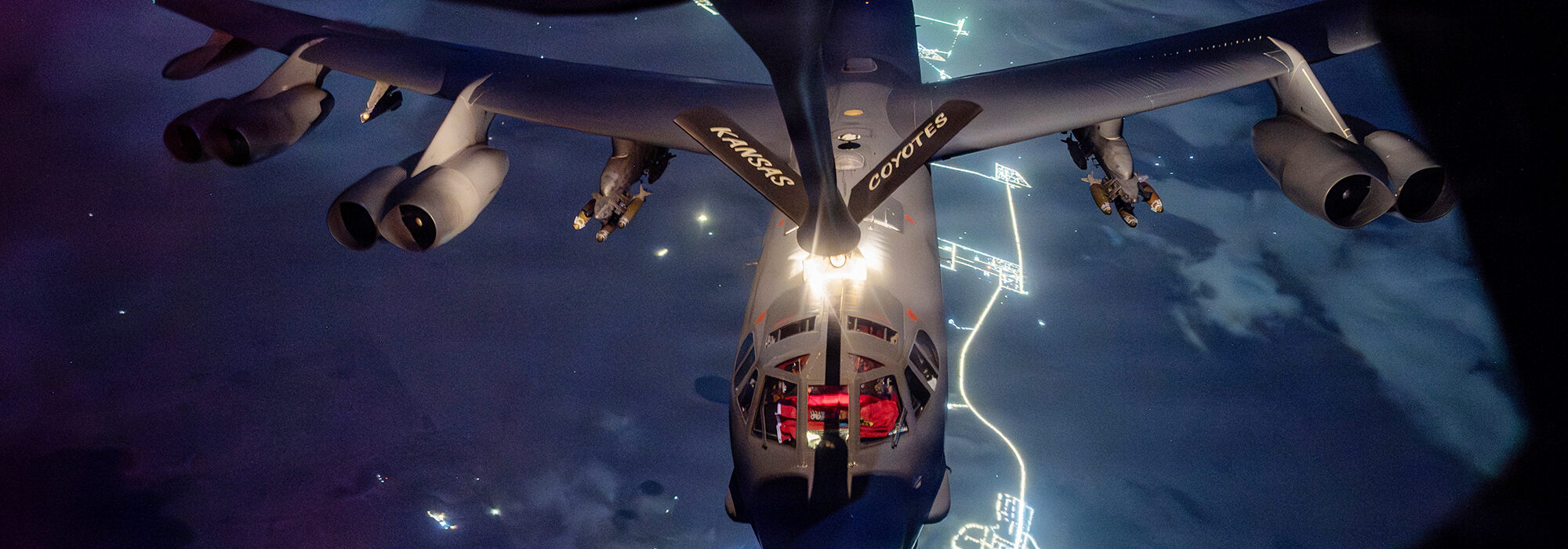
When Al Qaeda terrorists turned commercial airliners into cruise missiles on Sept. 11, 2001, killing more than 3,000 people in New York, Washington, D.C., and Pennsylvania, our military was ready and ripe for the challenge.
The first American bombs struck enemies in Afghanistan 26 days later; five weeks after that, the Taliban government collapsed and Al Qaeda was in hiding.
Our allies rallied. NATO E-3 Sentry Airborne Early Warning and Control jets from Europe patrolled our skies in Operation Noble Eagle, the only time in history that NATO members invoked Article 5 of the treaty, which holds that “an armed attack against one or more … [members] shall be considered an attack against them all.”
Though neither terrorists nor any foreign power again threatened American airspace at that time, their partnership brought us peace and reassurance. We felt better knowing they were there.
We needed NATO’s help because we’d sent our E-3s to war. In retrospect, this was a canary in the coal mine, an indication that USAF lacked the capacity to defend our homeland while simultaneously supporting combat operations overseas.
The next 25 years were disastrous for our military air and space enterprise. Decades of nonstop military operations exhausted the Air Force, and the cost of ongoing ground operations led the Pentagon to delay and sometimes forgo modernization. The Air Force contracted as adversaries watched, learned, copied, and countered everything it did or could do.
Restoring our military strength and international standing is Job One.
Now the war with Iran has exposed even deeper fissures in U.S. military readiness. Both the Air Force and the Navy had to extend deployments to nine months or more because they lacked the ready forces to relieve them.
The Pentagon raided weapons magazines in every part of the world to ensure munitions didn’t run out in the Middle East, leaving weapons inventories dangerously low while simultaneously increasing risks in every other region. The President’s military options appear limited not just in the Strait of Hormuz, but worldwide.
Not since the hollow-force days of the post-Vietnam military have we suffered such a readiness deficit.
Yet there is reason for optimism. From those dark days in the ’70s emerged a more confident and capable America and the military that broke the Soviet Union, expelled Iraq’s army from Kuwait, and rescued Kosovo Albanians from Serbian genocide.
We can rise again, if we look to the past. In the 1980s, the Reagan administration worked closely with Democrats in Congress to accomplish much that seemed unimaginable at the time: ending years of double-digit inflation, solving a Social Security crisis, and rebuilding the military with weapons purchases on a scale our nation has not seen since. Along the way, they restored American confidence. It is notable that those problems are essentially the same as we face today.
Restoring our military strength and international standing is Job One and is a bipartisan concern. To deter Iran, North Korea, Russia and China, the U.S. must present a credible conventional as well as nuclear deterrent. We need the means to wage and sustain war longer than our adversaries. Right now, we can’t, and it shows.
Though still superior technologically, our military forces are shrinking while others grow and innovate. China’s air force is approaching technological parity and scale. Our Air Force needs both capacity and capability to regain the advantage in the air.
Training and readiness must be restored. Air Force leadership must back words with funding, buying the parts and driving the schedule to ensure Airmen are training as they did in the 1980s. In those days, training was America’s secret weapon, even more than technological prowess. Our forces weren’t just better equipped; they were better prepared.
Congress returns to Washington in September having already given up trying to pass a budget in time for the fiscal year’s start on Oct. 1. They’ve already approved a continuing resolution. These unpredictable stopgap spending measures contribute to the readiness crisis and delay needed solutions. CRs lock in prior-year spending levels, blocking new starts and increased investments exactly when speed is demanded.
The Air Force and Space Force are the cornerstones on which rest our entire defense enterprise. No joint force operations can be conducted without one or both of those services. Their health and readiness are foundational and must be prioritized.
In space, the U.S. can no longer claim unique advantage. Iran’s access to space surveillance enabled its attacks on U.S. bases in the Middle East, inflicting pain on the U.S. that was not possible in decades past. China and Russia pose far more dangerous challenges, including the ability to attack our satellites in orbit.
A united Congress must appropriate the full $71.1 billion the Pentagon requested for the Space Force in fiscal 2027, ensuring resilient space systems that can fight through attack as well as counter-space technologies that can disrupt adversary kill chains.
Revitalizing the Air Force is an even greater challenge. It has atrophied and will need a massive capital injection to recover. China’s technological progress and its coming numerical superiority threaten USAF’s standing as the world’s biggest and best airpower. That’s not a position America should be willing to surrender. The Pentagon’s 2027 budget request increased by nearly 50 percent, yet somehow the Air Force’s share rose only 22 percent—less than half.
Congress must therefore correct the Pentagon’s misallocation:
Buy at least 60 F-35A stealth fighters, ramping up to 100 annually, while also buying as many F-15EXs as possible. Mass matters.
Replenish the MQ-9 fleet, directing the Air Force to acquire MQ-9Bs as replacements now rather than waiting for future promises to perhaps come true in five or more years. The airborne ISR gap needs combat-proven MQ-9s available now; we can debate next-generation alternatives while that’s happening.
Lay the groundwork to recapitalize the rest of its geriatric air fleet. E-7 Wedgetail Air Battle Management jets, new tankers, and a plan for next-generation airlift are all overdue.
Buy weapons at scale. The Pentagon is rightly investing billions to develop new, less costly munitions and to commit to longer-term contracts to ensure a steady supply of both current and future weapons. Our fighters and bombers are ultimately only as good as the weapons they carry and only useful if those weapons are available.
Don’t forget the people. At the heart of every enterprise are the people who make it run. Recruiting has improved but is always fickle. Retention is dependent on families. Fixing structural problems with the basic allowance for housing and the shortage of affordable, quality childcare is crucial to long-term talent retention.
The Air Force went from broke to awesome in the 1980s, turning around the enterprise in a decade. We can and should today do that again today. In World War II, it took two years to field a force that could defeat the Axis Powers. In a future war, we won’t have that time. Only by investing now can we hope to deter war tomorrow.
