


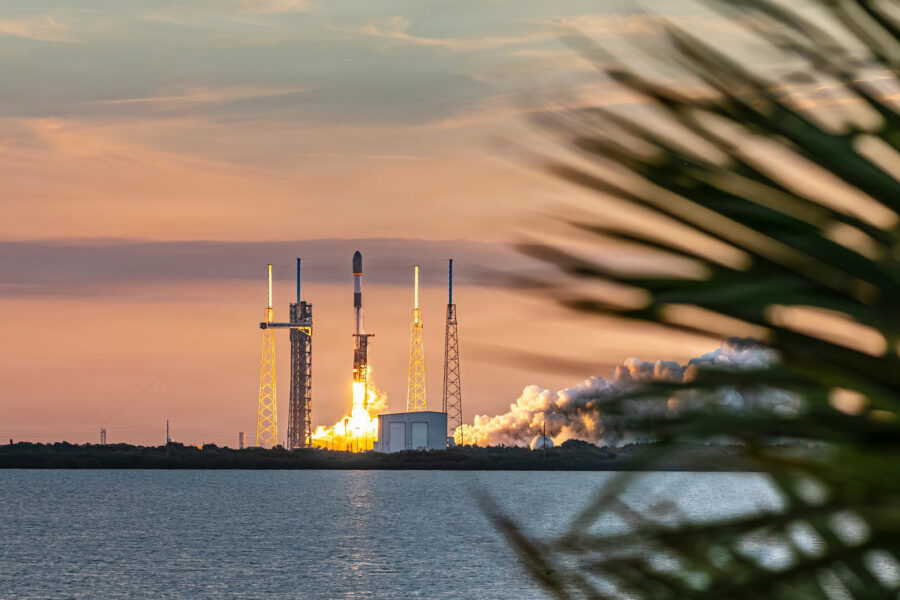
The head of the Space Force’s largest acquisition organization said the service needs a third spaceport to support medium and heavy launch by 2030—a goal he called “aspirational” even as he stressed the importance of building out the U.S. military’s launch infrastructure.
“We need this capability by 2030, but I’m also a pragmatist,” Space Systems Command boss Lt. Gen. Philip Garrant said Oct. 21. “That is not an inconsequential demand to build a spaceport when you factor in orbital regimes, safety, access to commodities … There are a lot of considerations.”
The Space Force operates ranges at Cape Canaveral Space Force Base, Fla., and Vandenberg Space Force Base, Calif., but those expect to run out of space in the coming years as demand for government and commercial launch surges. Air Force Secretary Troy Meink revealed in May that the service expects to need a third site.
“We probably need another site that’s capable of heavy and super-heavy launch capability, both from a resiliency perspective and just, even at the Cape, limitations on how much space we’ve got,” Meink said at the time.
The White House signed out an update to its National Space Transportation Policy in August, predicting the U.S. could see its annual launch cadence grow to 1,000 launches by 2030—a fivefold increase over 2025. The document calls on the Defense Department to work with the Department of Homeland Security and NASA to explore options to build additional spaceport infrastructure on federal property.
Garrant, who spoke to reporters during AFCEA’s annual Space Industry Days event, said the Space Force recently formed an operational planning team to “take a hard look” at what building a third spaceport would require.
“That work is pretty nascent, but we’re going to take some ideas to leadership at NASA, the National Reconnaissance Office, and the Space Force, and get some suggestions on how we might actually pursue a third spaceport,” he said. “That’s a recognition that the demand is there, and that we want to make sure that we meet those needs and support our launch service providers.”
The team right now is looking at a range of options for buying or leasing land for the third site, Garrant said—from a public-private partnership to using commercial land to building a new federal installation.
“All have pros and cons,” he said. “We haven’t made that decision yet, but we’re not discounting any of those.”
In the meantime, the Space Force is deepening its partnerships with commercial spaceports like the Mid-Atlantic Regional Spaceport on Wallops Island, Va., and the Pacific Spaceport Complex in Alaska.
The service is also investing heavily in its existing coastal spaceports and has plans to expand capacity at both ranges over the next five to 10 years. Congress allocated $1.3 billion in 2024 for “Spaceport of the Future” upgrades through 2028, and the Space Force plans to request more funding in the fiscal 2028 budget request to add more pads and launch support facilities, improve roads and bridges, and give launch companies better access to commodities like propellant and water. Both ranges are also looking to expand their harbors to support more providers.