
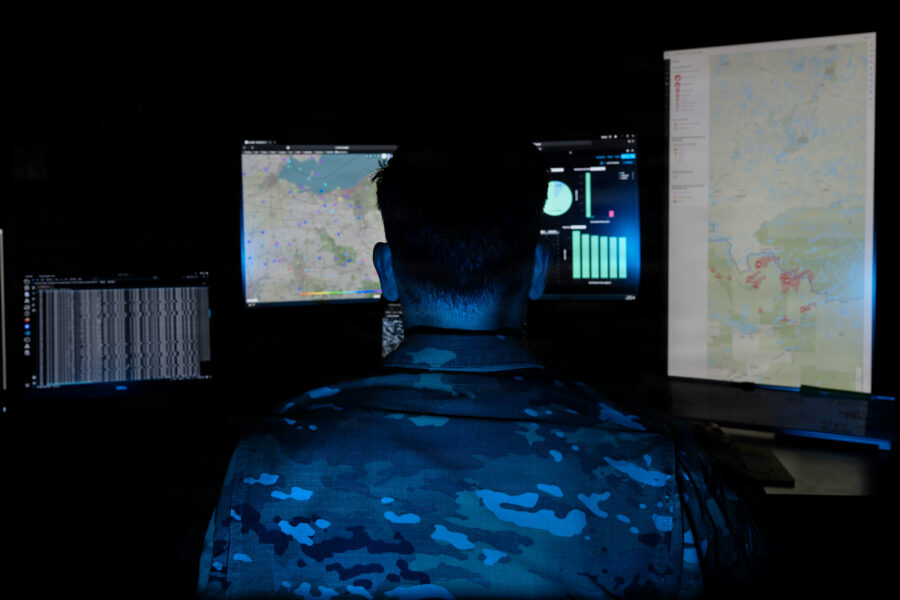
The entire Pentagon will soon use an Air Force program applying artificial intelligence tools to the cumbersome process of determining documents and data’s classification levels. But a former USAF tech leader warns that without proper guardrails, the move could create major cybersecurity headaches.
In 2025, USAF began an effort dubbed Battering Ram to find a way to more efficiently comb through more than 4,000 security classification guides used across the department to determine classification levels and durations for its multitude of projects, systems, and operations.
The classification process is a massive, expensive, slow endeavor. The Pentagon says it spends as much as $15 billion annually on records management, and without automation, the system results in errors, backlogs, a lack of interoperability, and static guidance for moving information through the required levels.
Battering Ram evolved recently into the Automated Classification Management Environment system effort, known as ACME. In August, the Air Force’s Kill Chain Integration Office at Hanscom Air Force Base, Mass., issued a request for information notice for ACME. In October, Deputy Secretary of Defense Steve Feinberg selected ACME as the department’s overall solution, tapping Air Force Secretary Troy Meink to oversee the program. That backing put $2.35 million into the program
“For decades, the Department of War has relied on manual processes to identify and protect classified information, even as modern technology and mission demands call for faster, more efficient systems,” the Pentagon’s Chief of Declassification, Paola Apodaca, said in a release.
The ACME acronym calls to mind the the Looney Tunes cartoons, in which the Acme Corporation produces faulty products used by the character Wile E. Coyote in his attempts to capture, kill, and eat the Road Runner. The Pentagon release acknowledges the connection but says this ACME will make things more efficient with “automated workflows to streamline slow, outdated, human-intensive information security processes.”
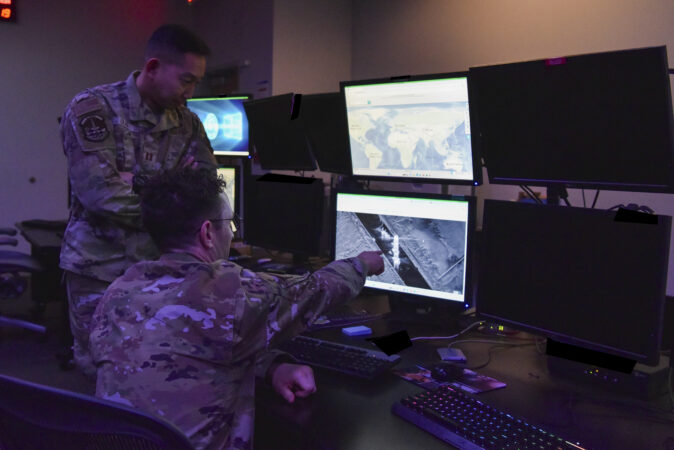
Neither the Pentagon release nor previous notices posted to Sam.gov reference what kinds of AI tools or models the Air Force plans to use for ACME, nor do they provide a definitive timeline for its implementation or full fielding.
Any timeline will have to be managed carefully, one expert on military IT told Air & Space Forces Magazine.
Retired Lt. Gen. William Bender, former Air Force chief information officer, said adding AI to the process of classifying materials needs special precautions to ensure the department’s Zero Trust architecture is used.
The Department of Defense had 20 of its 24 major IT programs start adopting Zero Trust in 2025, with a target date of the end of fiscal 2027 to implement a baseline Zero Trust architecture across the department, which includes 91 activities.
The department is scheduled to achieve an “advanced level” of Zero Trust, which includes 152 activities, by fiscal 2032.
Zero Trust is a practice in which a network, system, or entity assumes nothing is safe and requires that every user, device, and request to access its information or tools be verified at every point of use. If violated, it can lock down networks and sensitive data, trapping hackers if they’re inside the network.
Simply including AI in the process “elevates cybersecurity risks associated with an AI-enabled breach, whether having gone rogue due to improper prompting or handling, or because AI-enabled adversaries are able to manipulate the environment,” Bender said.
In many cases, he added, making classification-level determinations will be easier with automation. But in some instances, the process may “lack context and human intuition” needed for classification, Bender said.
The effort will require extensive testing and verification, and likely increased micro-segmentation, he said.
Micro-segmentation is a cybersecurity measure that breaks down a network or system into isolated zones, such as individual workloads, applications, or processes, and then requires strict security processes between each segment. It’s a more secure way to manage data and control for malware or other intrusions as compared to a classic firewall perimeter security approach.
Security Classification Guides
- SCGs define what is and isn’t classified, such as Secret or Top Secret, and then set the classification duration, or how long the information must remain secure before it can be reviewed for a classification change or declassified.
- There are more than 4,000 guides across the Department of Defense, and humans must manually search through them to ensure they’re covering all guidance before determining the classification or declassification of new or existing documents.
- As thousands of guides have been written, updated, or amended over decades, the rules can overlap, conflict, or even contradict each other, creating confusion and making it difficult to apply consistent classification rules and guidance. This is especially problematic when dealing with fast-moving software-defined systems, which create large amounts of data that must be classified.
After its August request for information, the Air Force released an amended request that refined AI-solution requests to the problem. That was followed by an industry day announcement in late October, seeking pitches from industry to run ACME. Air & Space Forces Magazine queried Air Force Life Cycle Management Center about the notices—AFLCMC did not immediately reply.
On Nov. 23, the Pentagon announced Feinberg’s October decision to make ACME the department’s AI-aided classification and declassification management system, covering more than 5 million troops, civilians, and contractors.