
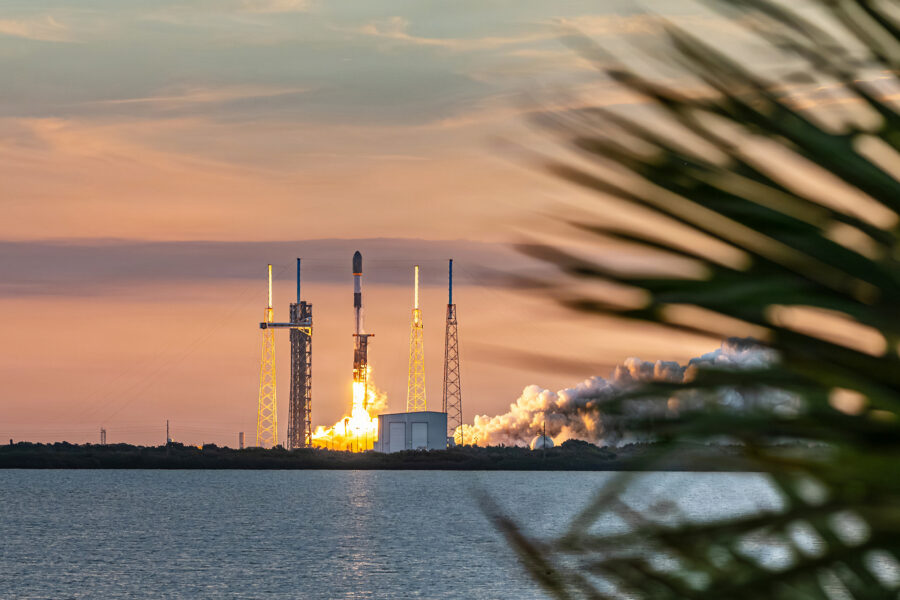
As U.S. allies look to establish sovereign military space launch capabilities, the Space Force is exploring ways to transfer lessons learned from its National Security Space Launch program to support its international partners.
In a new notice to industry, issued Sept. 3, the service said it is exploring a specific type of foreign military sales agreement called a technical service case, which involves the U.S. sharing specialized expertise with a foreign partner. The Space Force did not name which country it’s working with but said the nation is interested in acquiring engineering, logistical, and technical assistance to establish their own NSSL-like service using a U.S. commercial launch vehicle, including the spaceport infrastructure to enable it.
The U.S. is the global leader in space launch, conducting nearly 60 percent of all launches worldwide in 2025, according to analytics and engineering firm BryceTech. The Space Force operates the two busiest U.S. ranges: Cape Canaveral Space Force Station, Fla., and Vandenberg Space Force Base, Calif. Last year, the two spaceports supported 175 launches, and the White House is targeting 1,000 U.S. launches annually by 2030.
Amid a push from President Donald Trump’s administration for U.S. allies to increase annual spending on defense, some partner nations have announced increases in military space funding—both for space systems and for launch capabilities. In Europe, Germany, Spain, the United Kingdom, and Italy have all funded domestic rocket development. Meanwhile, in April, Canadian lawmakers proposed a regulatory framework for the country to establish its own space launch capabilities after long relying on the U.S. and other countries to reach orbit.
“In a more uncertain and competitive world, Canada cannot rely on others to secure access to space for our economy, our defense, and our future,” Canadian Transport Minister Steven MacKinnon, who introduced the Canadian Space Launch Act, said in an April 21 statement. “Establishing Canadian sovereign space launch capabilities would drive billions in investments, create good paying jobs, increase Canada’s sovereignty, reduce our economy’s reliance on the United States, and support a commercial space launch and re-entry industry that could be worth $40 billion.”
To support the FMS request, the Space Force is looking to select a contractor to help tailor U.S. best practices in launch and spaceport operations for the country’s specific requirements, and evaluate whether certain commercial launch vehicles and spaceport operators are a good fit for its needs. The contractor will also recommend a mission assurance approach for the country, based on its needs. The company will work with Space Systems Command’s portfolio acquisition executive for space access to compile data and craft a report on its findings.
The Space Force expects to award a contract by Sept. 25 and compile the report within 12 months.
As USSF helps its partners grow their sovereign launch capabilities, it’s also considering options to launch its own payloads from foreign soil. While this effort doesn’t address that, officials have said there could be opportunities to partner with Australia, New Zealand, Japan, and countries in Europe, but there are U.S. policy hurdles that need to be addressed first.