
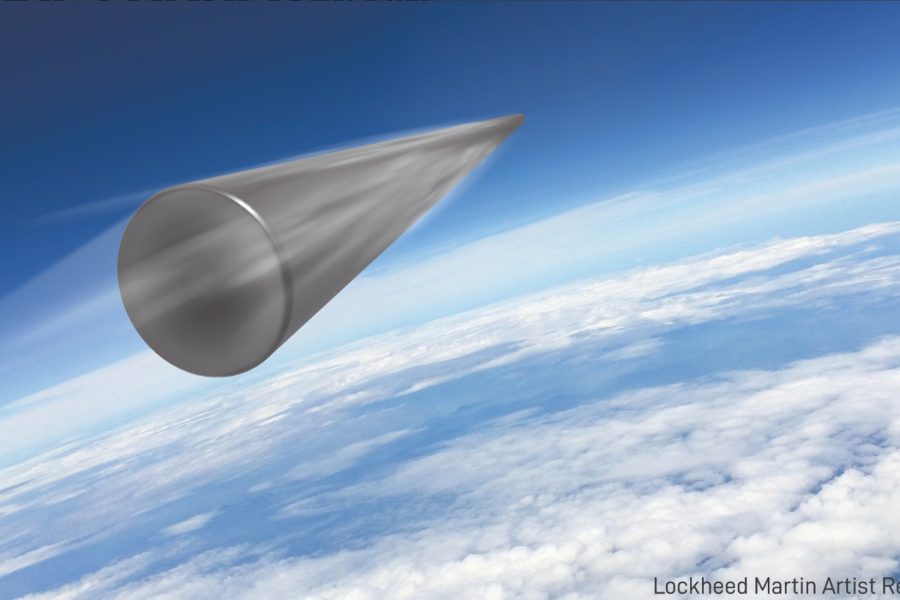
The Air Force Nuclear Weapons Center tested its new intercontinental ballistic missile reentry vehicle Oct. 9, launching the developmental vehicle atop a Minotaur I rocket from Vandenberg Space Force Base, Calif.
The Mk21A reentry vehicle, mated to the Sentinel ICBM, will eventually replace the Minuteman III as the land-based leg of the nation’s nuclear triad. Carrying the new W87-1 nuclear warhead, it will launch atop the Sentinel’s three rocket stages, blasting into space before reentering the atmosphere to strike its target.
The Oct. 9 test launch carried no warhead and was the first announced test of the new vehicle since June 2024.
“The Mk21A is crucial to modernizing our ICBMs in response to the rapidly changing global threat picture posed by our adversaries,” said Maj. Gen. William Rogers, the Air Force’s portfolio acquisition executive for ICBMs, in a statement. “The reentry vehicle’s development will ensure a safe, secure and effective deterrent for generations to come.”
The Mk21A is based on the Mk21 reentry vehicle used on the Minuteman III, and is being developed by Lockheed Martin. The Minotaur I launch vehicle, provided by Northrop Grumman, is based on the Peacekeeper and Minuteman rocket motors. The Space Force helped oversee the test through its Rocket Systems Launch Program, which provides commercial launch systems and excess ballistic missile assets for government payloads.
The Air Force Nuclear Weapons Center awarded Lockheed a $996 million contract for the Mk21A in October 2023, and followed with an additional $453 million contract modification in November 2025.
According to a Pentagon an April acquisition report released in September, the latest contract modification was part of a new baseline for the program intended to “decouple its schedule from external programs and continue development with an updated, more resilient plan.”
The LGM-35 Sentinel program office is still working to overcome the cost and schedule problems that triggered a mandatory Pentagon review, and while officials claim progress, the program is undergoing a restucturing before it can meet Milestone B, which would authorize it to move into engineering and manufacturing development.
The acquisition report offers scant details on the Mk21A rebaseline effort, beyond noting that it includes a new “alternate flight test strategy” and additional test assets. It does not, however, that the June 2024 test successfully flight-tested the vehicle’s heatshield, and that Lockheed was working on integrating the arming and fuzing subsystem in February 2026. Air Force budget documents released in April projected a “flight test of heatshield test vehicle and W87-1 environmental flight test unit” in fiscal 2026 and 2027.
A critical design review for the entire Sentinel system is planned by March 2027. The Air Force asked for almost $540 million to fund Mk21A reentry vehicle development in the fiscal 2027 budget request, up $184 million from 2026 as Sentinel ramps up integration and test activities.
